
Take a drive down the Santa Barbara coast, and before you make it to Los Angeles, you’ll hit Oxnard, a concrete coastal city right in the middle. If Santa Barbara is “L.A. without the traffic,” then Oxnard is Santa Barbara without the resources. But what it lacks in funding, it has always made up for in people power.
Diego and Miranda Magaña, siblings and co-founders of the nonprofit MiniNature Reserve, have lived in Oxnard their entire lives. Growing up in a town whose history is steeped in activism, yet is often reduced to what Miranda calls “the dumping grounds for a lot of larger cities,” has taught the siblings to not sit idly by.
In 1903, Mexican and Japanese laborers working on sugar beet fields in Oxnard unionized to form the Japanese Mexican Labor Association — the first major farmworkers union to unite members of different races — and held a 48-day strike against unfair wages and exploitative contracts. Years later, during the ’60s and ’70s, Dolores Huerta worked with the Community Service Organization, a Latino civil rights group, to organize movements to help farmworkers unionize throughout Ventura County, including in Oxnard. In 2025, a housing project in Oxnard for farmworkers and veterans was established, honoring her activism with the name Dolores Huerta Gardens.
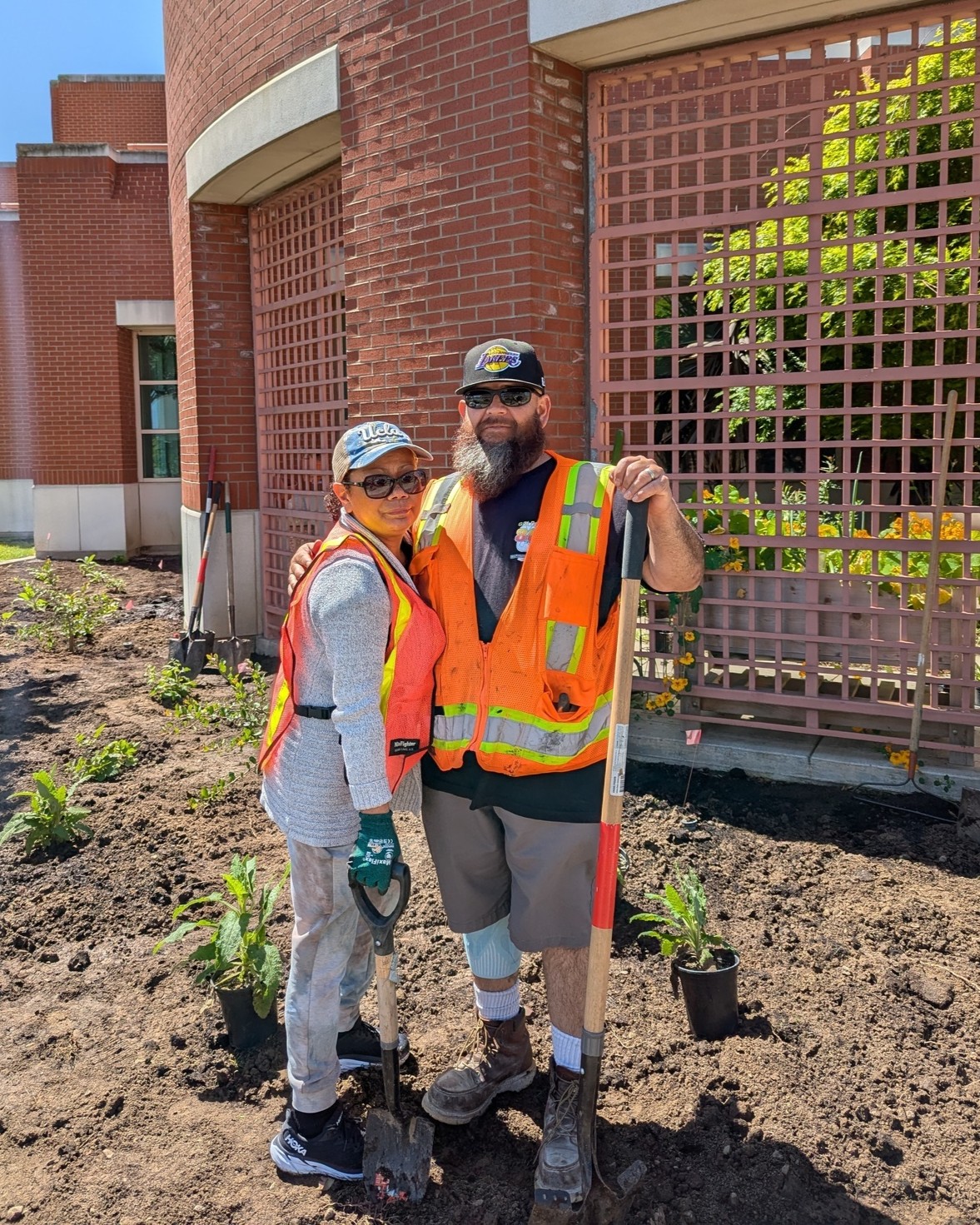
Today, the people of Oxnard have come together to take action for their community once again. A group of guerilla gardeners working with the siblings’ nonprofit is quietly planting patches of food, medicine, and native habitat in neglected pockets around Ventura County.
– Photos by Diego Magaña
Beauty Beyond the Concrete
When Miranda looks back on her childhood, she doesn’t see power plants, abandoned lots, and paved roads. She remembers walks to the park, getting down in the grass and plants, and collecting ladybugs in a water bottle to bring back to her grandmother’s garden.
Sign up for our newsletter, The Hub, and keep up with the latest uplifting climate action news, sustainable living advice, and Earth-conscious recipes.
Sign Up Now.
“Somehow I ended up with a fascination with nature. Because if you look in Oxnard, there’s not a whole lot,” she says. “You have to look in the small, little places.”
As the saying goes, you can’t miss what you’ve never had. Those moments of getting down in the grass and searching for bits of nature among the concrete were enough. That is, until Diego took a trip to the Grand Canyon.
As he stood there, taking in the natural beauty and grandeur of the canyon, he was moved to tears. “To this day, it’s the only national park that’s made me cry,” he says. On the way back to Oxnard, he realized what was lacking in his own home. “When you drive back, you start to notice all the forest and the deserts turn into farms and then gradually into concrete and asphalt,” he says. “I started grieving the loss of nature.”
He shared his feelings with Miranda. Surely, they thought, Oxnard was once just as beautiful as those deserts and forests. “The answer to bringing that beauty back was native plants,” Diego says.
They started propagating native plants in their backyard, some with medicinal and food value. Once they were ready to be planted, they called on their community via social media.
“We didn’t ask anyone. We didn’t ask the city,” Diego says. “Eight people showed up on the first day.”
With that education, volunteers are coming to Diego and Miranda with their own guerilla gardening projects. ‘We’re giving them everything they need and they go out and they do it,’ Diego says. ‘Now, the city can’t even keep up.’
Growing Pains
Since that first event in 2020, MiniNature Reserve has put more than 3,500 native plants in the ground with the help of more than 1,500 volunteers. Today, the nonprofit has 21 gardens maintained by the people.
But it hasn’t come without its challenges. “Unfortunately, we sometimes get gardens ripped out that were planted by the community,” Miranda says.
The city designs landscaping to take as little effort as possible by the maintenance team, who follow a “mow, blow, and go” system, Diego says. “When you add something that needs more care, then the maintenance crew gets scared.”
Sometimes the installations are destroyed by unknowing landlords who might mistake native sprouts for weeds, but the usual suspect is the city, who has mowed down, ripped up, and poured concrete over some of the gardens, citing the plants as tripping hazards in one case.
“It’s a little bit of a complicated relationship. Right now, there’s a lot of people in the city who claim to support us, but they told us they want to have an agreement in place,” Diego says. “But they have stalled, and it’s going to be almost a year since they banned us from doing anything in the gardens.”
People Power
Despite the disheartening reaction from the city, the Magañas and their volunteers refuse to back down. They are set on correcting the imbalance between those in power, the people, and the plants.
“I absolutely think that we don’t need permission to plant,” Miranda says. “Plants don’t need permission to grow and flourish. This is where they belong, and they were here before us.”
Now, MiniNature Reserve is working to mobilize their volunteers. They offer a training program and invite volunteers to their plant nurseries to empower and educate their neighbors on how to design, install, and maintain mini native habitats and gardens.
With that education, volunteers are coming to Diego and Miranda with their own guerilla gardening projects. “We’re giving them everything they need and they go out and they do it,” Diego says. “Now, the city can’t even keep up.”
The nonprofit also works closely with local Indigenous communities to host Indigenous knowledge classes. These workshops teach the community how to use plants harvested from MiniNature’s gardens and nurseries for food, medicine, and cultural practices.
“We are at this place where we’re realizing that we have a lot of volunteers, and in a numbers game, we beat them,” Diego says of the government officials in opposition. “They don’t run the city. They serve us.”
With just poppy seeds, you can paint the whole town orange.
– Diego Magaña
What You Can Do
Comments are closed.