
Technically, soil is a substrate but not all substrates are soils.
Soil consists of four major components: 1) inorganic mineral matter, 2) organic matter, 3) water and air, and 4) living matter. The organic material of soil is made of humus, which improves soil structure and provides water and minerals. Soil inorganic material consists of rock slowly broken down into smaller particles that vary in size, such as sand, silt, and loam. – Biology of Soil/6%3A_Plant_Structure_and_Function/31%3A_Soil_and_Plant_Nutrition/31.2%3A_The_Soil).
Soilless culture is defined as "any method of growing plants without the use of soil as a rooting medium, in which the inorganic nutrients absorbed by the roots are supplied via the irrigation water" (EI-Kazzaz, 2017; Resh, 2012). – Soilless Culture by ScienceDirect.
Hereafter, soil and substrate shall be used interchangeably to refer to soilless mixes.
~~~
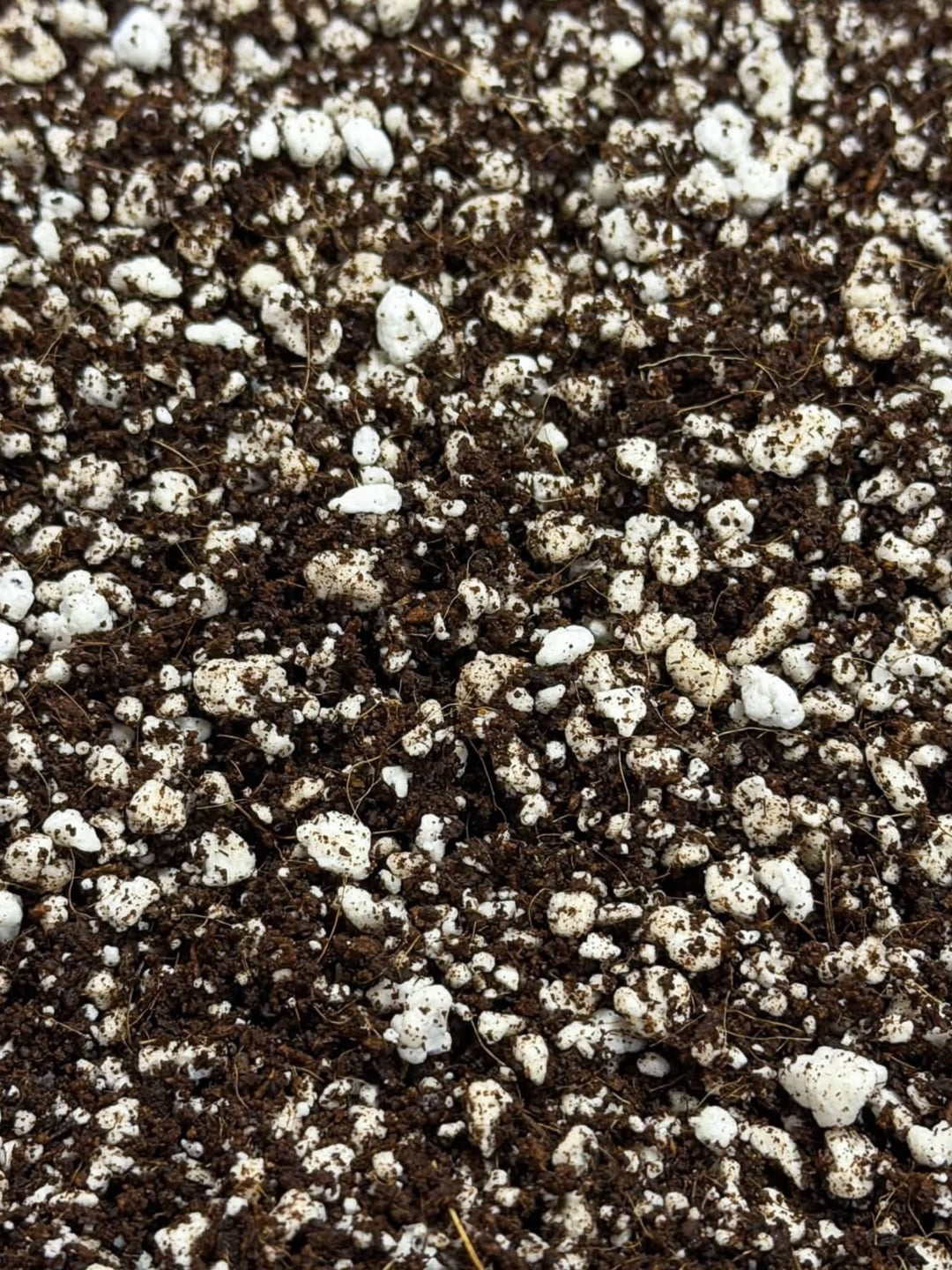
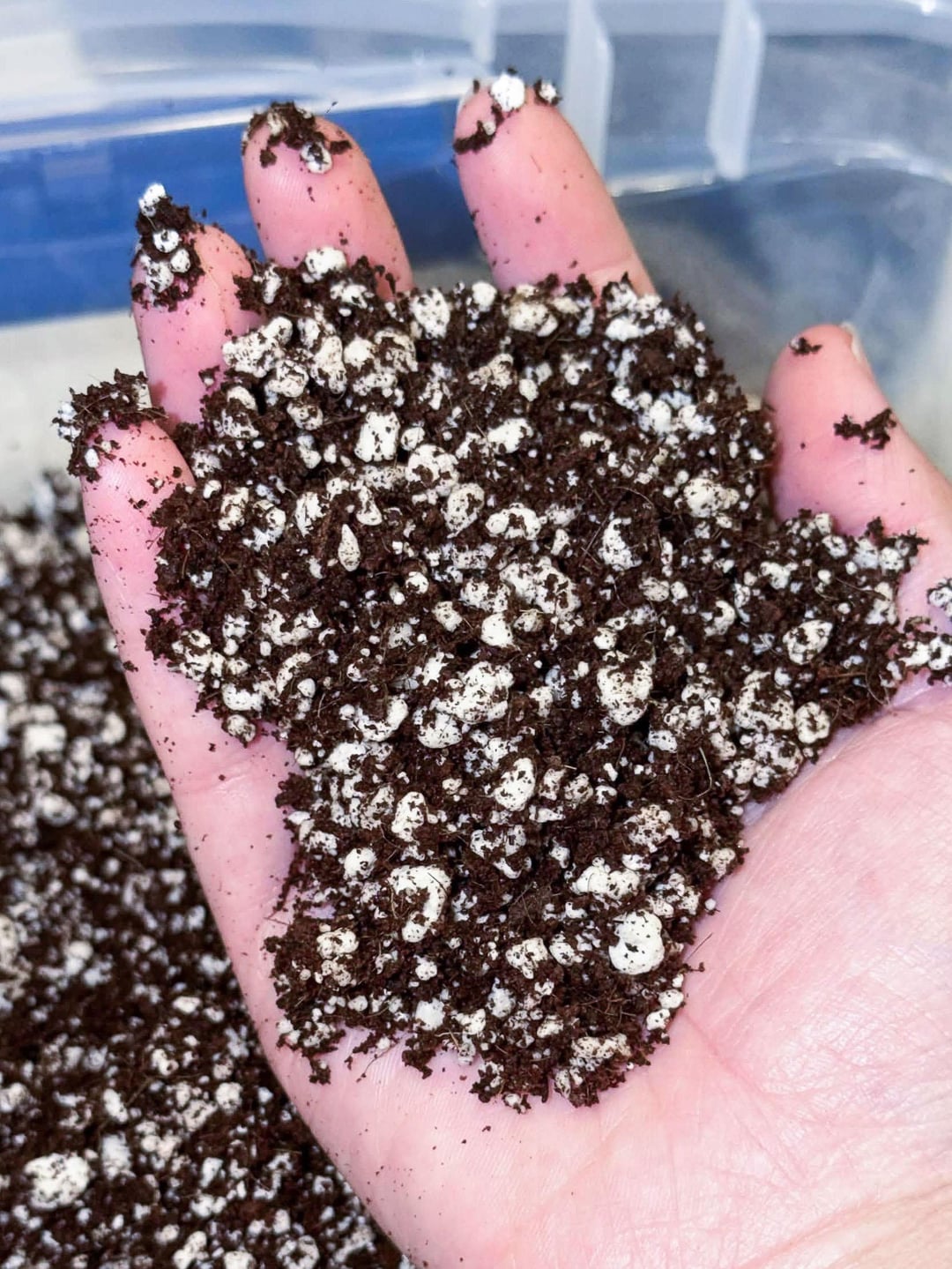
In my own culture, I top-water and do not use wicks. In terms of moisture, the soil should remain damp but not soaked. In terms of texture, the soil should crumble in the hand. I have included photos of my mix for reference.
I prefer a soilless mix comprised of one part coconut coir to one part perlite. That's it. Nothing else.
I used to inoculate my soil with mycorrhizae spores but I found the efficacy of the spores to decline after sitting in storage for several months at a time. There are some theories which support the idea that mycorrhizae fungi do not survive long in soil without the presence of roots, but there are also theories to the contrary. Out of an abundance of caution, I prefer to inoculate each plant individually when potting to ensure maximum efficacy of the spores. I like this inoculant by Wildroot Organic.
My mix once included vermiculite, but I no longer recommend it. Despite my sporadic watering routine, I find that my plants retain moisture just fine in the interim. For reference, I live in the American South where there are high temperatures and high levels of humidity. With air conditioning, our indoor ambient humidity ranges anywhere from 30% to 60% which is typical of air-conditioned homes but is still worth noting. In any case, I do not mind watering my plants a few times a week if needed. I always water by weight, so over-watering is never an issue for me.
I have been using the dehydrated coconut coir bricks by Burpee for years with great success. The only perlite I can find locally that does not contain fertilizer is the Sta-Green perlite from Lowe's.
I prefer to work with coconut coir as opposed to peat moss as I find the coir to be much cleaner, more inert, and less likely to cause pH imbalances. Coir, to me, is the best choice for environmental reasons but also cultural ones. I have experienced a myriad of issues with aging peat moss in my early mixes. Coir has been the remedy to that problem.
There is much debate about the proper size and grade of perlite to use, but I never cared. The "official" recommendation is #3 (coarse), but I can only find extremely large quantities online for more than I'd like to pay (and more than I could ever use, to be honest). The perlite from Lowe's, although finer in grade, is acceptable. The size of the Sta-Green perlite is functional, and the amount of dust per bag is minimal. The most important factor for me, however, is the lack of added fertilizer. I need to be in control of everything, so. There's that.
What's worked for you? What hasn't?
by h0rrorhead
Comments are closed.