
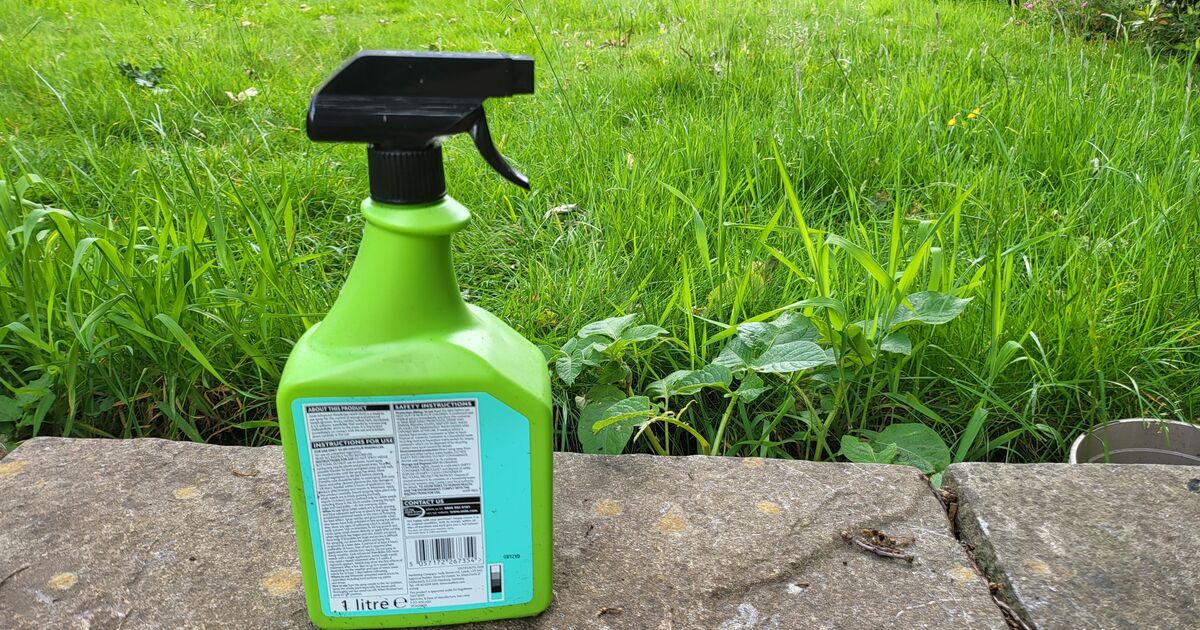
Weedkiller can be harmful in spring and summer (Image: Alex Evans)
Gardeners are being urged not to use weedkillers after an expert’s stark warning. It’s always alarming when you look out across your beautifully manicured lawn or carefully cleaned driveway and see the scourge of weeds popping up between paving slabs or taking over lawns.
With the return of some warmer weather this week, gardeners will already have noticed dandelions creeping their way back into lawns and patios. It’s easy to panic and reach for a quick fix, especially when so many products are available at garden centres and online that promise to kill weeds and tidy up gardens in a flash.
But what a lot of gardeners may not realise is that chemical weedkillers have been linked to harm to bees, as well as other vital pollinators like wasps, flies and butterflies.
READ MORE: Warning issued to anyone with robins in garden
READ MORE: Gardeners urged to sprinkle sugar on lawns this spring
This is worrying because pollinators play a vital role in the food chain and UK insect numbers are reported to be down by 60% in the past 20 years alone. If insect populations are killed off, food can’t grow because there are no pollinators left.
Pesticide Action Network Europe sets out several ways in which glyphosate weedkillers are potentially harmful to bees. It says the weedkillers disrupt the gut microbiome in bee colonies, making them more vulnerable to disease and other harmful effects.
They can also disturb the larvae cycle of bees and damage bees’ nervous systems as well as being directly toxic to them when ingested.
It’s not just bees, but all key pollinators like flies, wasps and butterflies which can also be affected in the same way and even wider wildlife like birds and fish.
It says: “Glyphosate has direct and indirect effects on the environment. Indirect impacts on birds and other animals occur due to the wiping out of weeds and wild flowers, destroying habitats and food supplies. Glyphosate is water soluble and has had significant effects on species that underpin the entire aquatic food chain with amphibians being particularly vulnerable.
“It upsets the balance of microbial communities in soil, increasing the numbers of some microorganisms and decreasing others, impacting on soil fertility. It has caused an upsurge in some crop diseases in no-till agriculture by stimulating the growth of a number of fungal pathogens. It also binds micro-nutrients in the soil causing deficiencies in plants.
“Glyphosate has also been found to have adverse effects on earthworms, beneficial insects and bees.”
Studies conducted by the British Ecological Society in 2021 found glyphosate weedkillers had killed as many as 94% of bees they came into contact with.
As a result, many manufacturers now offer non-glysophate options which are said to be safer for flying insects but there are still doubts among some gardeners about using any chemicals at all.
This view is backed by the Royal Horticultural Society, which sets out how weedkillers should only be used as a last resort.
It says: “There are concerns that weedkillers pose a risk to human health, and research is ongoing into the long-term effects of exposure to these chemicals.
“Weedkillers can harm or kill garden wildlife, including invertebrates present on plants when they are treated, and those, like bees and other pollinators, that feed on treated plants. The loss of vegetation, flower resources and habitat cover through the use of weedkiller can also impact negatively on wildlife.”
It added: “The RHS believes that avoiding pests, diseases and weeds by good practice in cultivation methods, cultivar selection, garden hygiene and encouraging or introducing natural enemies, should be the first line of control.
“If chemical controls are used, they should be used only in a minimal and highly targeted manner.”
Comments are closed.