SERIES 37 | Episode 09
Costa meets a gardener who has jam-packed his Sydney backyard with a variety of fruits and vegetables which sustain his connection to his home country.
By area, Holsworthy is the largest suburb of Sydney, but it is mostly covered by a military reserve and barracks. A small residential pocket in the north has a small multicultural population, where Vijay built a home and started his garden ten years ago.
Vijay grew up in a sugarcane farming family in Fiji, where growing your own food was just a given. After moving to Australia in 1989, he was perplexed that growing your own food was a thing people opted into. Nevertheless, he started gardening from the get-go in his new home country, always finding a way to grow fresh produce whether it was in small rental units through the early years, or his current home in Holsworthy.
Since moving to Australia, Vijay sought out crops that he grew up eating in Fiji, a lot of which are not widely available in stores and markets. He is now growing more than 40 different fruits and vegetables.
One of the most significant plants in his garden is sugarcane. His grandparents were brought over to Fiji from India to work on the sugar plantations as indentured labourers by the British empire. His parents are second generation sugarcane farmers in Fiji, and his brother still farms sugarcane back in Fiji. Having sugarcane in his backyard is that connection to his childhood and history.
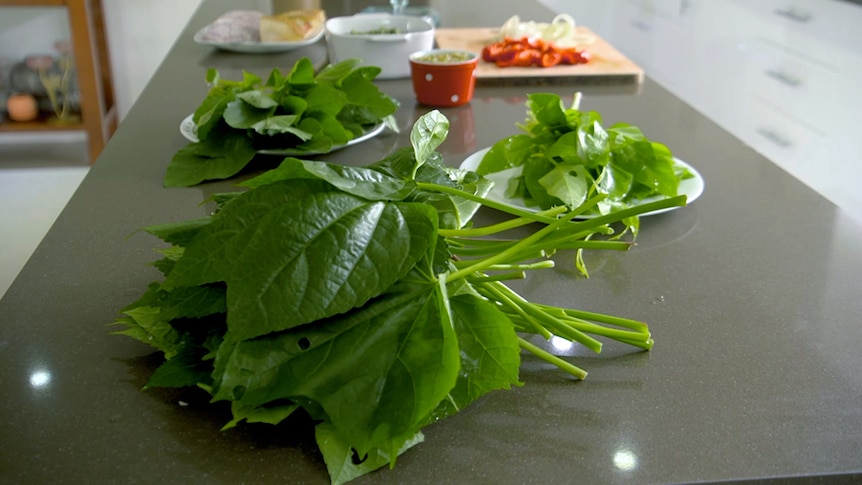
Amaranth greens are a staple in Fiji too, the equivalent of spinach. Vijay says it isn’t very common in general Australian cuisine but it’s one of the delicacies of Fijian-Indian food. It needs a rich, water-retentive soil with lots of compost. It can self-seed in the garden, so it’s best to harvest the plants before it flowers.
Vijay also grows water spinach (karemua) in a half 20-gallon drum, filled with water and a bit of soil to mimic the swampy conditions this leafy green naturally grows in. A boggy container like this can breed mosquitoes, but Vijay changes the water regularly to prevent mozzie larvae from growing.
Another common green vegetable in Fiji is bele (Abelmoschus manihot), a type of hibiscus with gelatinous leaves that are high in carotenoids, proteins and trace minerals. In Sydney, bele goes dormant in winter and reshoots in spring. The leaves are eaten sauteed or in soups.
Vijay also has several tropical fruits in the garden. His favourite is granadilla (Passiflora ligularis), a species of passionfruit with a hard yellow shell and sweeter, more fragrant pulp than the regular passionfruit. It’s a subtropical plant but will survive colder temperatures once established.
He also grows papaya, banana, guava, custard apple, soursop, dragon fruit, starfruit, mandarins, and mango. There are a few flowers that Vijay grows as reminders of his home country – bougainvillea, hibiscus, marigold, and jasmine. His family use the flowers for prayers as well.
Such a jam-packed garden does require a lot of work, which Vijay has time for now that he is retired. Most of his time is taken with watering and propagating. The dense planting helps supress weeds. He keeps an eye out for pests and diseases to catch them early. A resident blue tongue lizard helps keep the snail population down. Harvesting is a big job too, especially for crops that mature at the same time. Any surplus is first shared with family, friends and neighbours. What’s left is frozen, pickled or turned into jams.
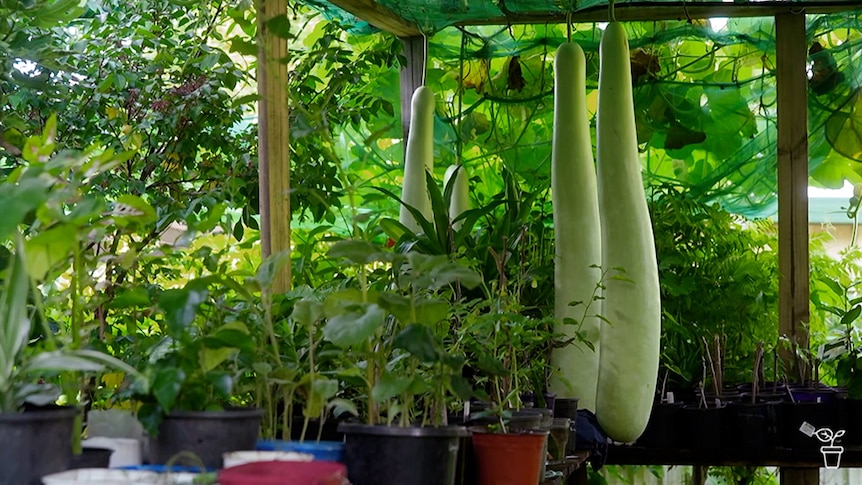
Featured Plants LAUKILagenaria siceraria cv.KAREMUAIpomoea aquatica cv. *AMARANTHAmaranthus cv. *BELEAbelmoschus manihot cv.GRANADILLAPassiflora ligularis* Check before planting: this may be an environmental weed in your area
Filmed on Dharawal & Dharug Country | Holsworthy, NSW

Comments are closed.