SERIES 37 | Episode 09
At Heronswood on the Mornington Peninsula, a historic public garden with sweeping views across Port Phillip Bay, innovation meets sustainability. Managed by The Diggers Foundation, this iconic site continues its legacy of inspiring gardeners through creative and practical ideas.
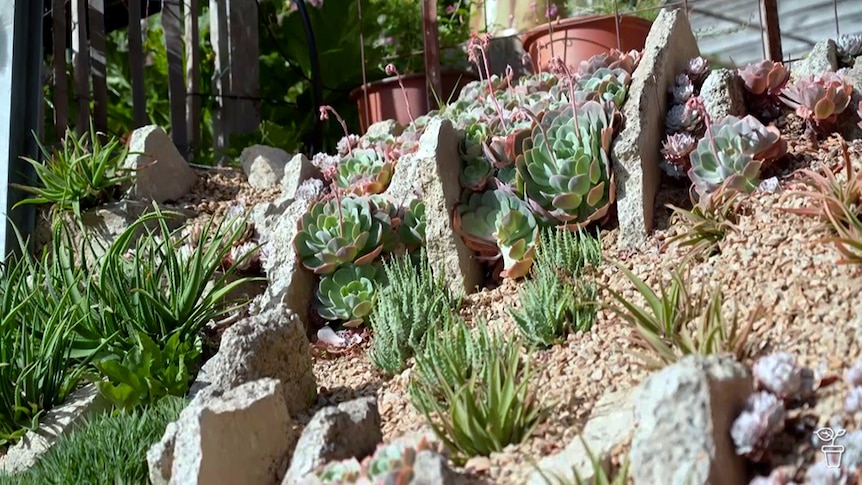
Head gardener Bill Bampton is transforming a once-neglected area, formerly occupied by old sheds into a striking crevice garden using recycled concrete. Rather than sending demolition waste to landfill, the broken slabs are repurposed to mimic natural rock formations, creating a layered landscape full of planting pockets and microclimates.
The process is both artistic and functional. Concrete pieces are carefully angled and “book-leafed” to imitate natural strata, with gaps left between them for planting. Crushed granite is used as an inert growing medium, providing excellent drainage and stability without breaking down over time. This low-nutrient environment encourages compact plant growth, echoing the conditions found in alpine and coastal rock habitats.
Plant selection is key. Hardy, low-growing species like cushion plants, such as Scleranthus are tucked into crevices and overhangs, where they can thrive with minimal water and care. Once established, the garden is intentionally left to fend for itself, reducing maintenance and preventing weed growth.
Beyond its practicality, the crevice garden reflects the rugged beauty of Australian landscapes from alpine regions like Mount Kosciuszko to coastal cliffs such as Cape Schanck. It also offers a powerful design solution for flat gardens, introducing height, texture and visual drama using readily available materials.
This hands-on approach shows that with a bit of creativity, even construction waste can be transformed into a dynamic, habitat-friendly garden feature, one that looks as though it has always belonged.
Featured Plant CUSHION PLANTScleranthus sp.
Filmed on Bunurong Country | Dromana, Vic

Comments are closed.