
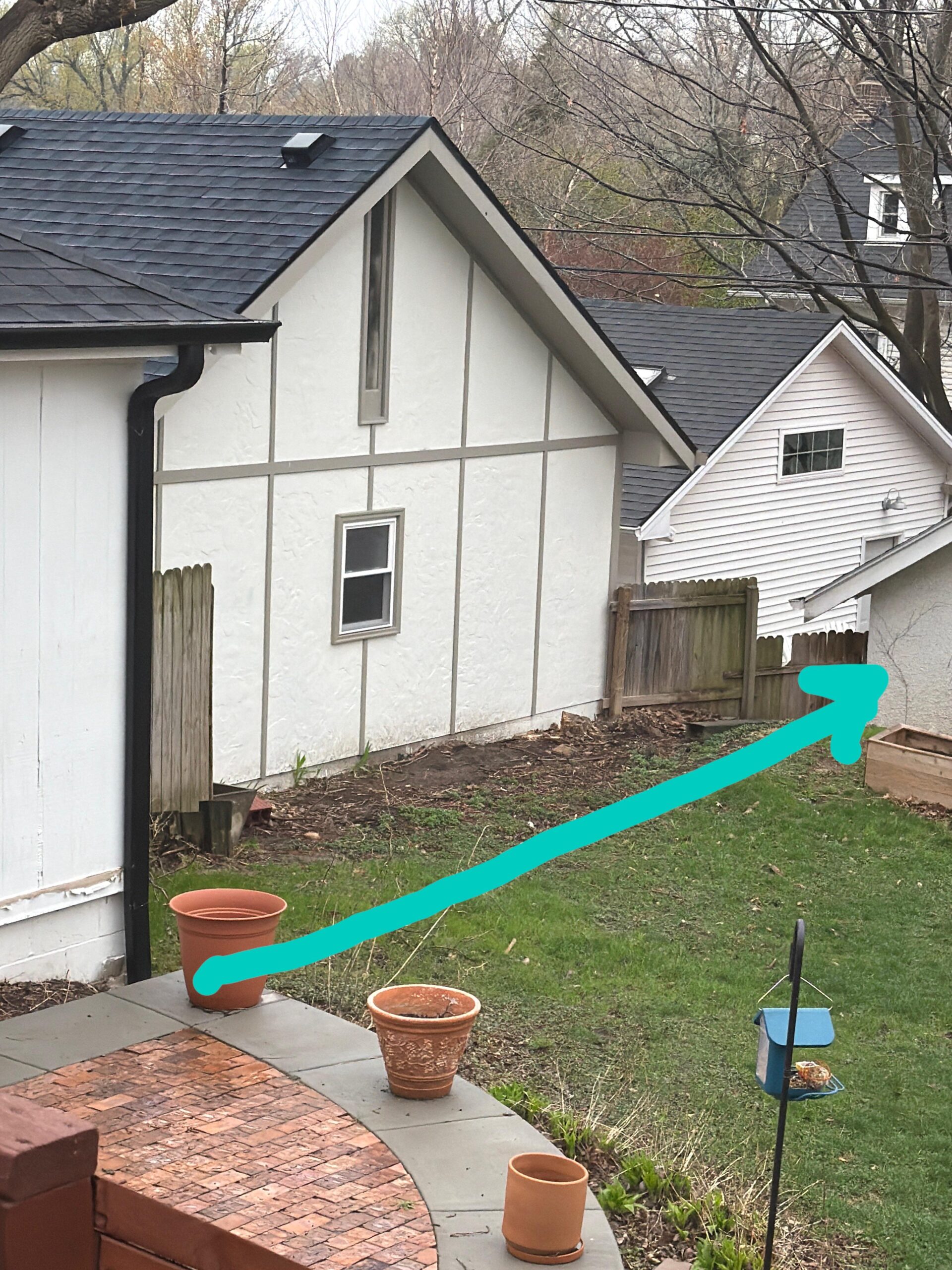
I have this shady patch that butts up to my neighbor’s garage. It gets a couple hours of sunlight a day, and gets muddy when it rains. Our yard is built on a slope, so when we get big amounts of rain (a few times a year) water flows from our street into my other neighbor’s garage. I would like to put something here. We already have a large patio and budget isn’t an issue.
Advice requested:
I’ve been thinking about putting some low light plants like hostas and astilbe and some ground cover to minimize the mud that gets on my dogs feet. Would the water that passes through that area be problematic?
Our yard has high-is levels of lead so I don’t want to plant veggies in the ground.
I was also thinking about making some sort of play area for my son, but he is little and I worry about rubber mulch getting gross here.
Any advice, experiences, ideas appreciated. Thank you!
by maureeenponderosa
1 Comment
You have a drainage corridor not a traditional flower bed. If water flows through there fast enough to reach the neighbors garage sticking hostas and delicate groundcover right in the mud will just result in washed out roots and dirty dog paws. You need to work with the water instead of fighting it. Dig out a shallow curved channel following that arrow and line it with heavy river rock to create a dry creek bed. That gives the stormwater a safe solid path to travel on while capping the muddy lead filled soil so your dogs stay clean.
Forget putting a play area in a flood zone. Kids and heavy runoff do not mix and rubber mulch will float away the first time it pours. Once your rock channel is in place you plant your hostas ferns and astilbe in sweeping continuous masses along the upper banks of the stones. The plant roots will drink up the surrounding soil moisture and the foliage will drape over the rock edge giving you a structured lush look without rotting in standing water.
Since budget is not an issue you want to get the layout perfect before paying a crew to haul tons of stone back there. Take a picture of that mud patch and run it through the GardenDream web app. Use it as a blueprint tool to overlay different river rock layouts and plant masses so you can visualize exactly how the dry creek needs to flow and function before you move a single shovel of dirt.