
 4 min read
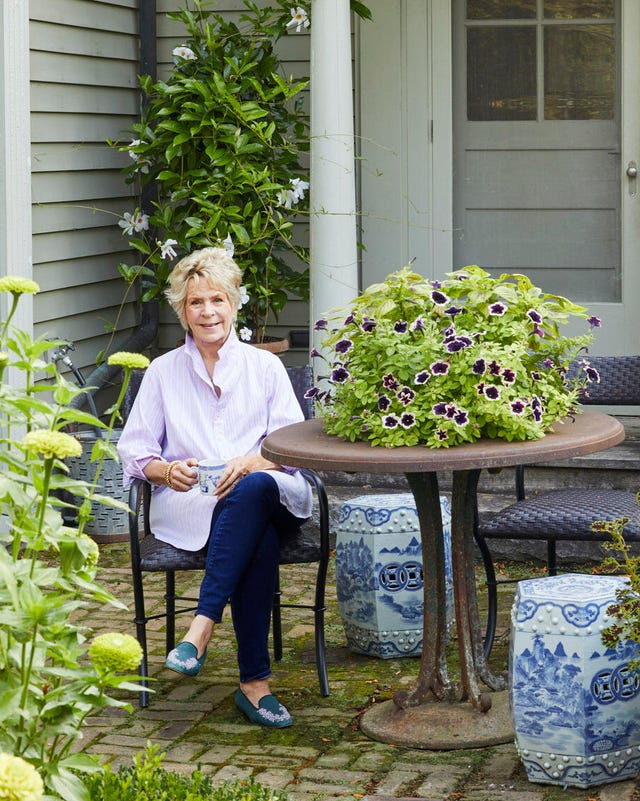
Growing up on a farm in Virginia, designer Bunny Williams’s love of gardening was first sparked by the sights and smells of spring’s freshly plowed fields. Even though her dream of being an interior designer took her to New York City, the call of life in the country stayed strong.
Annie Schlechter
After several years, she and her husband, antiques dealer John Rosselli, rented a farmhouse in Massachusetts and eventually bought their own country home, an 1840s classic Federal in Connecticut, which they named Manor House.
Pairing her impeccable eye for color and design with her newly discovered passion for English gardens, the self-taught gardener developed the sprawling property over time, letting its terrain inform its various garden “rooms,” separated with what Bunny calls “calm, negative space.”
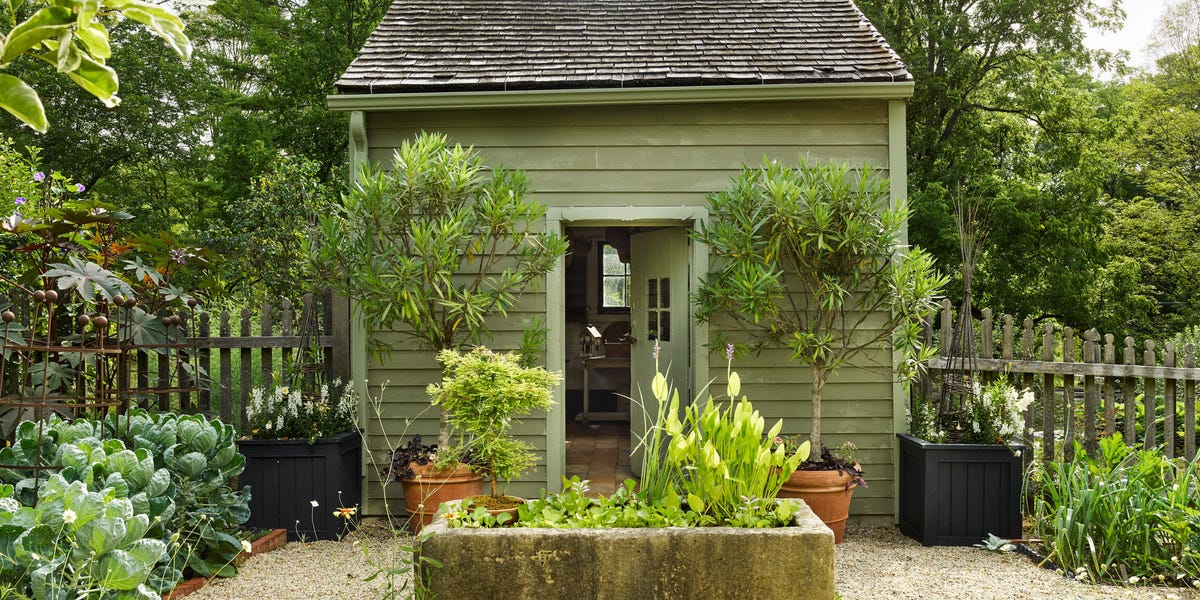
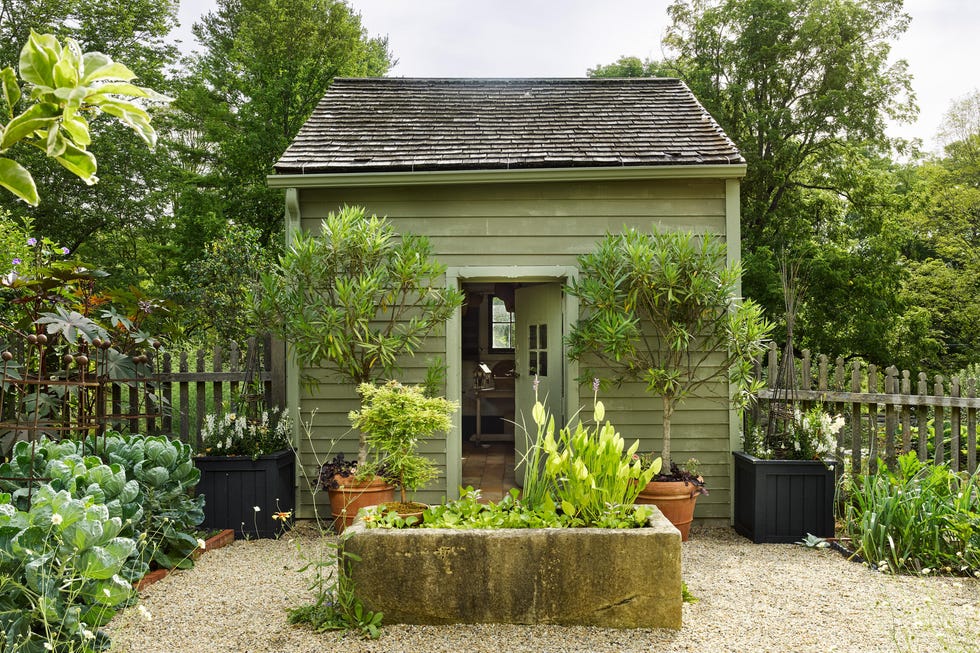
Sitting near the large greenhouse and vegetable and cutting garden is the petite potting shed, which was originally a tack room attached to the main house. It’s the place Bunny escapes to work—to pot plants and start seeds, to dry flowers and herbs—as well as to sit and savor the sights and smells of the lush surroundings. “Gardening has taught me a lot about life,” says Bunny. “It’s taught me patience—which I don’t have much of—and humility, because you can’t control nature. You have to give in to nature—the weather, the bugs, to whatever is going to be a part of your gardening experience.”
Annie Schlechter
The Setting:
12 rolling acres of gardens that include a barn, conservatory, formal parterre garden, vegetable and cutting garden, chicken coop, and orchard
The Structure:
A humble 18th-century shed rescued from another spot on the property (now painted Hancock Gray by Benjamin Moore with trim in Camouflage by Benjamin Moore)
Beloved Baskets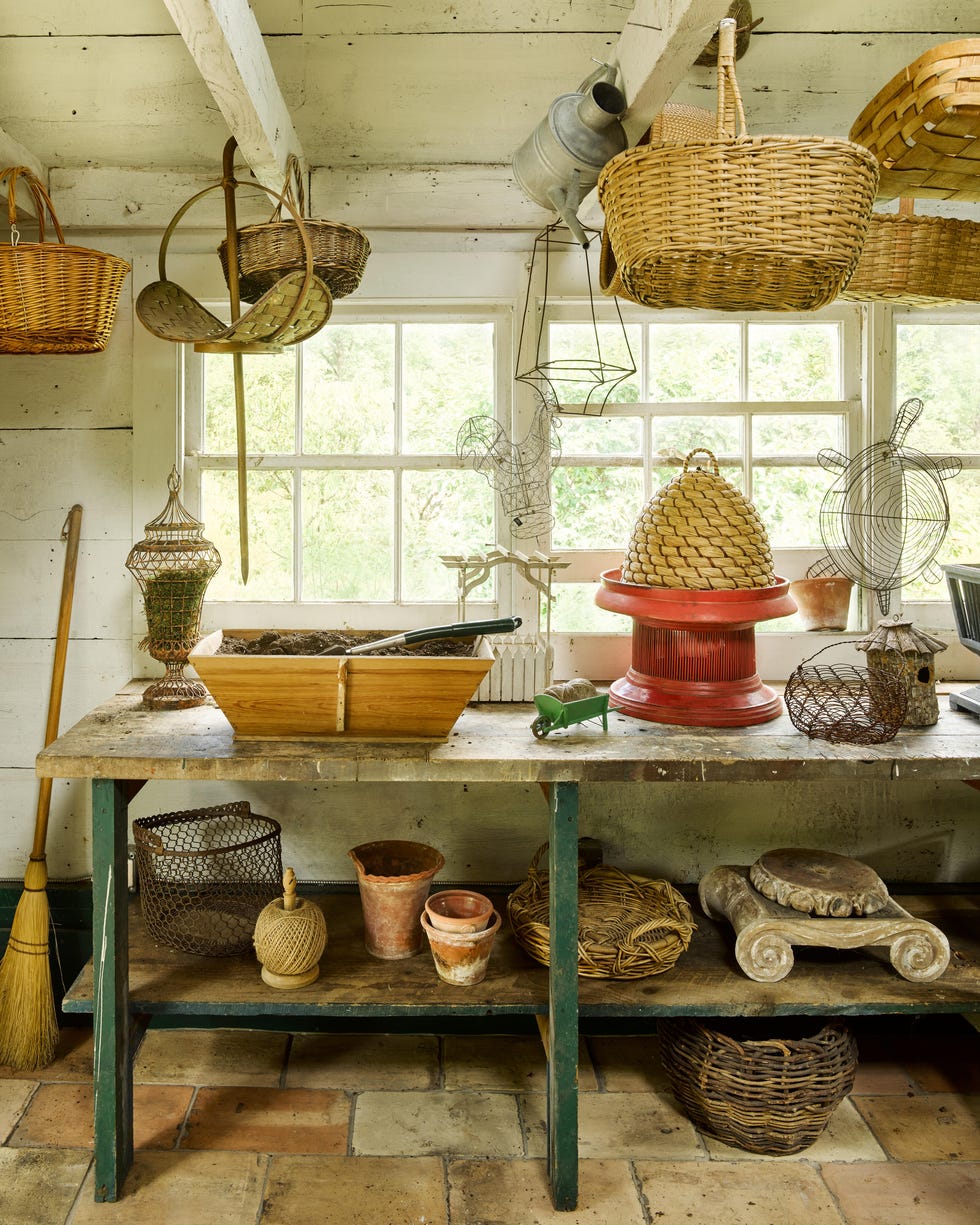
Annie Schlechter
The potting shed is also known as the “basket house,” duly named because it contains Bunny’s noted collection. (“How many do I have? I can’t answer that question,” she says.) Drawn to their handmade quality, Bunny has collected baskets for years, including those handwoven by Jesica Clark of Willow Vale Farm. (“I also love baskets by Deborah Needleman,” says Bunny.) They’re also her go-to souvenir when traveling. “I cannot pass by a basket shop without buying something,” she says. “Sometimes the basket itself costs nothing, but the cost of trying to get it on the plane or ship it back makes it very expensive.”
English Inspiration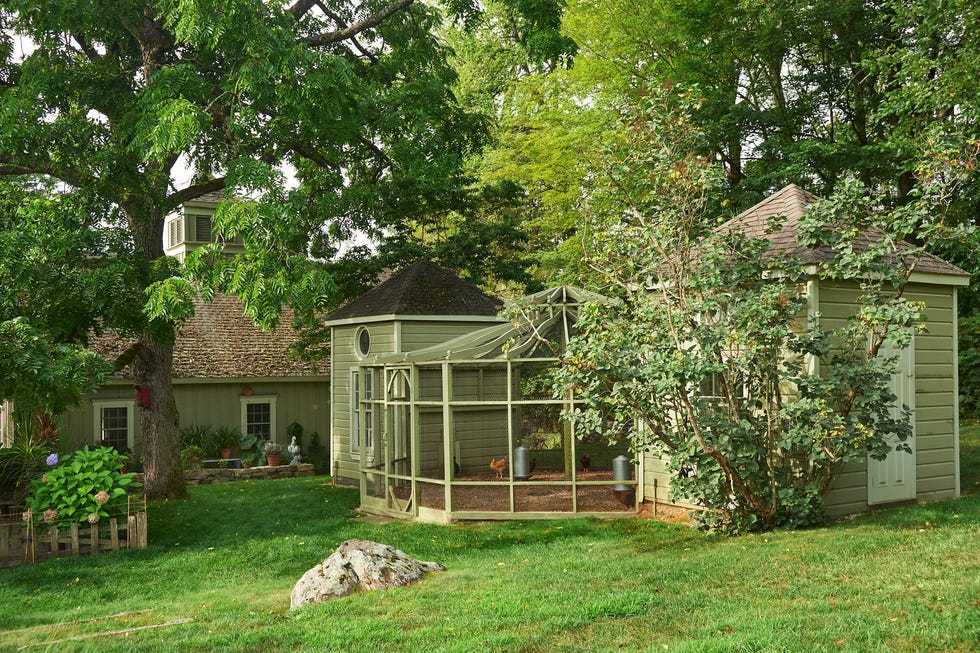
Annie Schlechter
It was during her very first trip to Kent’s Sissinghurst Castle Garden when Bunny became smitten with the design of English gardens. With each subsequent trip came new inspiration for her own property, including the design of the chicken pavilion’s octagonal cage. While Bunny grew up with and loves animals, she says it’s John who is the real bird lover. “I built the chicken pavilion as a birthday present for him.”
Birds of a Feather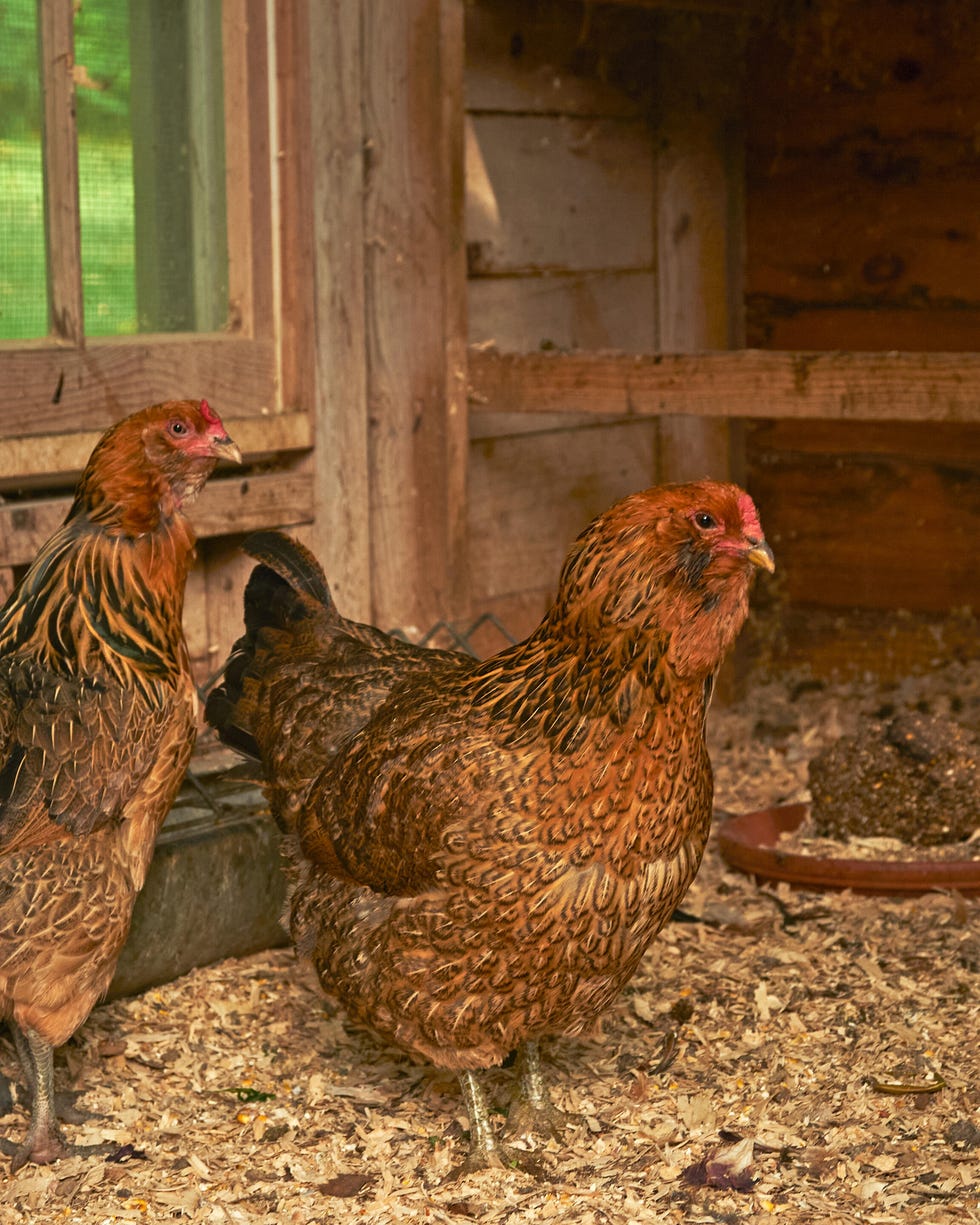
Annie Schlechter
Bunny and John’s flock of mixed-breed hens nest inside the two clapboard henhouses. “I bought them as tiny little chicks at the Tractor Supply,” says Bunny. “We came back [home] and had to keep them under a heat lamp.”
The Out Back Q&A
Pour a glass of iced tea and join designer and author Bunny Williams as she shares the joys and passions of a life spent in the garden.
Roam Sweet Roam: There’s no one favorite place in my garden—I’m always moving throughout. I’m very lucky to go into the cool shadows of the woodland garden and come out in the bright sun to the parterre garden, and end up in the birdhouse village. Needless to say, I spend a lot of time in the vegetable garden.
Pastoral Page-Turners: I always find myself returning to Russell Page’s The Education of a Gardener. I love all of Rosemary Verey and Vita Sackville-West’s books. I’ve also been enjoying [Dutch garden designer] Piet Oudolf’s books about more contemporary gardening.
Petal Preferences: Asking me to pick my favorite flower is like asking me to pick a favorite child. Some are tuberoses, passionflowers, and dahlias.
 Annie Schlechter
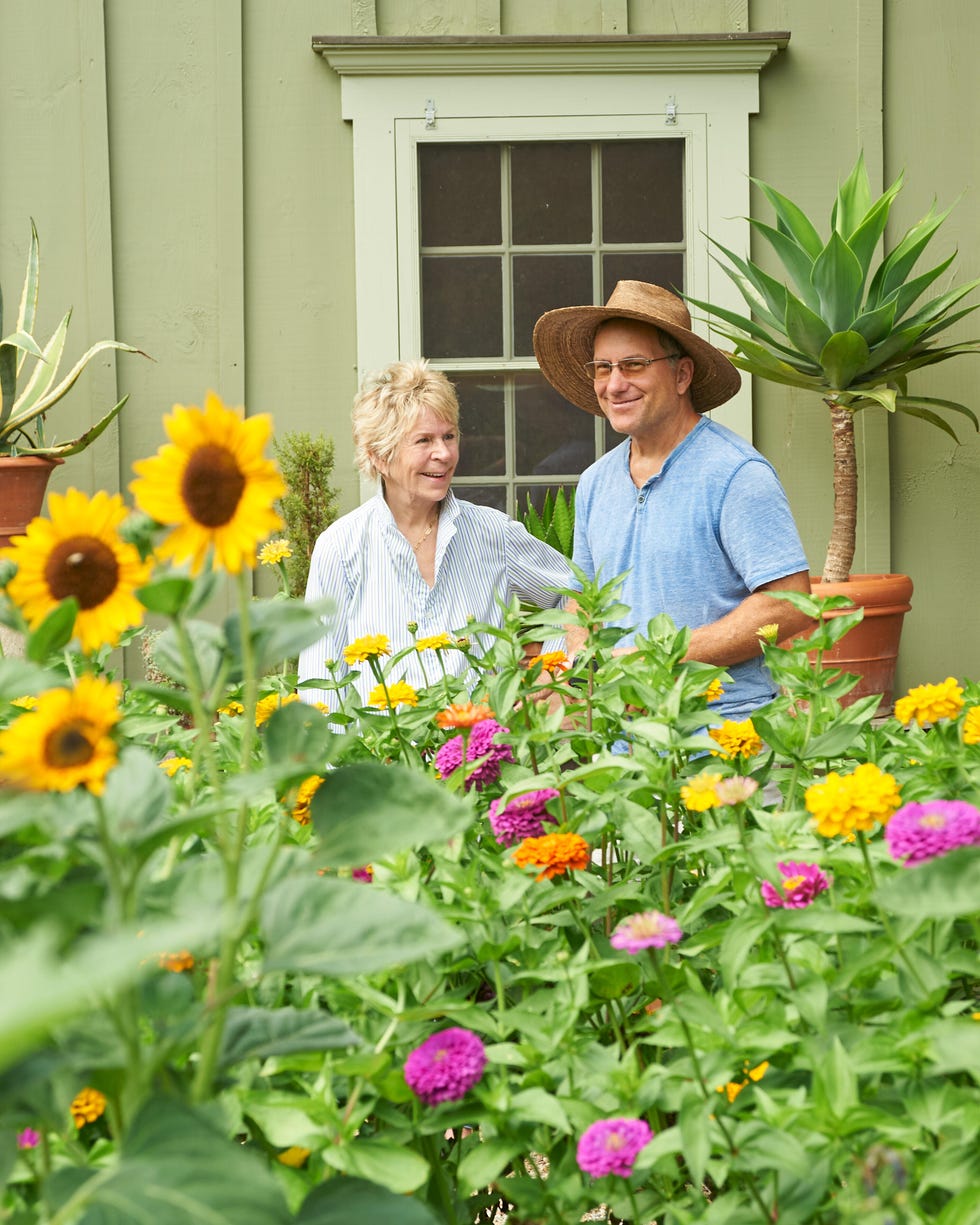
Bunny and Manor House’s Head Gardener Robert Reimer in the vegetable and cutting garden outside the main barn.
Trusty Sources: I like New Moon Nursery for native woodland plants, and White Flower Farm for perennials.
Sun Staple: I have a number of old straw hats, but I find they get in the way, so I’m very often taking them off and on.
Design Details: For garden antiques, I always visit [rare plants and garden antiques sale] Trade Secrets (Lakeville, Connecticut, May 17), and I love to frequent RT Facts and Michael Trapp.
Tool Talk: Felco clippers are the best and most reliable clippers that really last.
Pot Picks: I definitely like to mix old and new. If you’re doing a lot of containers together, it’s best if they are the same material. For new terra-cotta pots, I prefer the pale color from Italy. I don’t like the very orange terra-cotta color because it competes with the colors of the plants.
A Good Garden Has: A basic design plan, and then a really unusual combination of plant material. It’s very exciting when a garden can have both formality and informality at the same time.
(See even more of Bunny’s garden in her book, Bunny Williams: Life in the Garden from Rizzoli.)
This story originally appeared in the April/May 2024 issue of Country Living. Photographs by Annie Schlechter. Photographs also appear in Bunny Williams: Life in the Garden; Rizzoli New York (2024).
Comments are closed.