

“Do you like to breathe?” Titouan Bernicot asks me casually. We are sitting in his office on Mo’orea, a small island approximately 17 miles off the coast of Tahiti, northwest of the pearl farm Bernicot grew up on. It’s May, rainy season here, and the weather is pendulous, shifting between blue skies and tropical rain.
His question was a response to mine: How do you make someone who didn’t grow up with the ocean in their backyard care about saving coral reefs?
27-year-old Bernicot is the founder of Coral Gardeners, a global NGO based in French Polynesia focused on coral reef restoration. Bernicot, who bears a passing resemblance to Orlando Bloom and has a contagious passion for sustainability, jokes that Tahitian kids are taught to swim before they walk. In French Polynesia, the ocean is an essential part of life, as a source of pleasure, sustenance, culture, protection, and biodiversity. It acts as a barrier between the ocean and island populations, protecting against storms and erosion. At 16, he noticed coral bleaching firsthand. He was out surfing when he saw the normally colorful reef looking anemic.
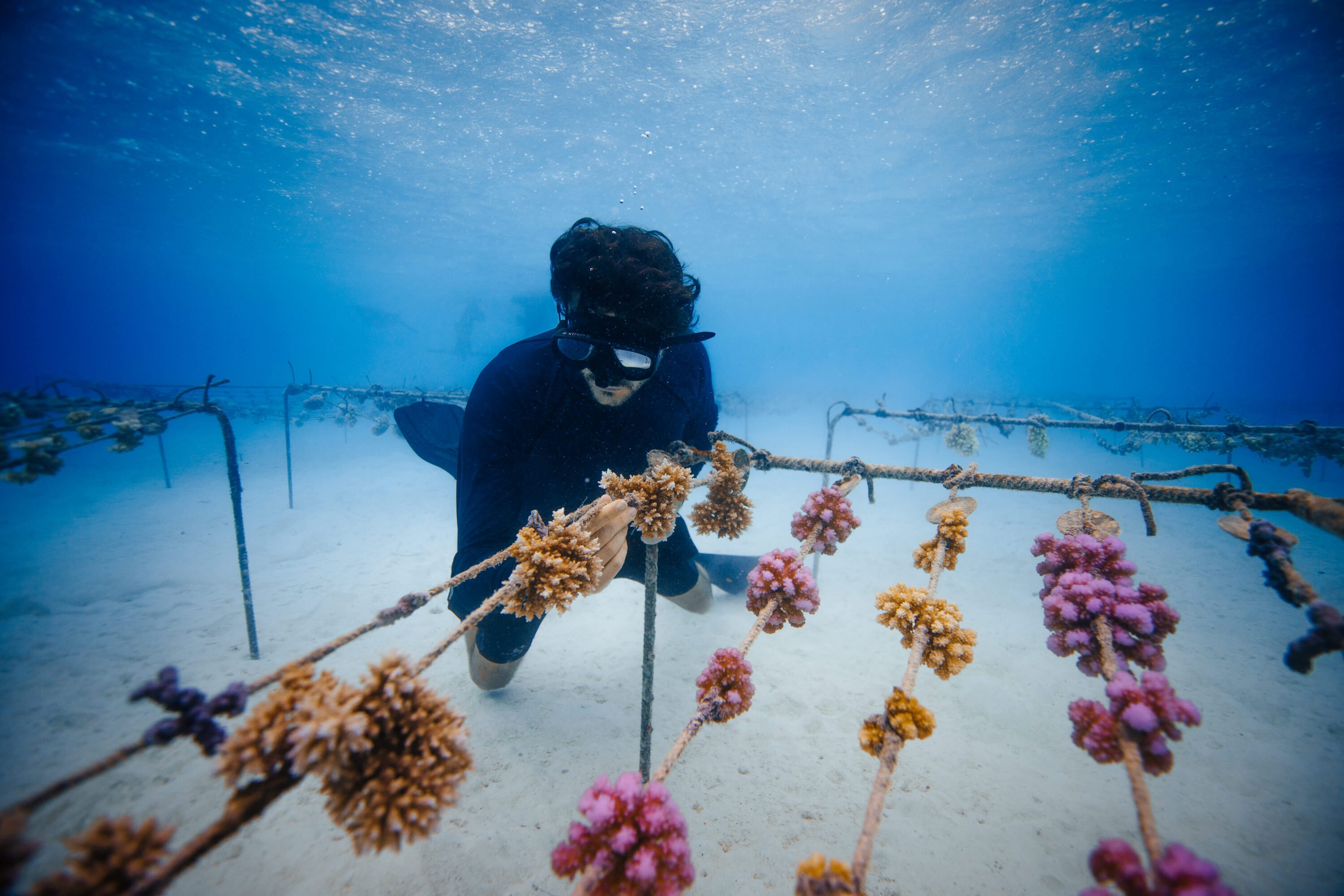
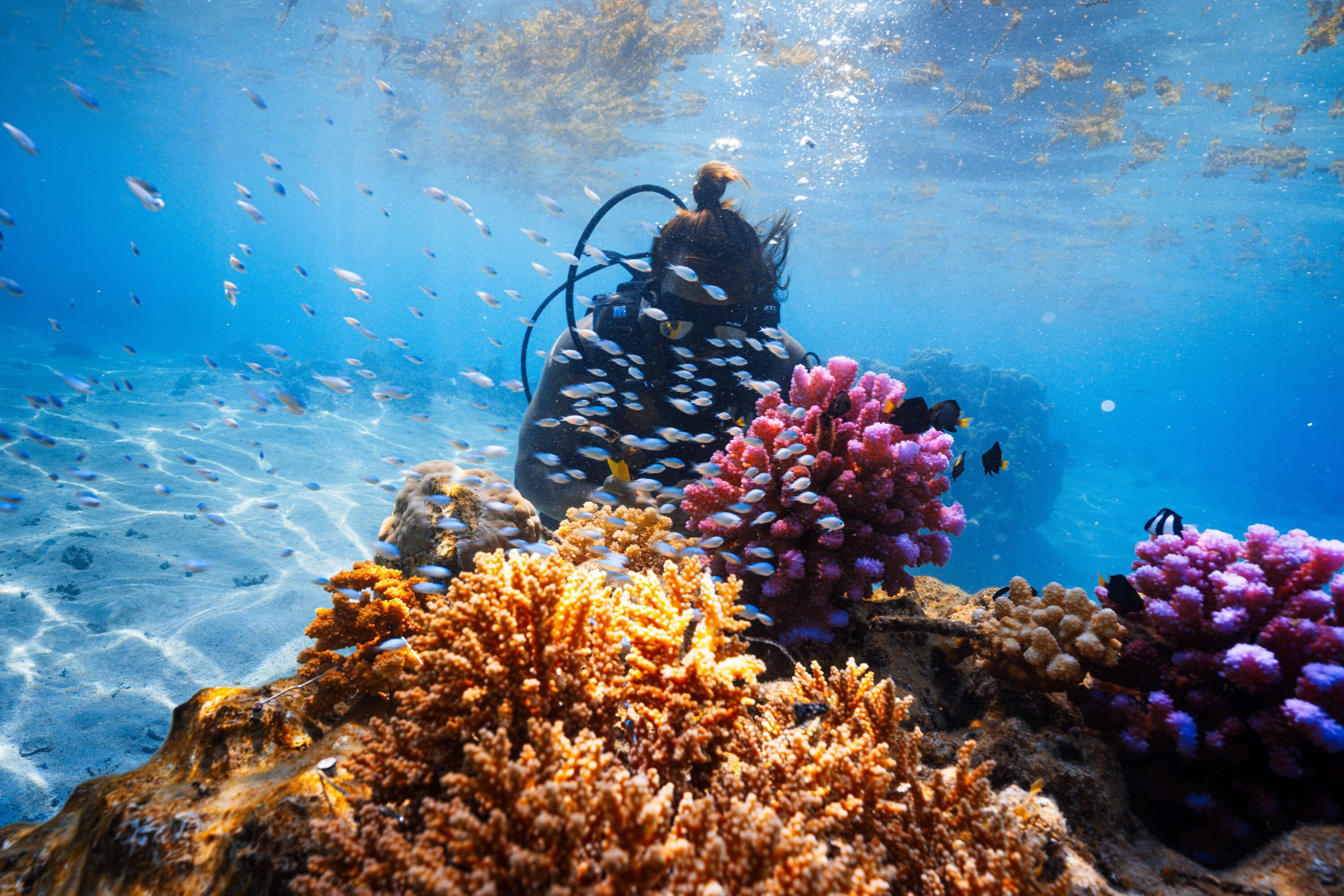
Beyond being a habit for marine life, coral is actually a living organism, made up of tiny invertebrates called polyps. The polyps rely on microscopic algae as their primary food source. As our planet heats up, ocean temperatures rise and the coral polyps become stressed, expelling the algae that gives them their color. The now-bleached coral becomes weakened and unable to function, resulting in a significant loss of biodiversity.
Then, to Bernicot’s point, there’s the oxygen. “No reef, no ocean, no air. Coral reefs are the most biodiverse ecosystem on our planet and almost half of them are already dead. If we lose everything, we lose a huge amount of life. More than 50% of the air you breathe in New York every day comes from our ocean.” (This was news to me! As a born and raised New Yorker my understanding of ocean science is rudimentary at best and pathetic at worst…I don’t even think I took 9th grade chemistry).
Others have a punchier line. Francesca Santoro, Senior Program Officer at UNESCO, quotes Sir Arthur Clarke: “How inappropriate to call this planet Earth, when it is clearly Ocean.” Santoro, a marine scientist, teaches the concept of One Ocean—a way of thinking about the ocean that gives all of us, no matter where we live, a vested stake in its well-being. Calling the Amazon rainforest “the lungs of Earth” is a misidentification. Calling our planet “Earth” is another one: our planet Earth is 71% ocean.
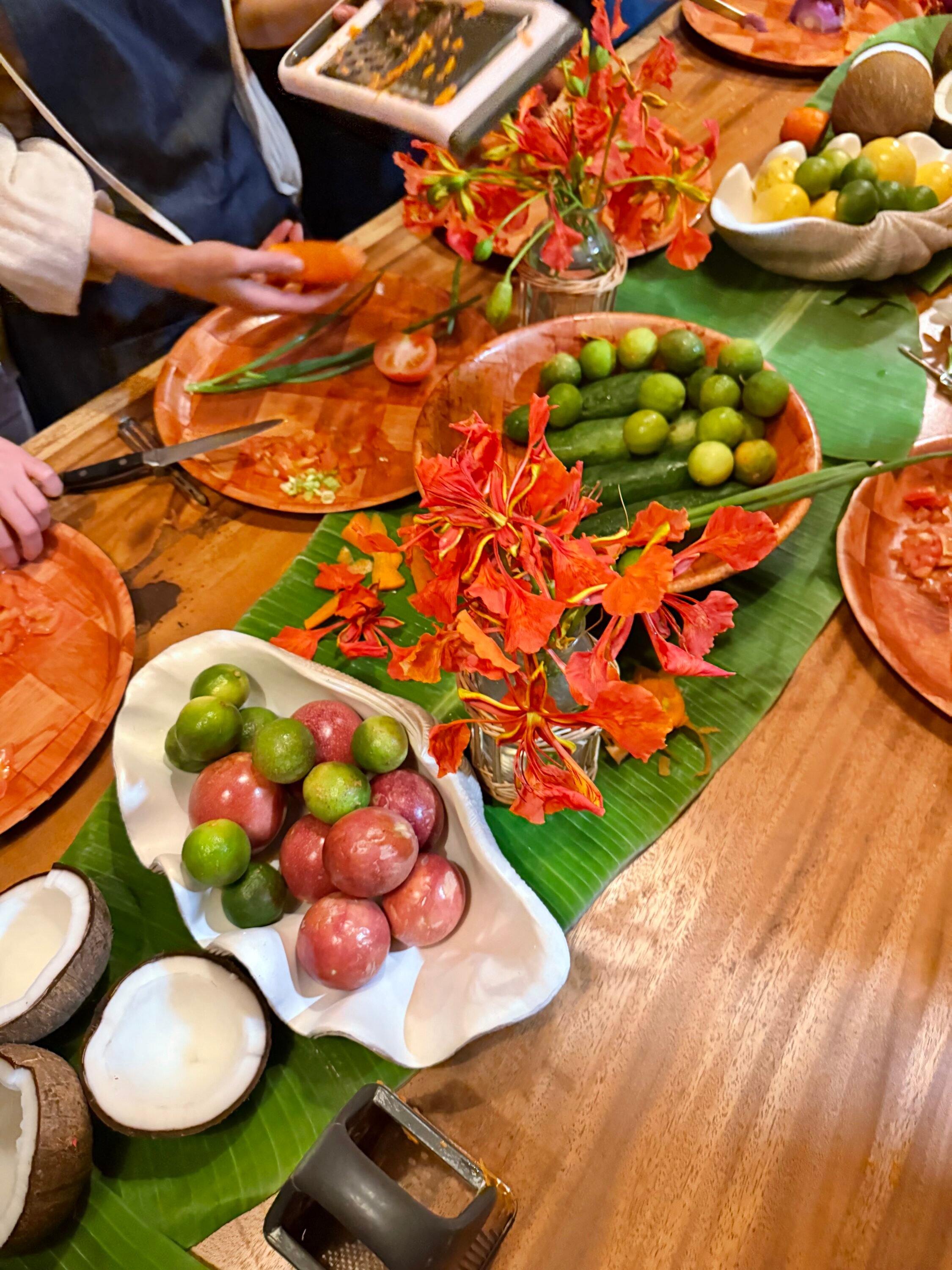
A beautiful Polynesian cooking class
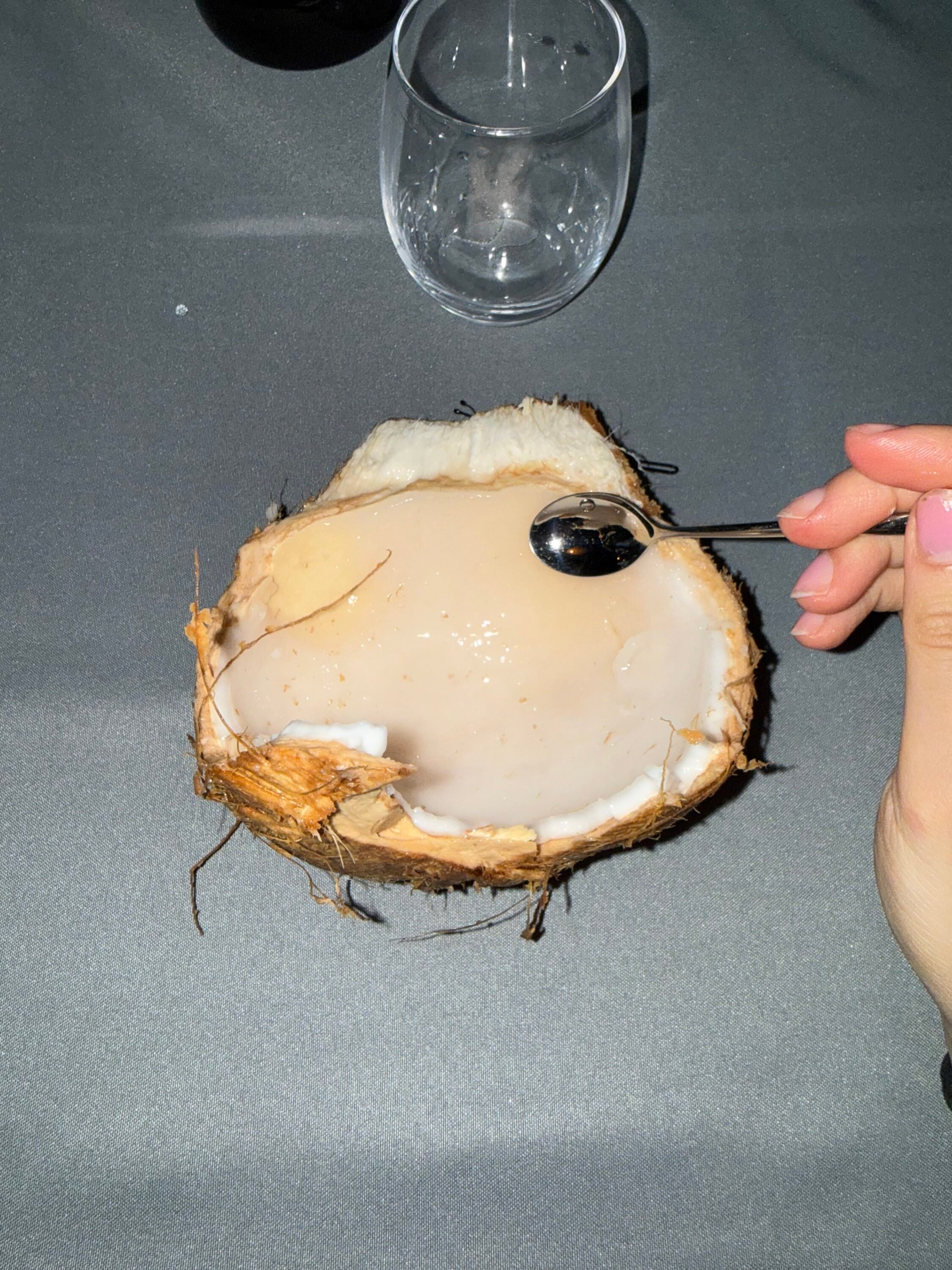
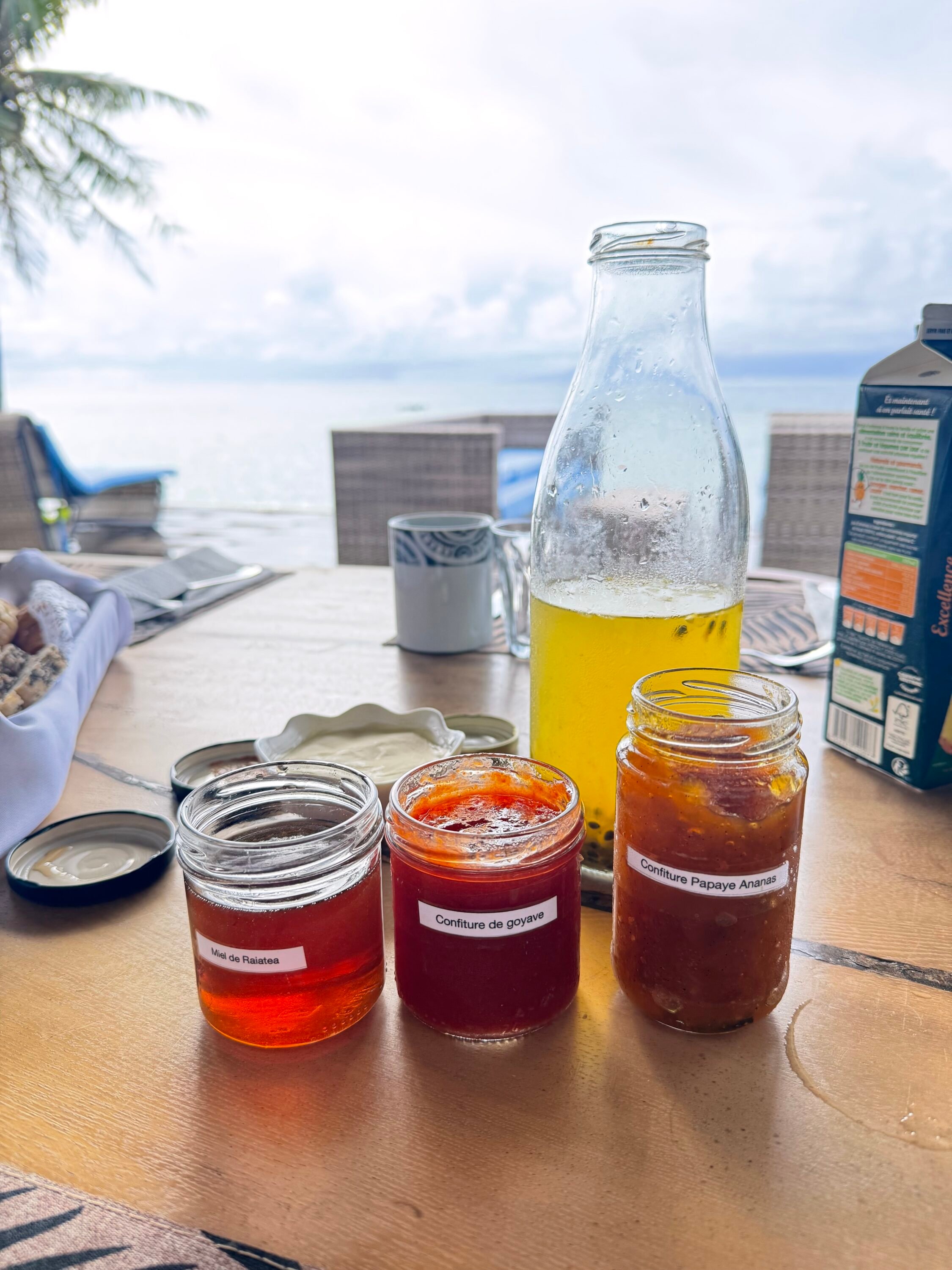
Papaya jam and Passion fruit juice
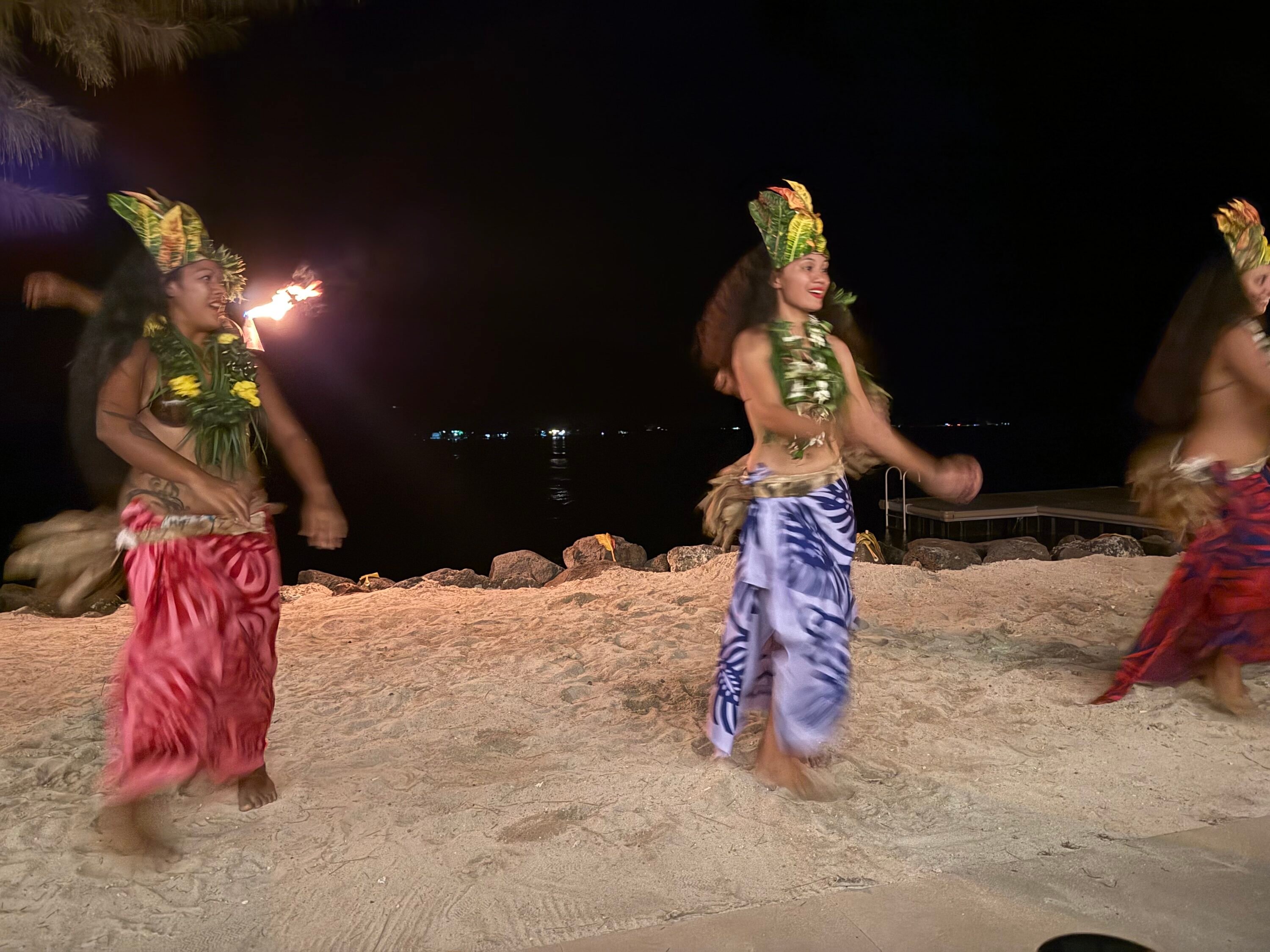
A local dance troupe performs on our first night
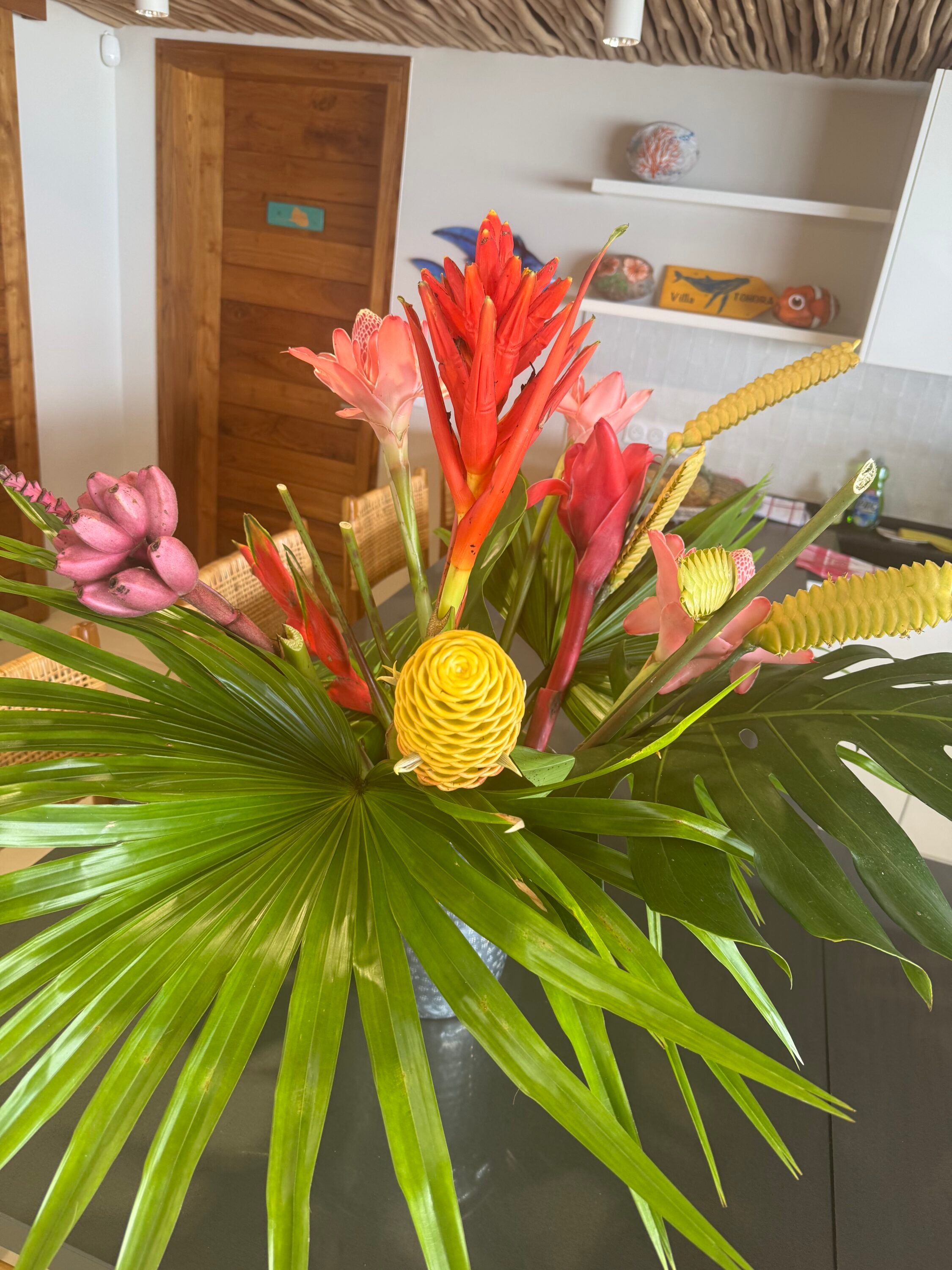

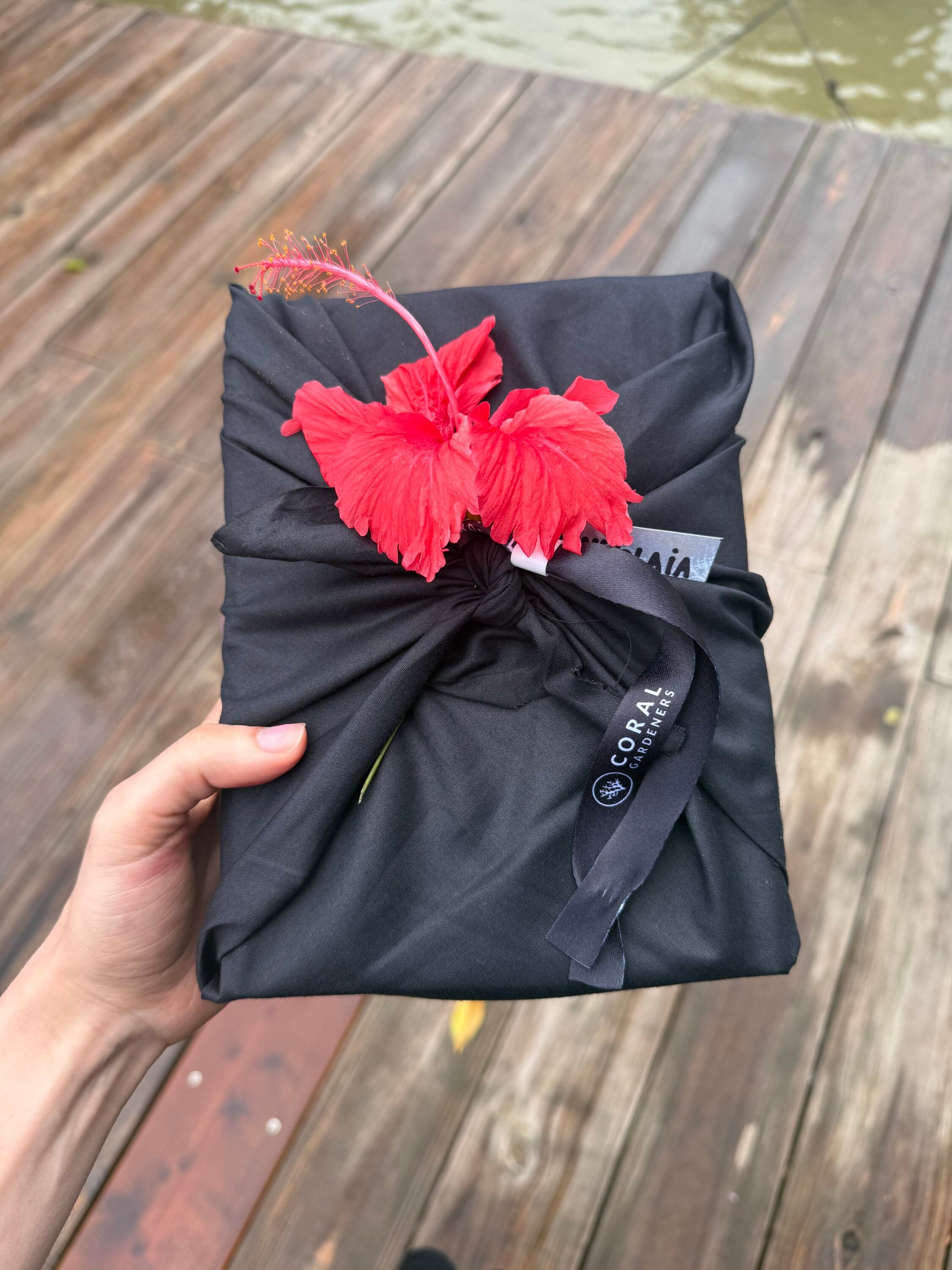
The traditional flower of Tahiti
A beautiful Polynesian cooking class
Papaya jam and Passion fruit juice
A local dance troupe performs on our first night
The traditional flower of Tahiti
When I got the invitation to visit Coral Gardeners, I was asked how comfortable I was in the water. Well, I thought, I like to shower everyday. Jokes aside, I wouldn’t swim in the Hudson River if I was bribed, have never scuba dived or surfed, and the last time I tread water was at camp in 2014. So the truth? Fairly uncomfortable. To recalibrate my own understanding of the planet, I spent five days in the deep end (literally) in French Polynesia with the Coral Gardeners team (a crew that wouldn’t look out of place on Baywatch– all sun-bleached hair and surfer’s embodied understanding of the ocean), several marine biologists (including a deep sea coral scientist who I couldn’t stop pestering at dinner about what it was like to go down in a submarine).
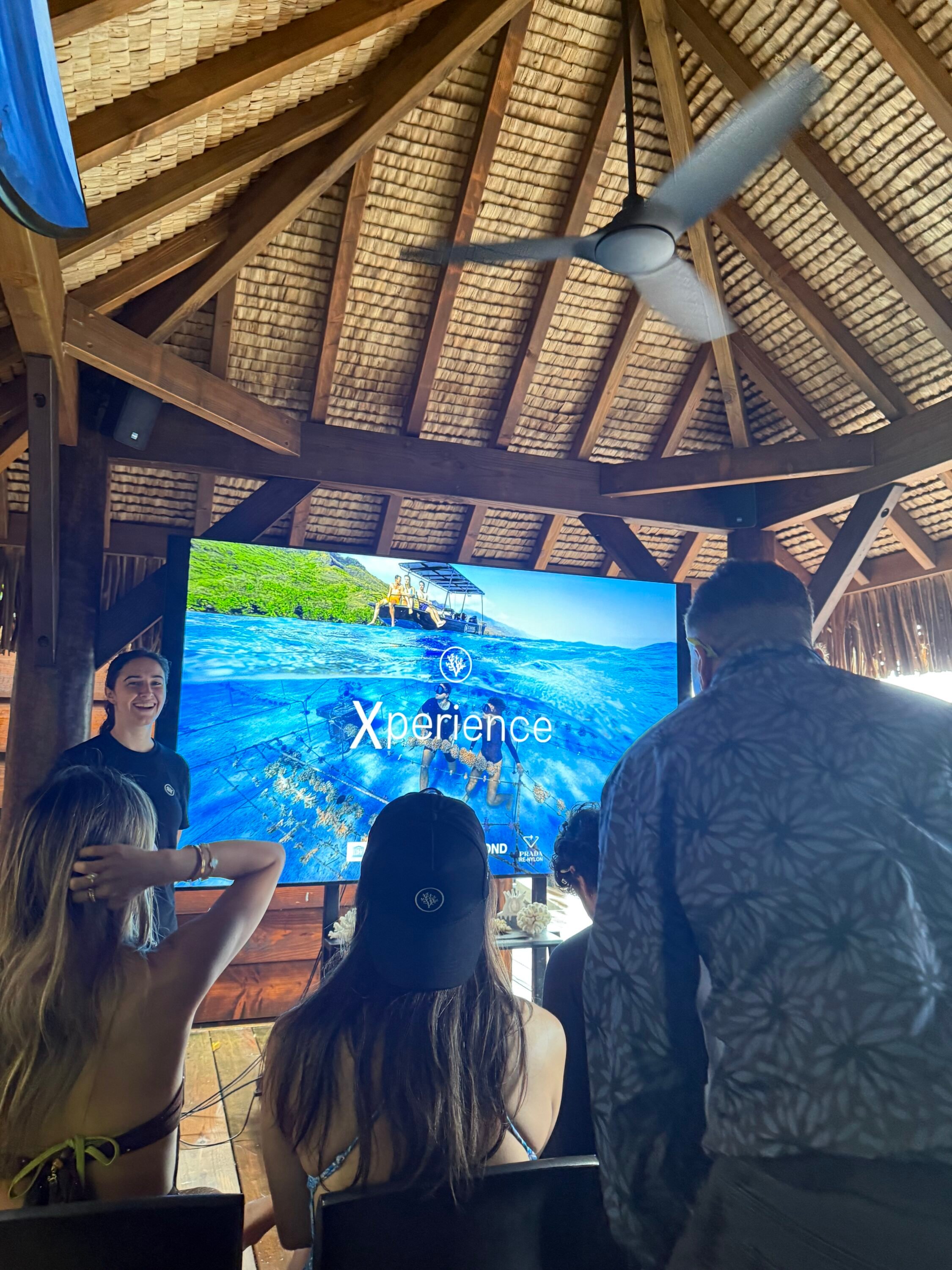
Coral Gardeners is one of the many projects supported by SEA BEYOND, a Prada Group initiative developed in 2019 with the Intergovernmental Oceanographic Commission (IOC) of UNESCO. The program is dedicated to advancing ocean literacy, teaching sustainability, and encouraging preservation globally. While education has always been the central pillar of the program—through modules taught in schools and initiatives like Kindergarten of the Lagoon (which teaches Venetian children about the ecosystem around them)—SEA BEYOND has recently expanded into funding scientific research (from deep-sea coral to glaciers) as well as policy advocacy dedicated to the ocean. The idea behind SEA BEYOND is to bridge the disconnect between laypeople and scientists, and between science and the ocean itself.
On Mo’orea that oceanic omnipresence is unmissable. French Polynesia is made up of 118 islands. They may be small, but together the islands and the ocean between them span an area the size of Europe. On Mo’orea—which has one road that wraps around the perimeter—there’s the UC Berkeley Gump Institute, the French CRIOBE, and the Mo’orea Coral Reef Long-Term Ecological Research station. Upon arrival on the glorious island I step outside and immediately get a sunburn.
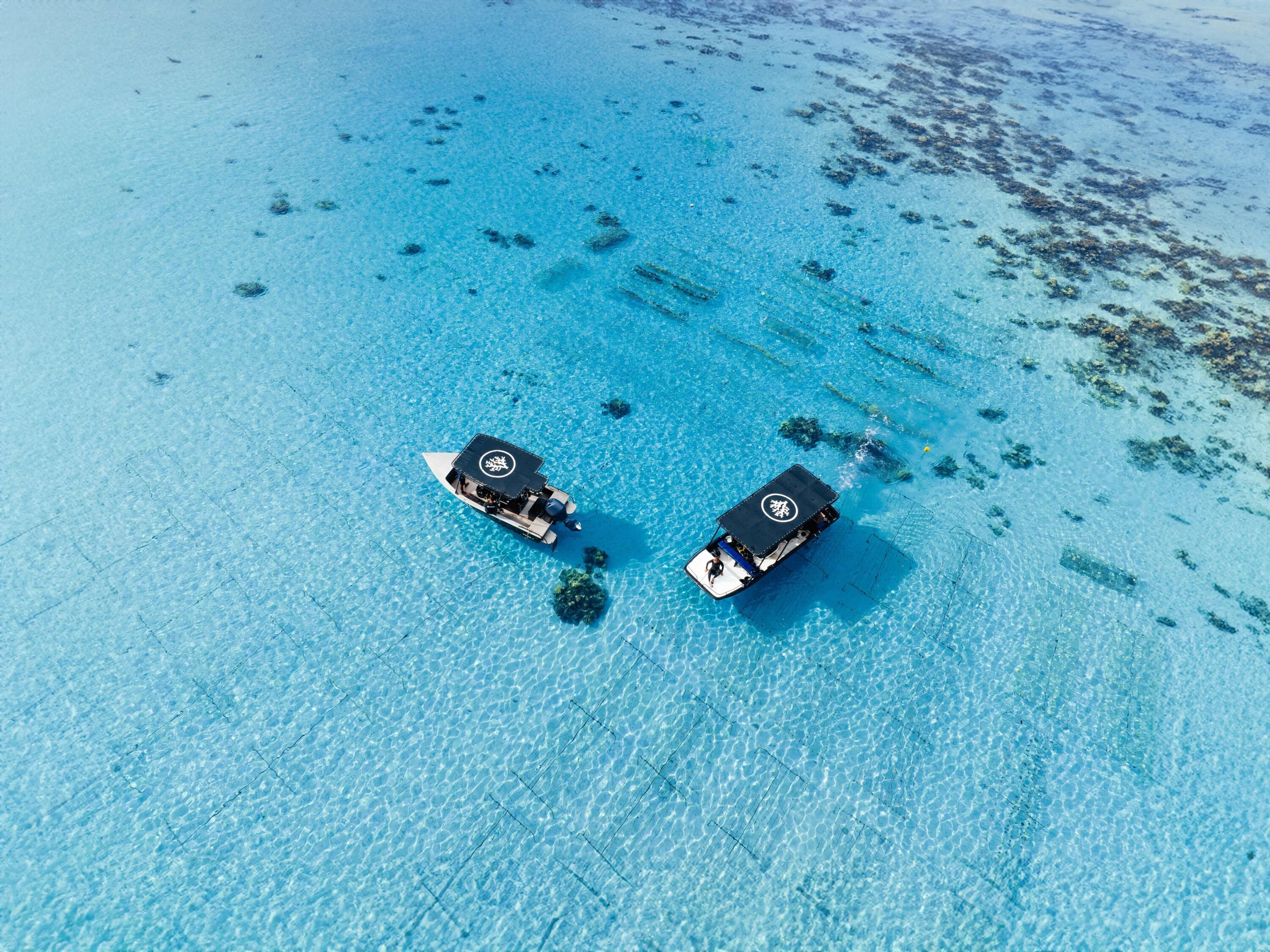
On a Wednesday morning we take a small boat fifteen minutes off the coastline. The water stretches out, giving little indication of what’s beneath. I have just dry swallowed dramamine and am clutching the side of the boat with both hands. We are at one of several coral nurseries stationed around the island. Into the water in full snorkeling gear. Our guide hands me a bucket of fragments to pick from. I hold a stubby piece in a gloved hand, shocked and moved by how small it seems, and also that I, girl who cannot keep a basil plant alive, was being charged with taking care of it. Gently, the coral is wrapped between strands of rope and placed on a line underwater. After two years of monitoring, the coral is transported to a prepared outplant area on the reef—delicately, as to keep whatever marine life has come to call the coral home intact. In Mo’orea there are about seven full-time gardeners.
Even as the Coral Gardeners team has grown to include a marine biologist and a tech wizard plucked straight from Silicon Valley, the team is mostly local. That’s deliberate. Outside agents (like international institutes where students cycle in and out) can have a destabilizing economic effect, where cost of living hikes and jobs outside of tourism disappear. Investing in job creation within the community means investing in the local economy and the future of the island.
When Coral Gardeners first started they operated out of Bernicot’s bedroom. “It took us five years to pay our first salaries. Now we have the highest salaries in the field of restoration.” Bernicot pauses. “I think conservation should not be a part-time job.” By the end of the trip I was ready to sign up myself.
Bernicot’s advice to those looking to get involved is, like everything he does, uncomplicated but effective, “First, learn and share the message—we need more people to know what’s happening and be passionate about it. Even little things you can do on a daily basis to reduce your carbon footprint. Me? I stopped eating red meat six years ago. Look at how you move, how you live, what little things you can do. And then support [the organizations doing the work]. Adopt a coral! It’s so cool!” As of 2023, 1% of proceeds from the Prada Re-Nylon Collection for SEA BEYOND supports the SEA BEYOND initiative.
Years after the Gump Institute politely sent Bernicot on his way, the tables have turned. Now, the institute is asking Coral Gardeners to collaborate. Since 2017, Coral Gardeners has planted 221,212 corals, with an 80% outplant survival rate. Bernicot is already expanding the project globally, looking toward regions like the Mediterranean and equipping local communities the tools to restore their own reefs. This year also marks the first time that Coral Gardeners will be officially recognized by the French Polynesian government, complete with training centers, insurance, and a legal framework. “We want to create a real career path for the young people of our island,” Bernicot tells me.
Bernicot’s story highlights the importance of ocean literacy. As Prada Ambassador Benedict Cumberbatch put it, “To hear how his story began—as a child asking, ‘Why is this happening?’—gives me hope in the face of overwhelming statistics and anxiety.” In SEA BEYOND’s educational modules, students are taught three steps: learn, think, act. The importance of such an education is clear, for the future of our planet, and for the future Titouan Bernicot. As I return to NYC, sunburn fading into tan, with a newfound appreciation of the ocean and confidence in my ability in the water, I realized something. New York is a city of islands too.
Comments are closed.