
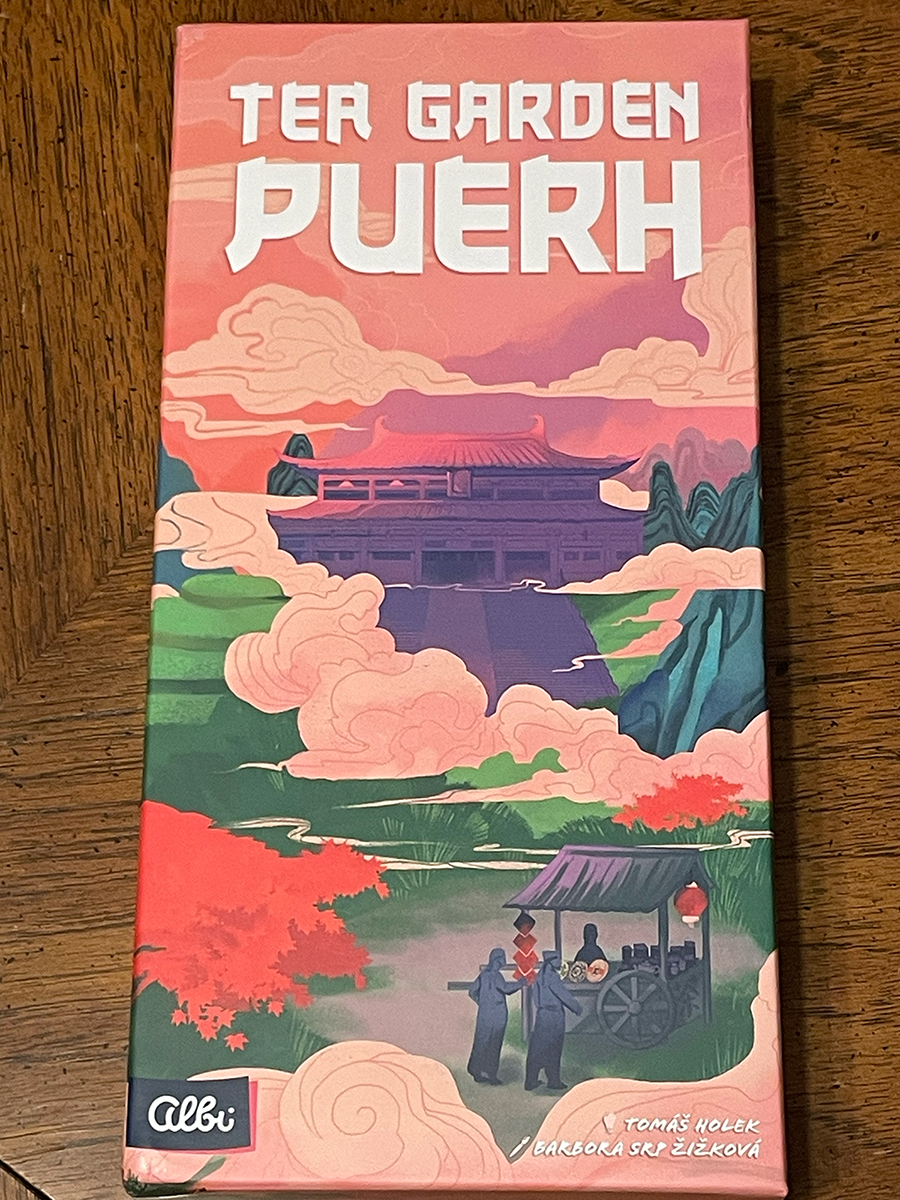
 Tea Garden: Puerh
Publisher: Capstone Games
Designer: Tomas Holek
Illustrator: Barbora Srp Zizkova, Marek Jaros
Number of Players: 1 to 4
Age Rating: 12 and up
Playing Time: 90 min.
MSRP: $34.99
Release Date: May 2026
ICv2 Rating: 4.5 Stars out of 5
Contemplating a game expansion is always something of a challenge. How much of the experience is merely a reflection of the original, and how much is provided by the expansion? But there are a few elements that mark a good game expansion in my mind: Does it mesh seamlessly with the original? Does it feel like it was always meant to be part of the experience and not merely extraneous fluff tacked on to a cleaner creation? Does it deepen or broaden the game in a meaningful way? Or would it have been better left on the sorting room floor?
Summary: For those unfamiliar, 2024’s Tea Garden is a game about cultivating tea in ancient China. Like a complex tea blend, the game offers a compelling mix of often familiar mechanical elements, with a hint of area control, a touch of resource management, undertones of a deck-builder, and a layer of card-based action selection. A mélange of Euro-style game design elements that combine for a surprisingly robust strategic flavor with rich tactical highlights.
The challenge for the expansion is to offer something positive to the game without curdling the experience by overweighing the original or introducing meaningless or tactically unworkable elements. Puerh attempts this in three ways. It introduces two new main actions that players can select on their turn, visiting the Noble Court to gain bonuses and purchasing components to make tea cakes at the Puerh Market, while offering the option of purchasing a fifth turn each round so players have more opportunities to take advantage of the new actions. It also adds new ways to score points, including random “Imperial Decrees” that create a race between players to complete goals for points. And it offers a solo version that uses a special deck of cards to dictate the actions of a virtual opponent in a two-player game.
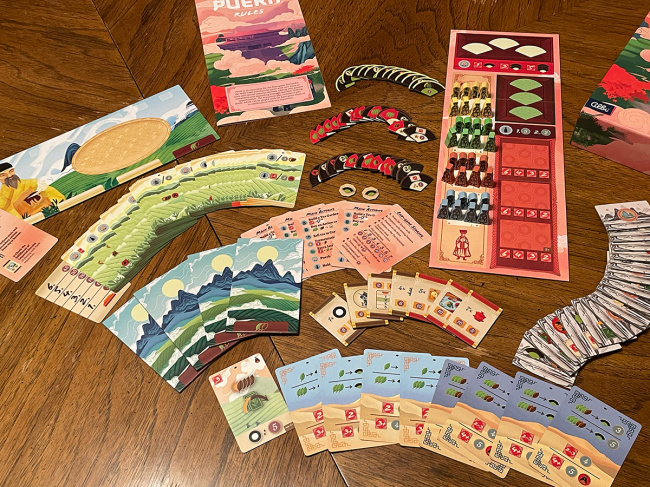 Originality: In some ways, “originality” is less of a goal for a game expansion than consistency. The expansion needs to introduce new concepts to the game in order to justify itself, but those concepts need to feel like an organic part of a larger whole if it isn’t going to disrupt the overall flavor of the design. Tea Garden itself is well-suited to expansion thanks to the diverse game elements that are already included in the core game, and Puerh takes advantage of this fact nicely. The new elements are different enough from those of the core game that they do not simply feel like more of the same while still integrating into the existing game system without disrupting what already works.
Presentation: The expansion continues the same aesthetic as the original, maintaining its calm, contemplative atmosphere and design so well that when placed side-by-side the expansion becomes an extension of the same artwork, while cleverly hinting at the new mechanics. The box is tall and thin, just as sturdy and well-designed as the core game’s, with little wasted space inside. This format allows for a detailed description of the game in two languages on the back, along with a simple illustration that shows most of the new components. Sadly, there seems to be no effective way to store all of the combined components in the core box without discarding the well-designed storage trays.
Quality: The new components match the quality of the original perfectly, with the same thick cardboard tiles, wooden playing pieces, and cardstock, and the colors match well enough that I could not distinguish the new from the old from the card backs. There is little in the way of new iconography, so using the new pieces is simple enough, and thought clearly went into making everything work together well. The rulebook is very good, with plenty of nice illustrations and examples, but it is a bit text-thick in places that makes it a little challenging to look up rules quickly during play.
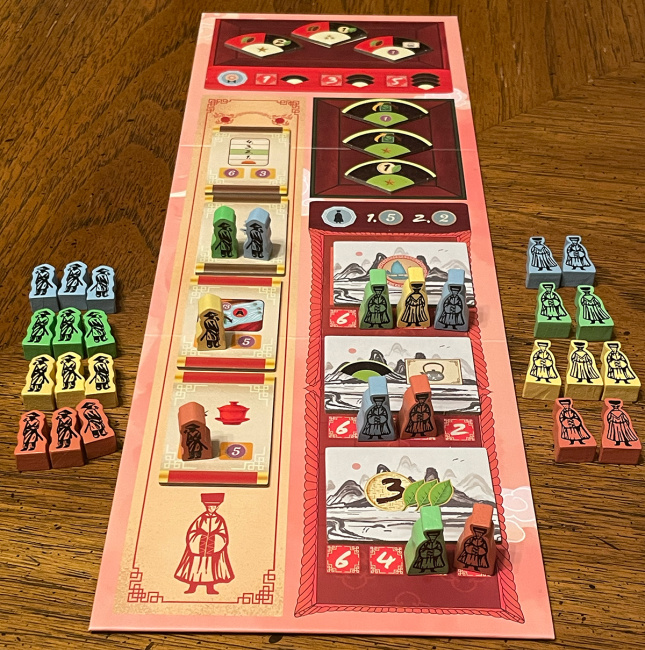 Marketability: Since an expansion by definition cannot stand on its own, the question to ask here is whether someone who appreciates the original game would find the expansion worthwhile, and I believe that the answer here is yes. While the core game offers sufficient depth to satisfy through multiple plays, this expansion enhances that experience by both broadening and deepening the strategic choices available without invalidating the original by merely overpowering the options that already existed. Thus, fans of the original are likely to discover more of what they already enjoy.
Overall: Tea Garden: Puerh, on the whole, does everything that I want an expansion to do. It adds new elements that enrich the core game in ways that offer both greater strategic depth and tactical breadth without undermining what I enjoy about the original. The new mechanics are easy to understand and work nicely with what came earlier. It doesn’t lengthen the game excessively or overcomplicate gameplay.
At the same time, this is an expansion really well-suited only to players who are already familiar with the core game. Confronting new players with the added options might be a bit much for them to handle all at once, offering a lot of different options that rarely have a single obvious best choice. Better to treat this as a way to breathe new life into the game once the group has become comfortable with the original. Wisely, the designer created the solo version so it can be used with or without the rest of the expansion, so even players not ready for the new material can find something useful in the box.
I enjoy playing Tea Garden, and to my surprise I found that I enjoyed it even more with Puerh, which is probably the best thing that can be said for any game expansion. And that’s why I’m giving this expansion 4.5 stars out of 5.
Comments are closed.