
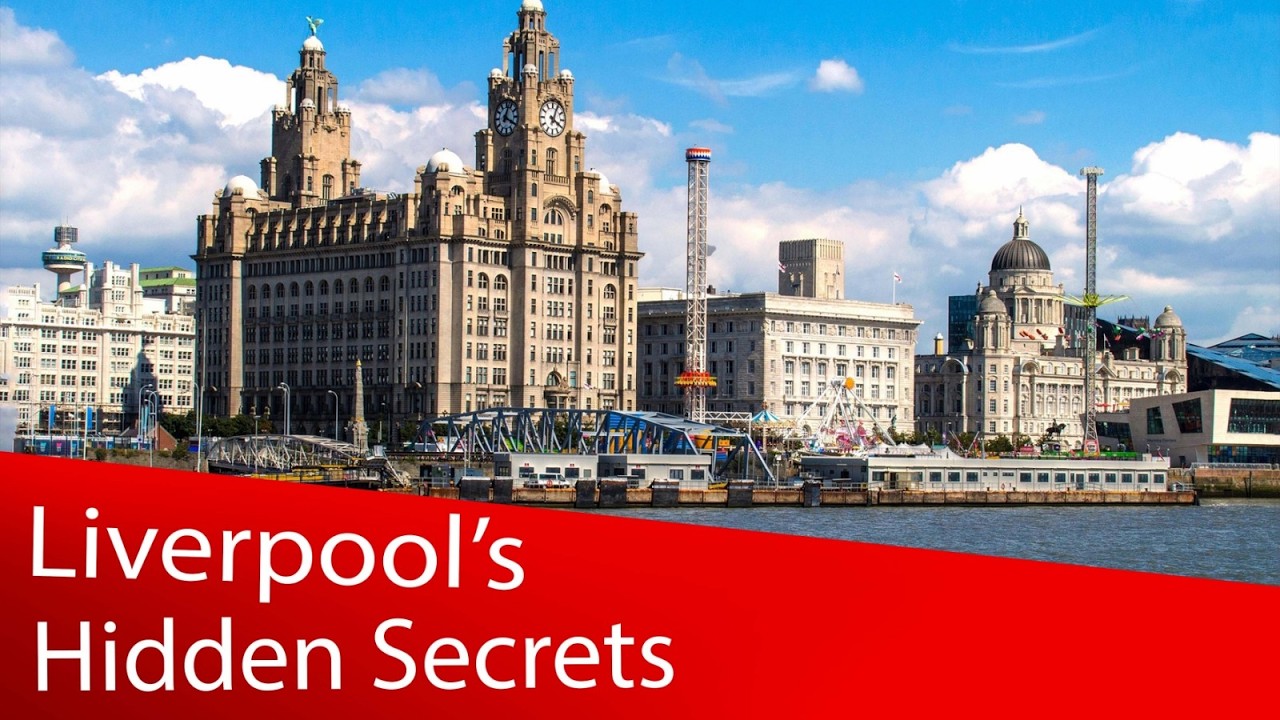
What are the 12 Liverpool’s hidden secrets that will blow your mind? Liverpool is a city that wears its heart on its sleeve. You feel it in the waterfront breeze, in the music floating out of pubs, and in the friendly rhythm of the streets. But what most people don’t realise is that Liverpool has layers — whole stories tucked beneath the pavements, behind old walls, and inside buildings that seem ordinary at first glance. These aren’t the famous landmarks everyone talks about. These are the hidden corners, the forgotten tales, and the mysteries only whispered about. Here are 12 Liverpool’s Hidden Secrets That Will Blow Your Mind.
Twelve. The Williamson Tunnels – The Underground Puzzle Nobody Has Solved
If you ask ten Liverpudlians why the Williamson Tunnels were built, you might get ten different answers — and that’s part of their charm. Created in the early 1800s by businessman Joseph Williamson, the tunnels run beneath the Edge Hill district. Some chambers are tall enough to stand in, others snake through old sandstone foundations, and many are still unexplored. One theory suggests Williamson dug them simply to give unemployed labourers work during a tough economic period. Another theory claims he enjoyed secrecy and eccentric projects. What makes the tunnels truly fascinating is that not even modern surveys have fully mapped them. Every few years, volunteers discover another passageway or chamber, adding new layers to the riddle. Beneath the busy streets above, whole worlds remain hidden, reminding everyone that Liverpool’s foundations hold far more than brick and stone — they hold stories.
Eleven. Liverpool’s Hidden Japanese Garden in Calderstones Park
Calderstones Park is where families stroll, runners pass, and locals walk their dogs — but tucked deep inside its greenery sits a peaceful surprise. Many visitors never reach this quiet corner, but those who do find a delicate little Japanese-style garden shaped by stone, water, and soft landscaping. It isn’t an official, historically documented Japanese garden; rather, it’s a carefully designed space inspired by Japanese aesthetics. A curved bridge sits over still water, trees arch gently overhead, and the whole place feels almost suspended in time. In a city known for energy and rhythm, this garden is a whisper — a small escape hiding in plain sight.
Ten. The St. James Cemetery Pyramid – A Symbol Wrapped in Mystery
Walk around the grounds of St. James’ Gardens, near the Liverpool Cathedral, and you’ll encounter something you don’t expect: a nine-foot sandstone pyramid. It stands quietly, giving the place an almost otherworldly feel. Built in the early 1800s, the pyramid is widely believed to have served as a ventilation shaft for the tunnels and vaults beneath the former cemetery. But its exact purpose was never fully explained, and its striking design has inspired all sorts of theories over the years. Some think it was chosen simply for its durability and shape; others believe the architect wanted to add symbolism to a spiritual space. Whatever its origin, the pyramid remains one of Liverpool’s strangest architectural fragments — a hidden reminder that the city once welcomed unusual ideas with bold enthusiasm.
Nine. Britain’s Oldest Chinatown Arch — A Story in Every Dragon
Liverpool proudly holds the title of having Europe’s oldest Chinese community, and the spectacular Chinatown arch is a tribute to that heritage. But here’s the part most people don’t realise: this arch was once the tallest of its kind outside China when it was completed in 2000. Built in Shanghai and transported piece by piece, it boasts over 200 hand-painted dragons, each one symbolising power, protection, or luck. The arch wasn’t just a decorative gesture — it was a collaboration between Liverpool and skilled Chinese artisans who crafted it using traditional materials and techniques.
Stand beneath it for a moment and you can almost feel the depth of connection between generations. It’s more than a gateway; it’s a bridge between cultures.
Eight. The Hidden Remains of the Old Dock Under Liverpool One
When you wander around Liverpool One, enjoying the vibrant shops and cafés, it’s easy to forget what once stood here. Long before the modern redevelopment, this area was home to the world’s first commercial wet dock — the Old Dock, opened in 1715.
IMPORTANT INFORMATION
This video contains images that were used under a Creative Commons License.
If you have any issue with the photos used in my channel or you find something that belongs to you before you claim it to youtube, please SEND ME A MESSAGE and I will DELETE it immediately. Thanks for understanding. Click here to see list of images and attributions:
https://docs.google.com/document/d/1_xl5aem8xaDh84LteUgKK-Mzv3ZWPDanfE_9P7zr1yg/edit?usp=sharing
12 Comments
It was going well until you mispronounced the final secret: Liver rhymes with fiver.
I don’t believe the Chinatown arch is particularly old. Oldest Chinatown, yes but the arch only appeared about 30 years ago.
HTF did you manage to use a picture of LIVERPOOL STREET station in LONDON as the thumbnail?? Oh I know – AI !!
Groan – here we go again with basic mispronunciation. It’s pronounced Li as in Bye. Not Liver as in the meat. Lie -ver Birds, Lie-ver Building.
The Calder stones are not in the greenhouse any more, they’re behind the reader cafe
Well. I've lived here all my life, and I've never seen any "time ball" on top of the former docks and harbour board building! If you're going to do this, do it properly!!
LIE – VER, not LIVER asw the organ, silly arse AI.
Bella looks over sea to guard sailors and bring them home safely, that's Bella. Bertie looks over the city waiting for the pubs to open.
What's meant to be secret about the Chinese arch or bombed out church? People walk past them every day.
Bertie and Bella aren't meant to face each other. Nothing to do with them flying away. Who would even expect them to fly? They're bolted to the building coz otherwise they might fall off. Not to stop them flying. Ffs
Btw Bluecoat gardens isnt "above" the city, its at the "back" of the blucoat buildings😮
This Ai says its about the hidden streets and goes on to talk about the sights 😂