

Anchor Bay Mountain lilac (Ceanothus gloriosus var. gloriosus ‘Anchor Bay’). This
evergreen shrub grows 2 to 3 feet tall and 5 to 6 feet wide. This is a very dense, low-growing and spreading selection with long branches that will drape over boulders or
retaining walls. In the spring, it produces blue flowers that are darker than those of the
species. The plant likely supports 74 species of butterflies and moths. (Courtesy Saxon Holt/PhotoBotanic)

California polypody (Polypodium californicum). This popular native fern spreads slowly
by rhizome in shady areas, growing 2 feet tall and 3 feet wide. It is native along the
coast, foothills and coastal mountains of Northern, Southern and Central California. In
areas that are wet year-round, it may stay evergreen; in areas of summer dryness, it will
become deciduous. This example shows a swath of this fern. (Courtesy Saxon
Holt/PhotoBotanic)

Douglas iris (Iris douglasiana). This native wildflower grows in the coastal regions of
Northern and Central California, primarily below 330 feet, though it is occasionally found
at elevations up to 3,300 feet. It prefers part or full shade and richer soils and is fast-growing and drought-tolerant near the coast, where it benefits from cooler temperatures and fog. It grows 7 to 31 inches tall and 2 to 4 feet wide, and self-propagates readily to form a swath. The flowers bloom in the winter and spring, and can vary widely in color: blue,
pink, purple, white and yellow. Many cultivars are available. (Courtesy Saxon Holt/PhotoBotanic)
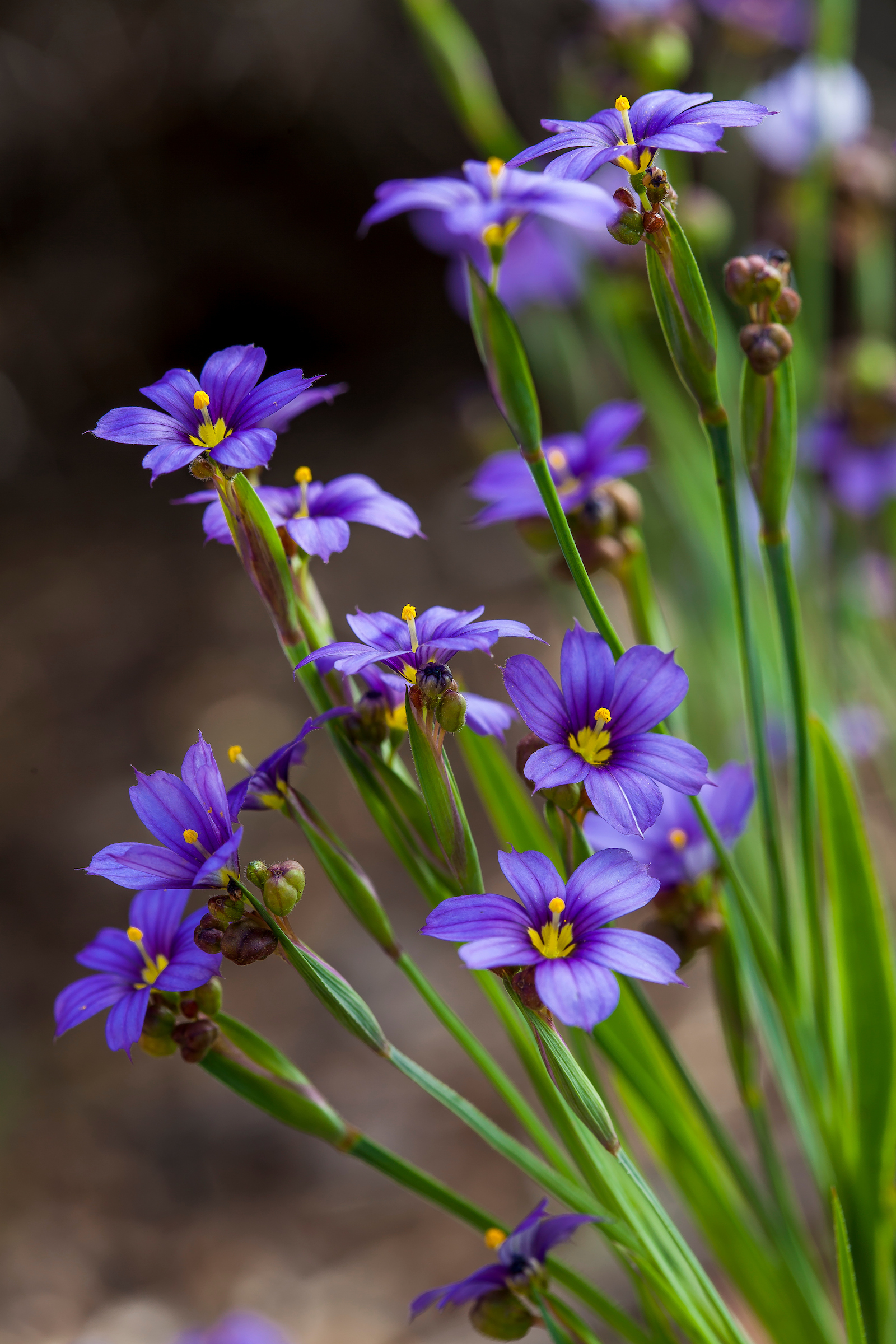
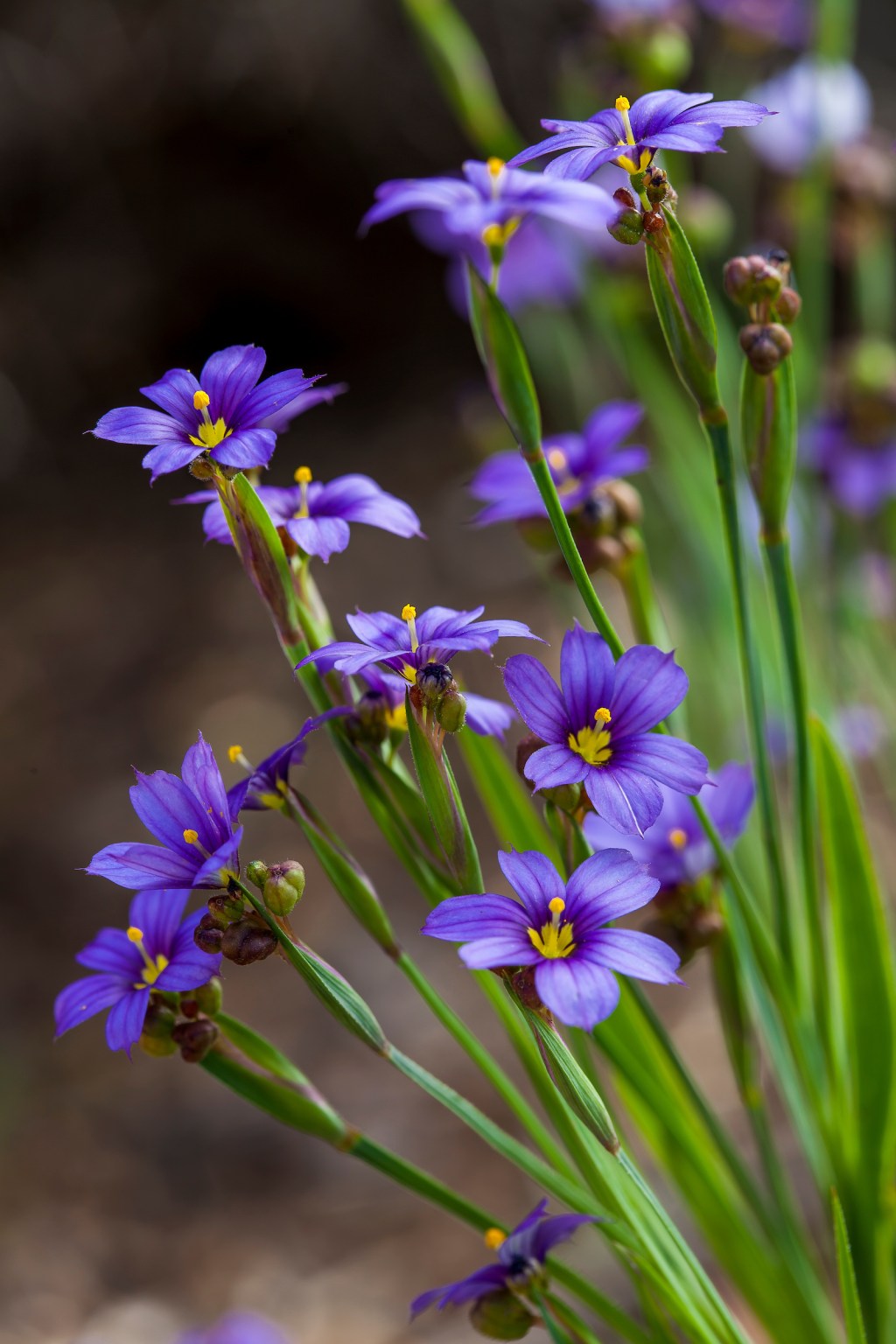
Blue-eyed grass (Sisyrinchium bellum). This 1-foot-tall, upright, columnar perennial
herb grows throughout California, usually in open, grassy places with some moisture. Its
leaves are grassy and tufted. From January to July, it produces small, purplish-blue flowers.
After flowering, it dies back to the ground and is summer-dormant. Blue-eyed grass is on
several lists of fire-resistant plants. (Courtesy Saxon Holt/PhotoBotanic)

Wildflower meadow. This landscape exemplifies a cultivated meadow in a residential garden. Without trying to identify the multiple species in this garden, we enjoy the blend of plant forms and blossom hues. This meadow surely supports bees, butterflies and moths. (Courtesy Saxon Holt/PhotoBotanic)
Show Caption
1 of 5
Anchor Bay Mountain lilac (Ceanothus gloriosus var. gloriosus ‘Anchor Bay’). This
evergreen shrub grows 2 to 3 feet tall and 5 to 6 feet wide. This is a very dense, low-growing and spreading selection with long branches that will drape over boulders or
retaining walls. In the spring, it produces blue flowers that are darker than those of the
species. The plant likely supports 74 species of butterflies and moths. (Courtesy Saxon Holt/PhotoBotanic)
Expand
Today’s column focuses on the 2026 Spring Plant Sale of the Santa Cruz Chapter of the California Native Plant Society. This annual event will occur from 9 a.m. to 1 p.m. Saturday at the Cabrillo College Horticulture buildings. Shuttle service will be available from the parking area.
The Cabrillo Horticulture Plant Sale and Spring Festival will occur at the same time and place. The college’s joint event will offer both California natives and a range of plants from across the United States and beyond.
These joint sales reflect a strong working relationship between the two host groups and offer gardeners an opportunity to draw from impressive collections of young plants as well as support these nonprofit community organizations.
Today’s gallery of images
The accompanying photos feature California native plants available at CNPS Santa Cruz’s Spring Plant Sale. Our friend, garden photographer Saxon Holt, generously provided these photos in support of the CNPS sale. He offered more fine photos than we could include in this column, making our selection process a challenge.
California native plants in your garden
The moderate climate of the Monterey Bay area supports a broad range of garden plants. There are key reasons for including a significant number of California native plants in your garden. The broad rationale for favoring these plants encompasses supporting wildlife, saving water, adapting to climate change and gardening like nature.
Gardening like nature involves selecting plants that grow naturally in your garden bed’s climate, sun and wind exposure, soil quality and terrain. Aligning your gardening with nature leads to lighter gardening tasks and higher success rates.
Resources for designing garden beds
A gardener’s impromptu visit to the CNPS’s Spring Plant Sale can result in bringing attractive California native plants back to the garden for later decisions.
On the other hand, a purposeful visit involves selecting plants for an existing or new garden bed.
Our previous column included brief descriptions of garden bed design concepts: meadow, wildlife support, companion planting, vignette, swath and layer. We could expand this list of bed designs, but the core idea is for the gardener to envision a design that guides plant selection.
Having a design in mind makes plant sales more productive opportunities. That is the case for the CNPS and Cabrillo plant sales.
Gardeners base their gardening on their aesthetic preferences, which are the primary resources for designing garden beds. They can draw upon external resources to enhance their visions.
Let’s consider some external resources for designing garden beds oriented to, or dedicated to, California native plants. This emphasis, of course, relates to the CNPS Santa Cruz Chapter’s 2026 Spring Plant Sale.
The principal resource is the CNPS’s Calscape website (calscape.org). The exceptional online resource already offers a range of garden-planning tools and continues to grow.
To begin using this site, open its home page, scroll down to the section “Native plant garden inspiration,” and review three webpages of design ideas to consider.
Then, return to the top of the home page, click on “Explore Native Plants” and review the “Filter by” list, which includes categories of plants in the Calscape database.
Some of these categories may relate to garden bed designs. The “Plant Communities” category, for example, sorts the database into the following communities: chaparral, coastal scrub, desert, forest, grassland, meadow, wetland/riparian and woodland.
Several other categories in the “Filter by” list are relevant to garden bed design.
If you have already explored Calscape before the CNPS Spring Plant Sale, you are well-prepared for the purposeful selection of plants.
If you have selected a plant without a plan in mind, search Calscape for the plant’s botanical name to develop a design. For example, if you selected blue-eyed grass (Sisyrinchium bellum), acquire useful facts from Calscape’s plant description, plant overview, landscaping information, natural setting, companion plants and wildlife supported.
Calscape has created a new resource, the Pollinator Tool. From the top menu, click on “Design & inspiration,” select “Support wildlife” and scroll to “Test Our New Pollinator Tool!” and click on the “Try it” button. The tool will provide a pollinator planting guide customized to ecoregion, site conditions and plant goals.
To discover that “Calscape has been revamped with a fresh new look, advanced search capabilities, and science-based advice,” visit cnps.org/calscape. There is more for thoughtful gardeners of California native plants to discover.
Advance your gardening knowledge
Visit photobotanic.com and photobotanic.photoshelter.com/index to see more of Holt’s photos.
While at his site, click on “An iPhone is All I Have” for an introduction to Holt’s online workshop, “Camera Phones are Cameras.” Pursue that workshop! All gardeners can use photography to store images of their plants and plant combinations to study before the next growing season and to share with gardening friends.
To discover at least 12 books that feature his photography, browse Amazon and search for “Saxon Holt.”
This week in the garden
Visit this spring sale to acquire plants to enhance and build your garden.
If you haven’t already downloaded and reviewed the lists of available plants at these two concurrent sales, here are the links to these lists:
• CNPS Santa Cruz County Chapter Spring Plant Sale 2026: tinyurl.com/4tz544am.
CNPS organized its list as annuals (27 cultivars) and perennials (201 cultivars), and identified each plant by the botanical and common name.
• Cabrillo Horticulture 2026 Spring Sale Inventory: tinyurl.com/3wssyryt.
Cabrillo organized its list in several categories: succulents and cacti; trees, shrubs and perennials; seasonal color; California native plants; indoor plants and orchids; edible plants-perennial and annual. The list includes details on each plant, including origin, plant type, size, available quantity and location at the sale’s several sites. The college’s list is an exceptional product of thorough and careful development, presumably with student participation.
We will include more gardening projects in our next column for April.
Enjoy your garden!
Tom Karwin is a past president of Friends of the UC Santa Cruz Arboretum and the Monterey Bay Iris Society, a past president and Lifetime Member of the Monterey Bay Area Cactus & Succulent Society, a Lifetime UC Master Gardener (certified 1999-2009), past board member of the Santa Cruz Hostel Society and a current member of the Pacific Horticultural Society and other garden-related societies. To review the archive of recent On Gardening columns, visit santacruzsentinel.com and search “Karwin.” Visit ongardening.com to review columns from 2012-2020 (and eventually) from the following years. Please send comments or questions to gardening@karwin.com via email.
Comments are closed.