
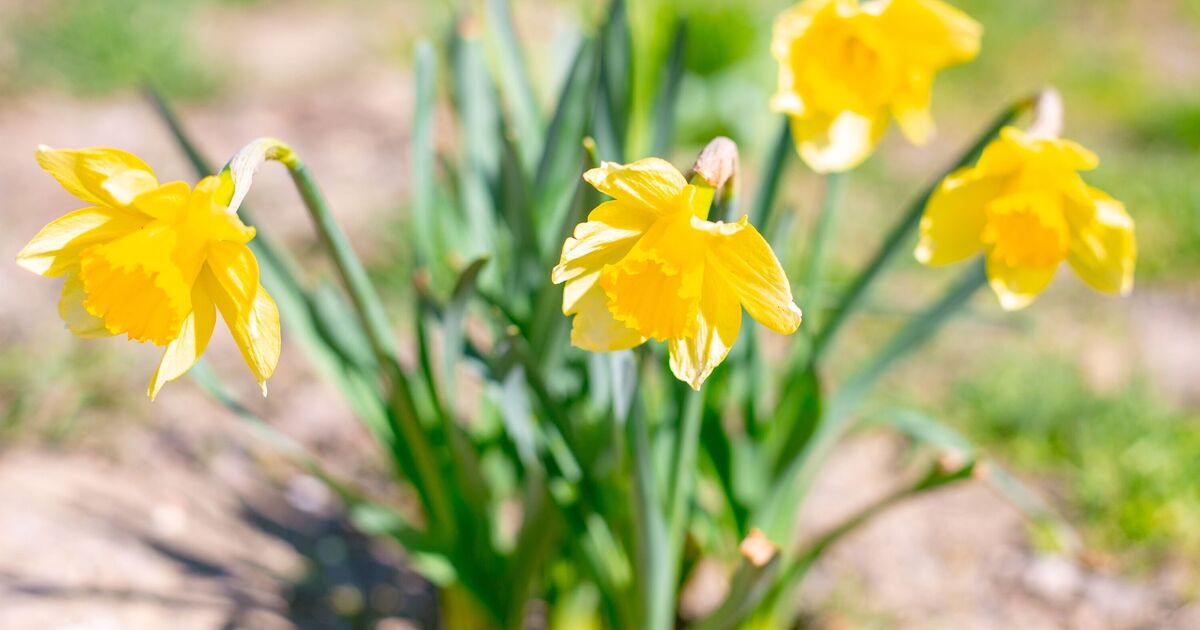
Daffodils are among the most popular flowers in UK gardens, blooming from February to the end of April, with peak flowering in March and April. They are one of the most reliable spring-flowering bulbs, according to the Royal Horticultural Society (RHS), because they bloom year-after-year with little attention.
With the flowering period coming to an end, gardeners are urged to complete one task to ensure they reappear next year. This involves deadheading the spent flowers after flowering, the RHS had advised. This is so that instead of forming seeds, the plants put all their energy back into their bulb, for a “good flowering display” next year.
The experts added: “Deadheading also keeps the display looking its best.” Plus, it’s super simple to do.
Simply pinch the spent flowers with your thumb and index finger, gently pulling them away.
Gardeners should deadhead as soon as the flowers fade or lose their colour. If they have turned brown, they are definitely ready.
Not pulling the dead flowers off may result in fewer blooms next year, so it’s important to complete this task soon.
With the brown leaves you’re left with, some people like to tidy them by tying them in a knot or binding them with twine, but this isn’t good for the plant’s recovery, as it reduces photosynthesis.
Instead, plant them closely with perennials or shrubs that will hide the dieback, and let them slowly recover for the next spring.
It’s also important not to remove the flowers too early, so if you’re unsure when to remove them, leave them for a week or two before reassessing.
Also in April, gardeners should focus on deadheading tulips and bedding plants such as pansies, primulas and violas.
Spring-flowering shrubs like rhododendrons and camellias can also be deadheaded to encourage flower production.
Comments are closed.