
Though this may seem off topic, I've gotten into some less than cordial discussions here over whether microplastics are a concern in composting. My stance has always been that exposure matters and there's probably not that much from plants. Yes, after searching the peer reviewed literature it appeared that plants take them up and they could thus end up in the food chain, but after 35 years studying chemical effects on cell and molecular biology this never made sense to me. Passive uptake of greasy molecules or active uptake of ions is fairly inefficient, but goes like gangbusters compared to uptake of microparticles, so I figured microplastics uptake should be minimal.
Given that, I didn't lose a minute of sleep worrying that I was poisoning my green beans with microplastics from tea bags or the blue tarp I sometimes use to wrap my compost bin.
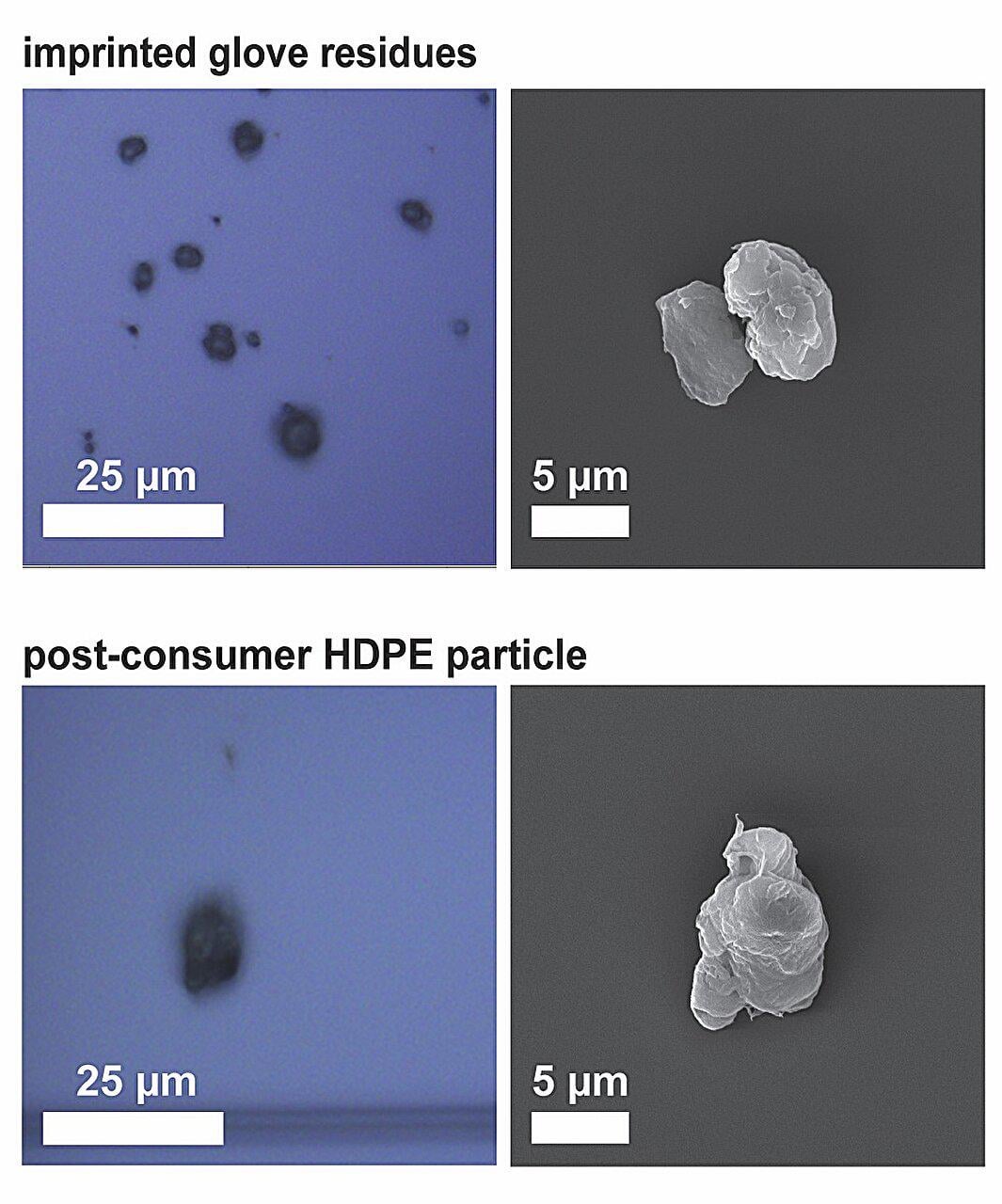
This week a bit of potentially good microplastics news came from the University of Michigan. It seems estimates of environmental microplastics are probably massively overblown and instead reflect lab contamination. Turns out there's a lubricant used in lab glove manufacture that looks a helluva lot like bona fide microplastics. It contaminates literally everything that glove touches.
This is not to totally dismiss the issue, but it's probably fair to hold off taking drastic individual measures until this gets sorted out.
https://phys.org/news/2026-03-nitrile-latex-gloves-overestimation-microplastics.html
by IceNine-Polymorph
6 Comments
https://en.wikipedia.org/wiki/Ideonella_sakaiensis
I need a sample of this species to put in compost with a bunch of plastic
“There’s still a lot out there, and that’s the problem.”
I think of microplastics as the revenge of the dinosaurs for disturbing their place of rest. 🙂
I think back to last year’s black plastic scare, and how it was due to a decimal point error. I replaced all my black plastic stuff, only to find out that the threat was overblown.
The me of today is not going to worry about a scrap of sponge when I’m using a plastic compost tumbler.
Awesome! Glad to hear it! I have other good news about plastics, in case anyone wants this kind of optimistic stuff to think about– if that’s not you, sorry!
But the great garbage patch in the Pacific Ocean ranks up there among some of the most depressing things we’ve done to the planet for many people, doesn’t it? I’m included! But did you know that critical endangered species are really happy the garbage patchs exists? See pre-historically, a lot of lumber would come down rivers and get dumped into the ocean. That lumber would find its way to the swirl that we now call the garbage patch, and that lumber was a habitat for a wide variety of amazing creatures called Nudibranchs (which I always hear pronounced “new-da-brinks” but that may not be right IDK). Anyway, story conclusion, some folks in better countries than mine have let their guilty conscience motivate them to try to clean up the garbage patch and remove the plastics and so forth out there floating around. But biologists are saying WAIT, think of the nudibranchs! Modern societies don’t just let lumber flow down rivers anymore, so without the garbage patch these buddies have zero habitat. And they seem to like our garbage quite a bit. Biologists are saying, look, the garbage patch may *feel bad* but we’re not even sure it’s really causing HUGE problem yet, and the nudibranchs love it! Maybe we should just pause for now on cleanup efforts until we know more.
I think some of the fear-mongering over plastic is just wild.
Don’t get me wrong, it’s *definitely* and environment concern.
But people act like getting a speck of plastic anywhere in their digestive system is going to be a life sentence.
And I’m just like, listen, if my bodies exposure to plastic knocks off 6 months off the end of my lifespan when I’m 85, it was worth it if it means things like I had access to clean bottled drinking water instead of dying from cholera at age six.
I assume that some of my biggest bodily exposure to microplastics comes from things like getting vaccines or having surgeries done, and not from eating a carrot that I grew in compost that I found a Snickers wrapper in one time.
People need to chill out.
I read that paper and I remember thinking, “Oh what a handy scapegoat for the plastics producers.”
Microplastics are a huge problem, specifically *because* we don’t know what the long-term effects are.
We already know that they interfere with reproduction, feeding, and other essential stuff in the “lower” organisms (with faster reproductive cycles). And the data is steadily coming in about how bad they are for humans.
In the meantime, it makes sense to minimise our contact wherever possible.
And in our own compost bins, this is definitely possible.