
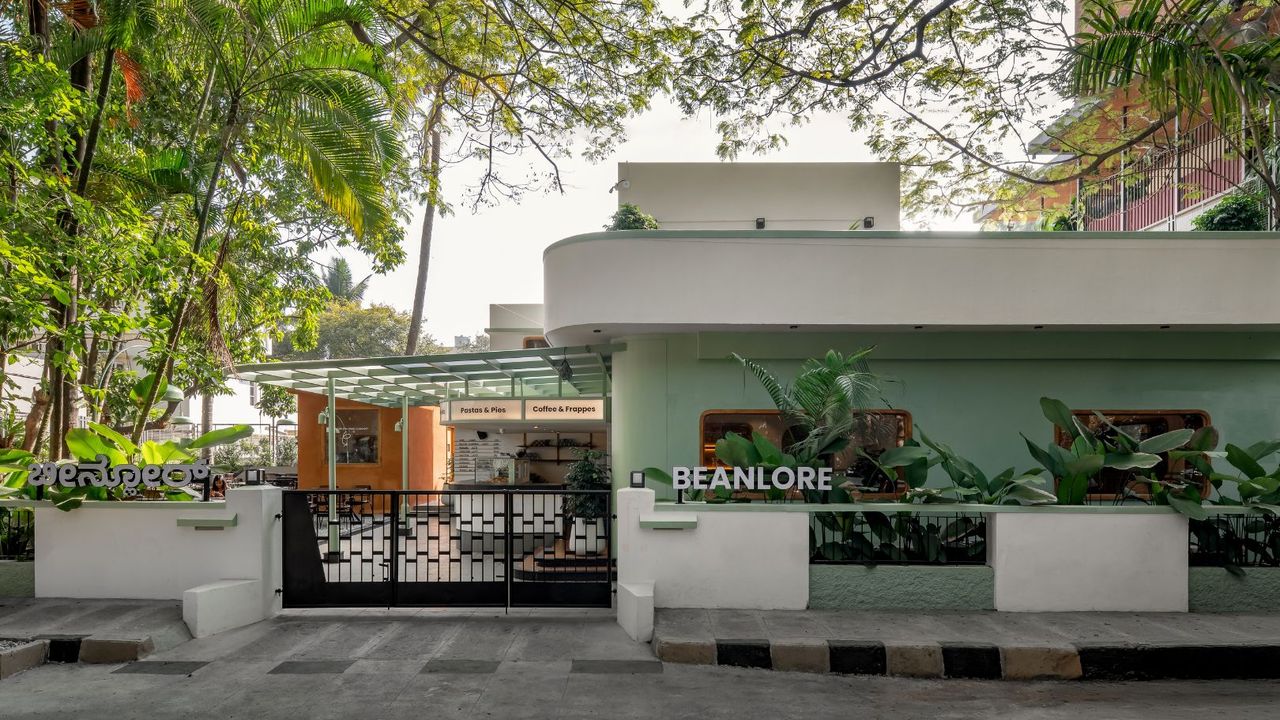

Corners turn into pause points, inviting you to linger a little longer.Arjun Krishna
Inside, the café takes on a quieter, more contained character. It’s air-conditioned, more structured, and dotted with intimate work pods that cater to everything from quick coffee breaks to long, languid work sessions. Yet it never feels cut off from the outdoors; glimpses of green and filtered light keep the connection alive. Materially, the space is deliberately low-key. Terrazzo floors ground the interiors, while wooden café chairs, soft fabric lamps, and gently textured walls in muted tones of beige and mint green keep things light.

Stone, brick, and rubble keep the outdoors honest and unpolished.Arjun Krishna
Arched openings introduce a softness that offsets the otherwise straightforward layout, giving the rooms a slightly old-world lilt. “There was never a moment where we said, ‘let’s make this look a certain way,’” Shetty reflects. “It was more about allowing the materials to settle into themselves—and letting the space feel like it had aged into its current state.” Hovering above it all is a canopy of rain trees, easily the café’s most compelling feature. Their shifting shadows move across tables and floors, blurring edges and softening the entire setting. It’s this interplay—between built and unbuilt, planned and improvised—that gives Beanlore its charm. You come for the coffee, of course. But chances are, you stay for the light.
Also read: Bandra’s beloved Pali Bhavan finds a new home at the Eros building in Mumbai
Also read: 20 must-visit restaurants in India with the most breathtaking mountain views
Comments are closed.