
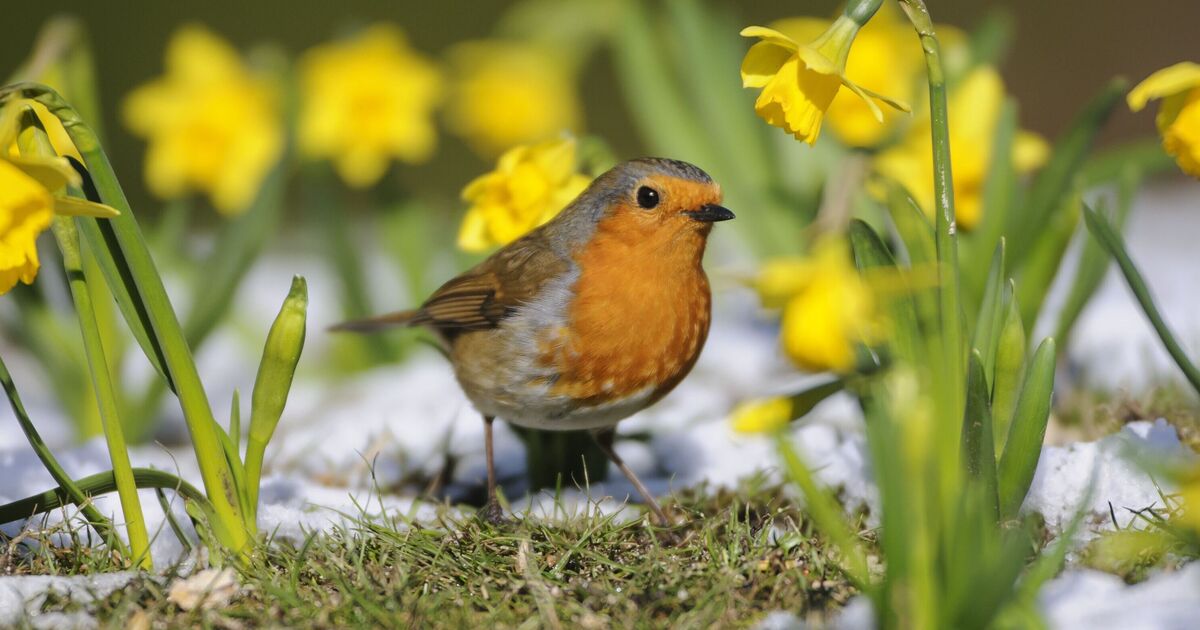
Feeding birds in your garden in spring is hugely helpful to their survival. Garden birds like blue tits, robins, house sparrows and goldfinches will happily eat from bird feeders. It makes their survival easier and gives you the joy of seeing these beautiful birds flock to your garden. Leaving fresh water out is helpful too.
Although you may think it’s more important to feed birds in winter, when their natural sources of food are harder to come by, in fact feeding them all year round is important for different reasons.
“During the spring and summer months, birds also require high-protein foods, especially while they’re moulting,” says the RSPB, which advises you to put any bird feeders somewhere which is both safe for them and visible for you so that you can get lots of enjoyment from it.
It adds: “Feeding birds in the spring and summer may help them to raise their chicks more successfully.”
Birds will eat a wide variety of foods and there are lots of safe options you can leave out for them, ranging from suet pellets and mealworms to small seeds and sunflower hearts. Mealworms are especially popular with robins and blue tits. Dried fruit and leftover fruit are good options too.
But there are foods you should avoid putting out for birds as they can seriously harm or even kill them. Below are four foods you should not try to feed birds.
There are some foods you “should never put out”, says the RSPB. They are:
If you are using a bird feeder, the RSPB says you should try and tick the following boxes and aim for somewhere that is:
Quiet, where birds won’t be disturbedSafe and not too close to bushes or trees where predators could hide (but close enough to cover so that birds can easily get away)Sheltered from harsh winds.
Lastly, it’s also important to keep bird feeders and bird baths clean. The RSPB advises: “Brush off debris every time you put out fresh food and scrub feeders with mild disinfectant solution weekly. Move the feeders from time to time to stop droppings building up underneath. Water containers should be rinsed out daily, especially during the warmer months, and allowed to dry out before fresh water is added.”
Comments are closed.