
On Nutrition
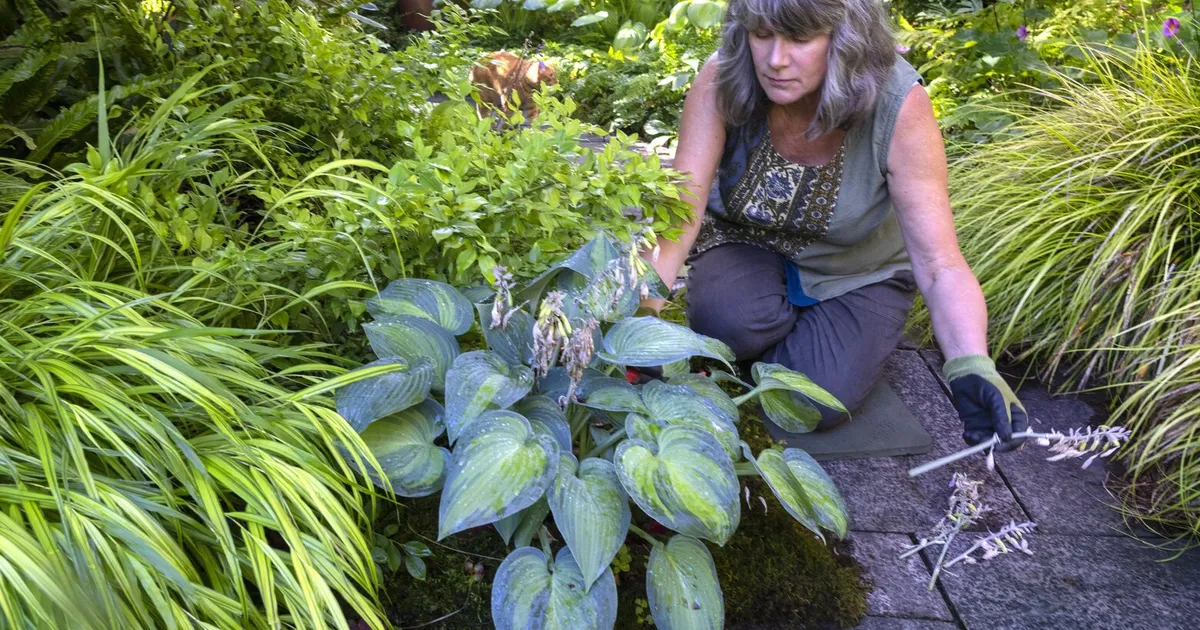
I don’t think I’ve ever mentioned it, but I am an ardent gardener. For me, there are two seasons, gardening and planning for gardening (I schedule my vacations to not interfere with the former). I’m currently tending trays and trays of vegetable, herb and flower seedlings in various stages of growth.
Like many gardeners, I know that an hour pulling weeds (plants you don’t want) or sowing seeds (for the plants you do) can do wonders for clearing the head. There’s a deep, physical satisfaction from spreading compost and, eventually, experiencing the unrivaled taste of a tomato still warm from the August sun. Today, however, these anecdotal experiences are being validated by science. It turns out that gardening isn’t merely a hobby — it’s a health-promoting practice that can engage your body, settle your mind and improve your relationship with the food you eat.
The green gym: movement with a purpose
Let’s start with the physical reality of keeping a garden alive and thriving. It is, quite simply, hard work. The romanticized image of harvesting tender lettuce still damp with the morning dew or snipping flowers in a sun hat glosses over the realities of hauling heavy bags of soil, digging trenches, pushing wheelbarrows, and the endless squats and lunges required to plant and harvest. (Increasingly, I see my year-round weightlifting and yoga as training for gardening, my true sport.)
The sustained, dynamic movement of gardening is itself good for you. Many gardening activities count as moderate-intensity cardiovascular exercise, something adults need at least 150 minutes of each week. Gardening also improves grip strength, enhances flexibility and balance, and builds strength and stamina. As a bonus, working outdoors exposes us to natural sunlight, prompting our bodies to synthesize vitamin D, which is essential for bone health and immune system regulation (wear sunscreen, please).
A 2023 randomized study published in The Lancet Planetary Health journal found that participants who were given an introductory gardening course, seeds, and community garden plots to work in for a year increased their moderate-to-vigorous exercise by about 42 minutes per week on average, compared with non-gardeners.
Sowing seeds of calm: stress and the nervous system
While the physical benefits of gardening are substantial, the mental and emotional rewards may be even greater. We live in an era of chronic distraction, in part because many of us seem to be permanently tethered to devices that demand our constant (increasingly fractured) attention. Gardening forces a radical shift, anchoring you to the present — when you have your hands deep in the soil, you’re less likely to be thinking about the past or worrying about the future.
Gardening also enhances interoception — our ability to perceive sensations inside our bodies. As you garden, you become acutely aware of your physical boundaries: the stretch of your hamstrings as you lean over a raised bed, the warmth of the sun on your neck, and the grit of soil particles between your fingers. When you tune into these physical sensations, your nervous system can naturally begin to down-regulate. Your mental chatter fades as the rhythm of the physical work helps you feel grounded.
Science backs up this sense of grounding. A study published in the Journal of Health Psychology compared gardening to reading as a stress-relieving activity. After completing a stressful task, participants either read indoors or gardened outdoors for 30 minutes. The study found that while both activities decreased stress, the gardening group reported a significantly better mood and showed remarkably lower levels of cortisol, the body’s primary stress hormone.
Interestingly, the mental health benefits might also be microscopic. Soil contains countless beneficial bacteria and other microorganisms, a few of which have been studied for their effects on psychological well-being. For example, exposure to the soil bacteria Mycobacterium vaccae appears to stimulate the immune system, stabilize the nervous system and trigger the release of serotonin in the brain, functioning much like a natural antidepressant. Similarly, people exposed to the soil bacteria species Streptomyces rimosus showed an increase in serotonin and a decrease in C-reactive protein, a marker of inflammation.
From soil to plate: a mindful harvest
Beyond the physical labor and the mental respite, when gardening includes growing your own food, this can change how you nourish yourself. Let’s face it, when you spend months nurturing a vegetable from a tiny seed to a mature plant, your relationship with that food changes. Your appreciation for eating seasonally grows as you eagerly anticipate the crisp snap of spring peas or the cooling hydration of summer cucumbers.
Those homegrown vegetables? They’re also more nutritious than what you’ll find in a store. Like it or not, fresh produce begins to lose its nutritional value the moment it’s harvested. Tomatoes, salad greens or bell peppers that sit in storage as they travel thousands of miles simply can’t compete with those picked and eaten the same day. Numerous studies have found that adults and children who participate in community or home gardening consume significantly more fruits and vegetables daily than non-gardeners. You don’t just eat better because the food is there — you eat better because you respect the process that created it.
The good news is that you don’t need a huge yard to reap these benefits. A few pots of herbs on a sunny windowsill, a cherry tomato plant on an apartment balcony, a single raised bed, or a P-Patch plot is enough to start. Gardening allows us to deeply connect with nature, teaching patience in an impatient world and providing a quiet space to reconnect with our physical bodies. So, the next time you feel overwhelmed by the pace of modern life, or the 24-hour news cycle, I highly recommend stepping outside and getting some dirt under your fingernails. You might just find that while you are busy growing a garden, the garden is busy growing you.
Carrie Dennett: CarrieOnNutrition@gmail.com. CarrieOnNutrition@gmail.com; on Instagram: @CarrieDennett. Carrie Dennett, MPH, RDN is a registered dietitian nutritionist at Nutrition By Carrie, and author of “Healthy For Your Life: A non-diet approach to optimal well-being.” Visit her at nutritionbycarrie.com.
Comments are closed.