
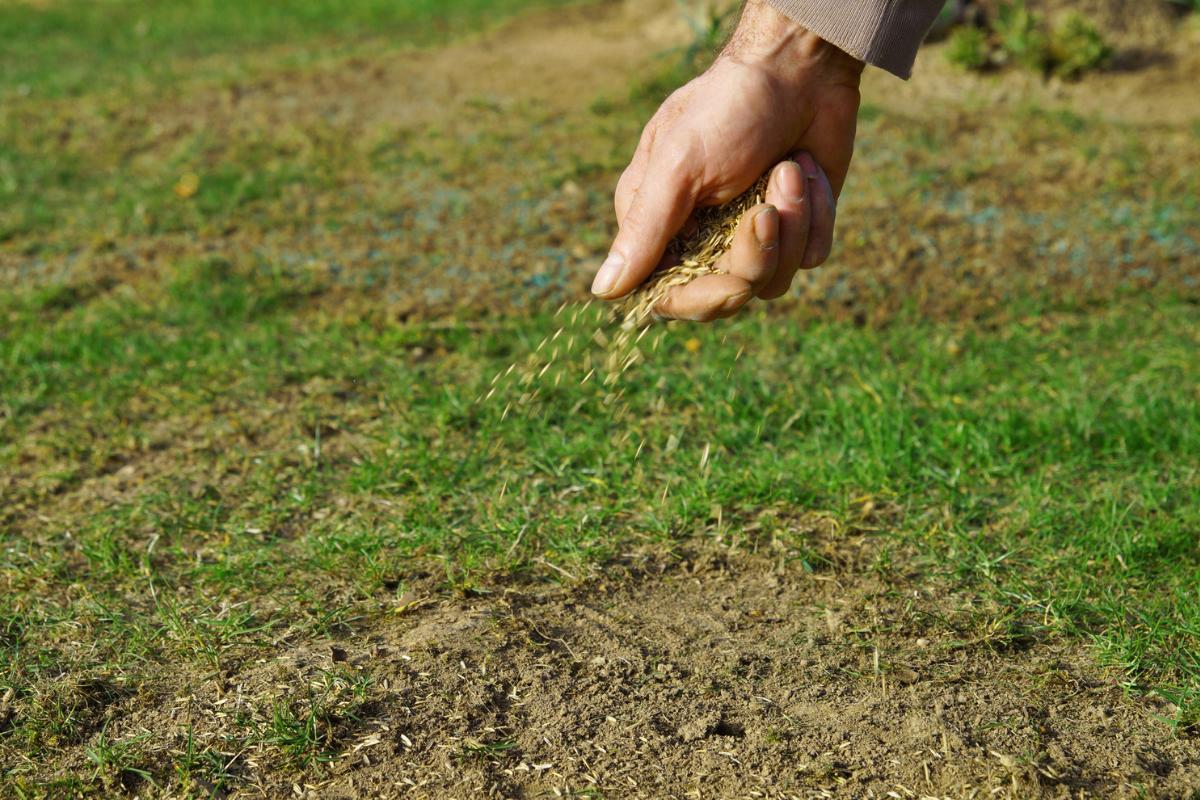
Have you added some grass seed to your garden this year? A garden expert has shared the importance of patience and a £1 coin hack to help you “provide a comforting environment” for your seeds.
Despite the warmer, sunnier days arriving in the UK recently, some areas are experiencing mixed weather.
Lawn experts are reminding gardeners who have overseeded their grass that warmth is needed for the seed to germinate.
Don’t “panic” as lower temperatures could slow grass seed growth
Ben Agnew, grass expert at Lawnsmith, said: “Grass seed needs a minimum temperature of 10C to be able to grow with the optimal temperature being more like 12 – 15C.”
He added: “This is nothing to panic about, patience is key when it comes to growing grass from seed.”
Ben said “the germination process will be slower” if temperatures are cooler, that’s all.
If you’ve not seen results yet, don’t worry, as Lawnsmith’s expert insists gardeners aren’t necessarily doing something wrong.
Garden expert shares £1 coin hack to check soil depth for grass seeds
Ben explained: “Anyone starting a new lawn or filling in patches might be feeling frustrated with the lack of progress in their lawns.
“Especially if they’ve spent time and energy taking care of seedlings.
“And thankfully, there is nothing extra that they need to do except keep going with their usual lawn treatment.
“Keep the seedbed moist, but not pooling water.
“Make sure seeds are at the correct depth to stay protected from the elements and maintain good seed-to-soil contact.
“I recommend sowing your seeds at a depth of approximately three £1 coins stacked on top of each other.
“This will provide a comforting environment for the seedlings to germinate and grow.
“The worst thing you can do is panic and throw more grass seed down, as this could cause a situation where you lay too much seed and there is competition, leading to poor growth.”
Try to keep footfall to a minimum to reduce the disruption to your developing lawn.
When is the best time to sow grass seed?
Different seeds have different germination speeds, so growers should pay attention to the information provided by the seed manufacturer.
“It can depend on the type of seed used, but typically germination can take five to 15 days,” Ben said.
He added: “Grass seeds like ryegrass or fescue often germinate quickly compared to other varieties like Bermuda that can take longer and require higher soil temperatures.”
Recommended reading:
The Royal Horticultural Society (RHS) shares that the best times to sow grass seed on your lawn are in Autumn (between September and November) and mid-spring (in March and April).
Dog owners warned about the dangers of grass seeds
If you have a dog, it’s worth noting that grass seeds can get stuck in their paws and other places.
The most common places that grass seeds cause trouble are in the eyes, between the toes and around the ears, but they can find themselves anywhere and work their way under the skin, PDSA warns.
Using the right equipment, it might be possible for a vet to pull the grass seed out of where it has got stuck.
However, grass seeds that work their way into the skin are harder to find and don’t often show up on X-rays.
They can also start travelling around, causing inflammation, infection and abscesses.
Let us know any tips you have for a healthy lawn in the comments below.
Comments are closed.