
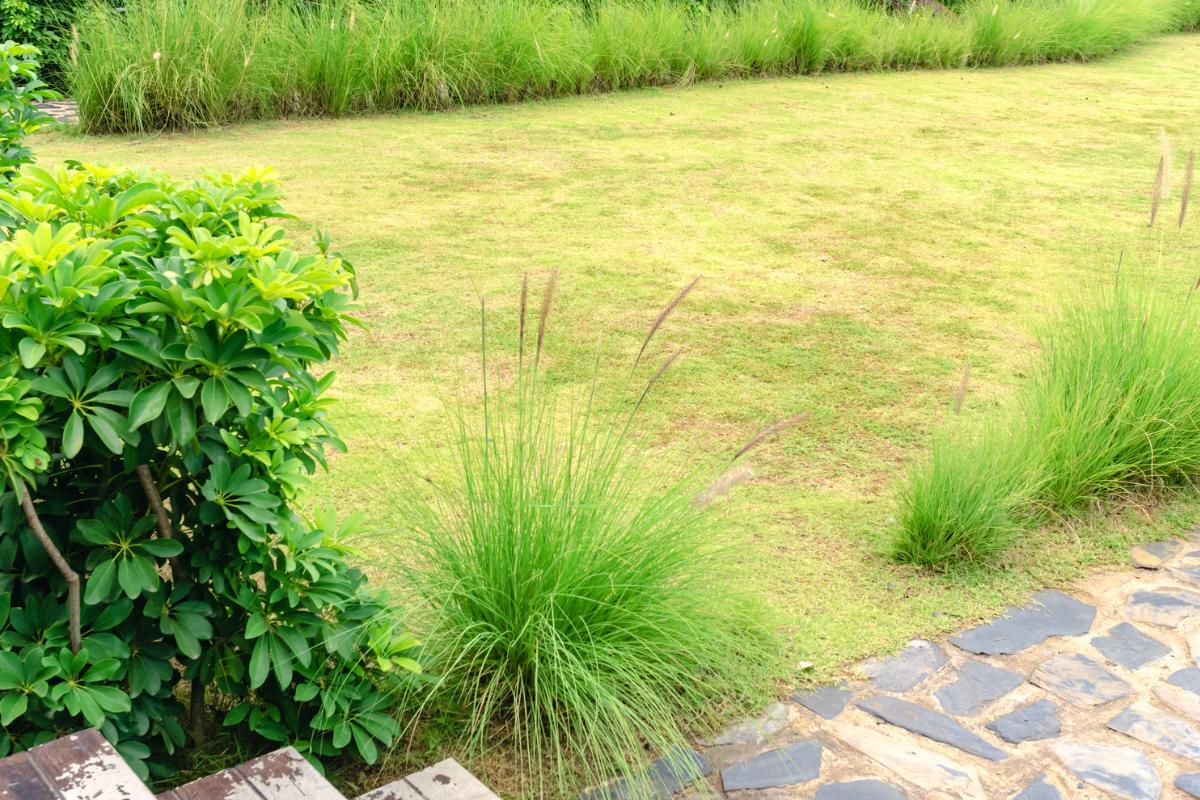
Have you got yellow patches on your grass?
A garden expert has warned homeowners that yellow patches on a lawn can be caused by thousands of pests that lurk beneath the surface and eat the roots.
While you might be preparing your garden and lawn for spring and summer, The Grass People said you’ll need to be aware of this ‘gardener’s nightmare’.
What are the first signs of leatherjackets?
Leatherjackets, which hatch from daddy longlegs’ larvae, cause grass to die out, and the first sign is often yellow bare patches which turn brown, Chris McIlroy, lawn expert at The Grass People, explains.
When it comes to leatherjacket infestations, prevention is best, says an expert (Image: Getty)
Daddy longlegs could be causing the yellow patches on your lawn
He said: “Although small, these pests can undo all the hard work you’ve put into your lawn and leave you with nothing.
“Crane flies, also known as daddy longlegs, lay eggs in most UK lawns. Some may never hatch.
“But after the wet weather we have had, the damp soil is the perfect setting for the eggs to hatch into leatherjackets.”
How many leatherjackets could there be in your lawn?
There can be hundreds of leatherjackets per square metre, meaning thousands could be present across an average-sized lawn, in severe cases.
Lawns with poor drainage and that remain damp are perfect for the pests to thrive.
Chris added: “Once hatched, leatherjackets feed on grass roots, meaning they kill blades from the ground up.
“The first signs will be yellow patches on your lawn, but if left untreated, your grass can quickly disappear altogether and leave your garden resembling more of a mud bath.
A closer look at Alan Titchmarsh’s life and love for gardening
“Birds often descend on your lawn to try and feed on the grubs.
“Their pecking can often make damage appear worse.”
What to do if you notice yellow patches
If you notice yellow patches on your garden, lift a section of the turf and see if you spot any grubs, Chris advises.
The grubs are often a greyish-brown colour, legless with a tough, leathery skin and typically around 2-3cm long.
How to get rid of a leatherjacket infestation
“Getting rid of a leatherjacket infestation can take time and you’ll likely have to re-sow your lawn in affected areas.
“Prevention is the best course of action,” Chris explained.
He added: “The trick is to make lawns less inviting for crane flies to lay eggs.
“Damp lawns offer favourable conditions, so maintaining an efficient drainage system should be a priority.
“Aerating with a garden fork creates air pockets that improves water flow and reduces puddling.
“Regular mowing encourages stronger roots that can withstand some damage that leatherjackets cause.
“Regular feeds can also keep your lawn in tiptop condition.”
The Royal Horticultural Society (RHS) has shared an effective way for removing leatherjackets from a lawn.
It says: “Leatherjackets may also be revealed in lawns by soaking with water and covering with material impervious to light, such as black polythene.
“The following day if leatherjackets are the problem, large numbers of grubs should be found on the lawn surface under the cover.
Recommended reading:
“Crows, magpies, rooks and starlings will search for leatherjackets in turf.
“These birds leave small round holes in the turf where they have inserted their beaks.
“They will also search for chafer grubs in a similar manner”.
RHS explains that leatherjackets can also damage “small planters in garden borders and vegetable plots by eating roots.”
What’s your favourite garden hack? Tell us about it in the comments below.
Comments are closed.