
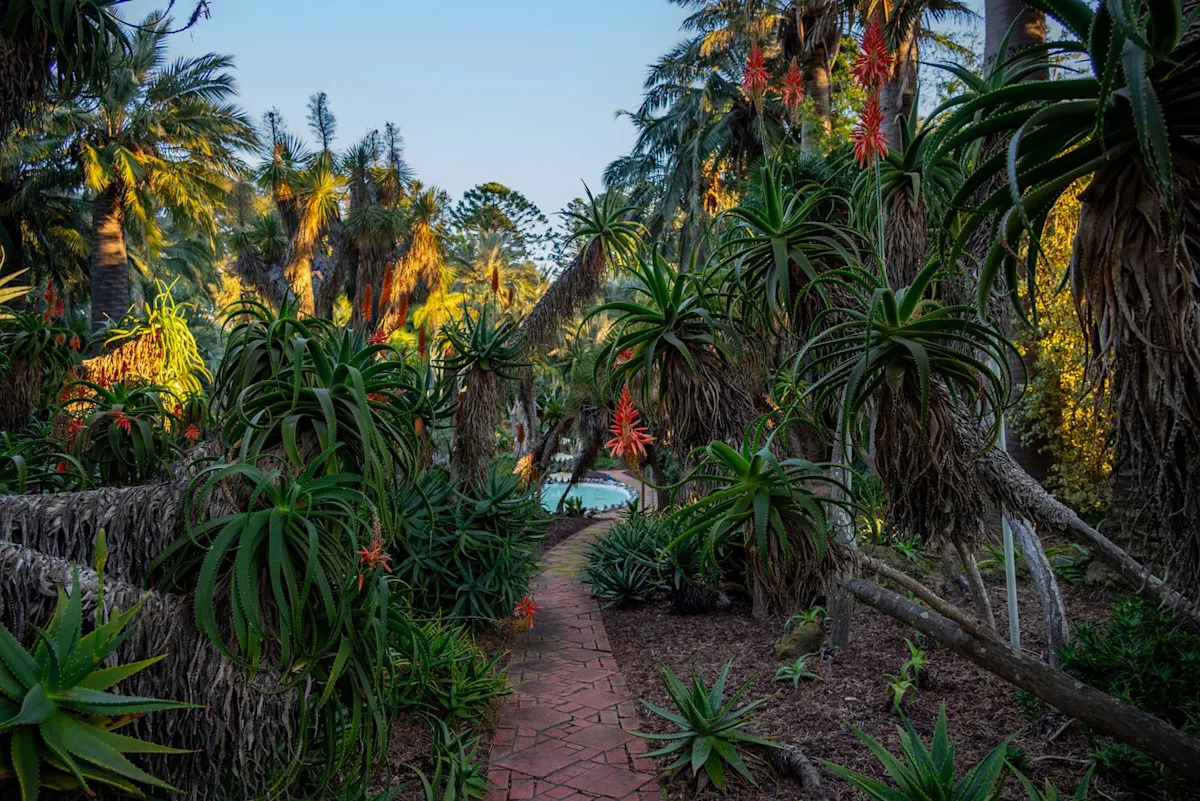
Like many WWII-era émigrés to the United States, the Polish-born opera singer Madame Ganna Walska adored her adopted country. But California was its own magnificent world. The view from the Hollywood Hills, she said, was the “most limitless and, at night, most fantastic view one could ever set eyes upon.” In this western state “the soul began to stir” and “the air was magnetized.” When one of Walska’s many husbands—a wayward yogi, discarded relatively quickly—persuaded her to buy a 37-acre estate in nearby Montecito, she correctly prophesied that after her long career as a globetrotting performer, she would spend her final years there.
Lotusland, the “California wonderland” she created on the estate, is undeniably a love letter to the region’s flora, but it is above all a botanical fever dream portrait of its creator. Walska spent decades making a landscape of dramatic gardens, lotus-filled and cycad-hemmed ponds, waterfalls, and otherworldly tree groves. Opened to the public in 1993, it is now attracting a new generation of devotees—among them landscape artist Art Luna and designer Lisa Eisner, who have teamed up to document the gardens in their current splendor, bringing with their words and images a much needed reminder of what a life looks life when lived like a true original. “These sorts of mass plantings, no one was really doing that back then,” says Luna, who has been visiting and studying Lotusland for nearly three decades and introduced Eisner to the gardens. “The layering is just genius, and it’s really at dramatic high volume. It takes guts to plant like that.”
“Walking through the gardens with Art, you get the director’s cut,” says Eisner, who opines that navigating Lotusland could be overwhelming without such an expert guide. She recently spent several days at the estate, photographing the gardens from sunrise to sunset.
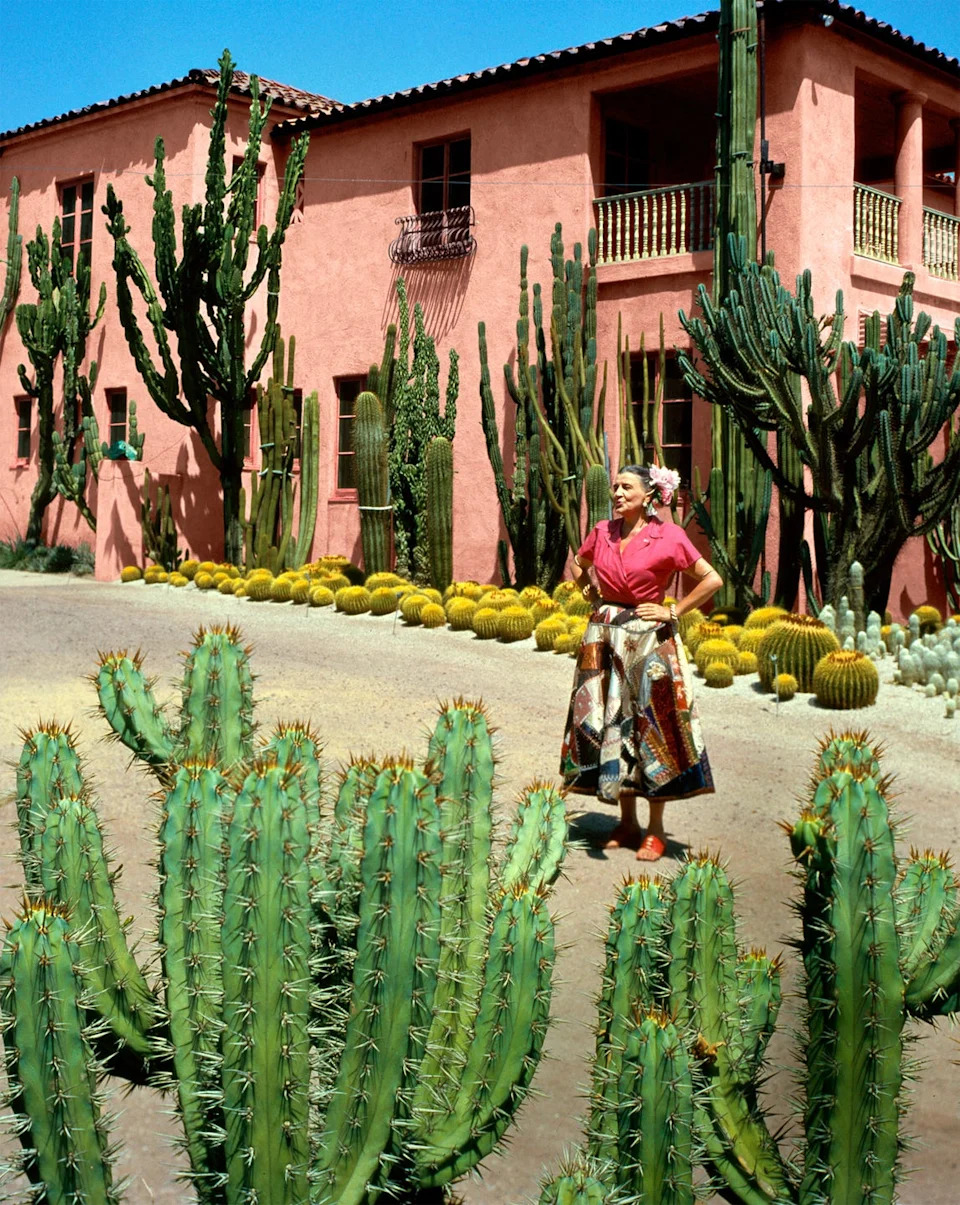
Lotusland, the 37-acre estate and garden in Montecito, California, was the verdant vision of Polish opera singer Ganna Walska, photographed here in 1957. Walska spent decades perfecting her botanical fever dream.Photo by J.R. Eyerman/Madame Walska at Lotusland 1957/Courtesy Ganna Walska/Lotusland
Walska conducted every aspect of her life on a vast scale, amassing substantial collections of jewelry (Cartier preferred), husbands (six in total), and, finally, plantings (one example: Lotusland’s hundreds of rare cycads, including several varieties that may no longer exist in the wild). Friends and acquaintances who invited Walska to tea or dinner did so at their own peril. If she spotted a tree or plant she liked on their property, she often demanded to buy it. Few dared to say no. If impressive scale was a Walska directive, so was uniqueness. Nothing could be predictable; sameness was a cardinal sin. “Enemy of the average” was her credo, and, despite having no official background in botany or gardening, she personally masterminded the vision for the entire Lotusland landscape. She also served as a highly exacting commander, overseeing a battalion of gardeners to transform the land into a series of verdant and often idiosyncratic worlds. “It’s a very, very personal vision,” Eisner says. “It’s one woman’s point of view. She broke every rule. There was nothing like her, and there’s certainly nothing else like this garden.”
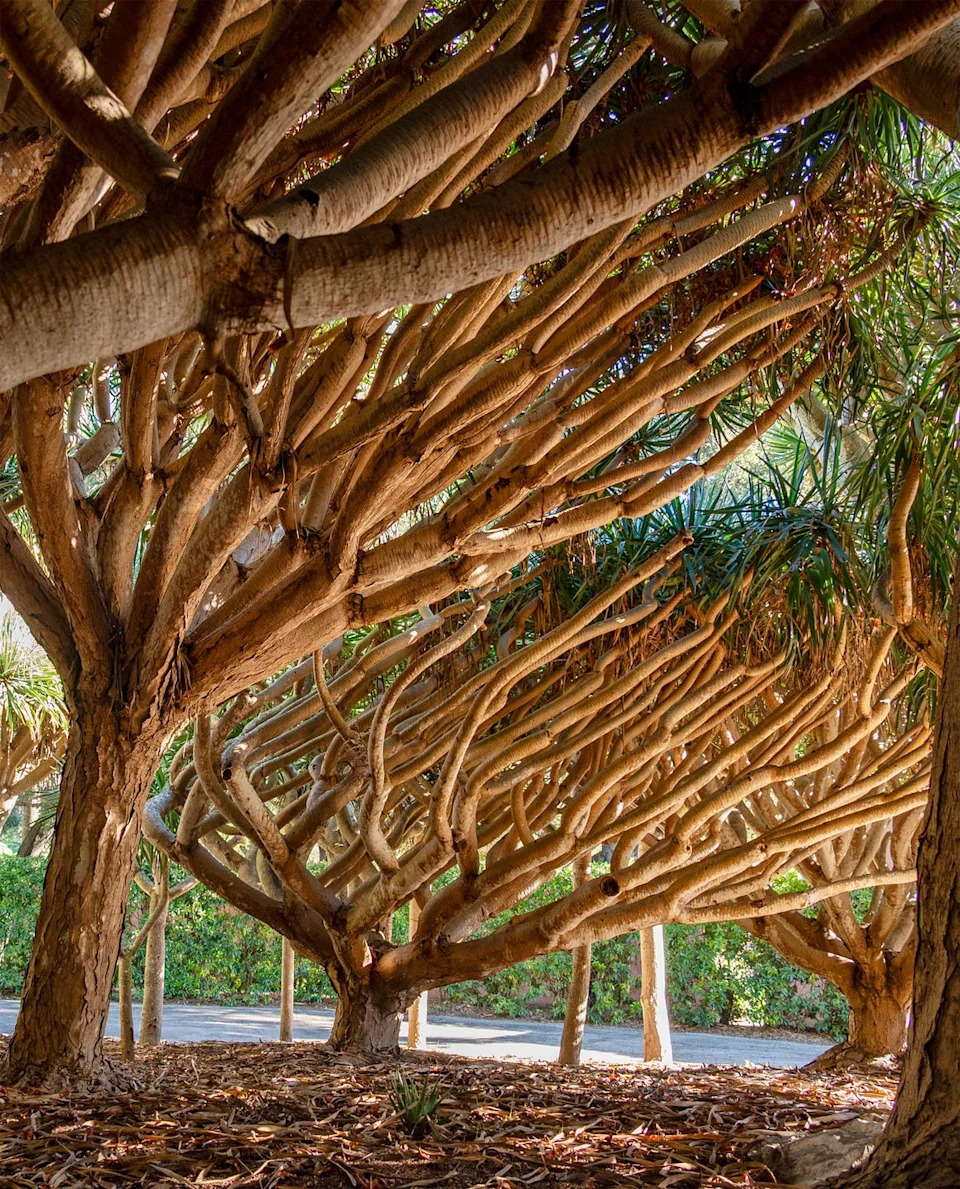
Dragon trees, first identified in the Canary Islands more than 600 years ago, are known for their red sap (“dragon’s blood”), which was used as varnish on Stradivarius violins. The endangered species still thrives at Lotusland, where the oldest specimen dates back to the 1890s.Lisa Eisner
“Lotusland is like an opera, in which you’re going from one scene to the next,” Luna adds, listing off his favorite settings: the blue garden, the cycad garden (“That’s church,” he says), the bromeliad garden, the dragon tree grove (“You feel as if you’re underwater there, surrounded by seaweed,” Eisner says), the shade palm garden, and, of course, the namesake lotus pool, where Walska used to swim among the flowers. Her presence is still keenly felt, her singular credo still in effect. For Luna, spending time at Lotusland is an antidote to the aesthetic herd mentality, in which sameness and average are ubiquitous and accepted. If you get Lotusland, in all its luxurious eccentricity, you just get it. “I was just drinking it up, because it was not like anything I had seen before,” he says. “The shadows and textures and crystals: I understood it all, and it felt like somebody that just got me, too.”
For Eisner and Luna, Lotusland is also the antithesis of the modern epidemic of instant gratification. Walska cultivated the grounds over decades, creating layers of accrued opulence. She adorned her own body with jewels and Erté couture. Hundreds of green glass rocks line the footpaths that wind throughout the grounds; they resemble long, gleaming emerald necklaces. “Everything about her was so decadent and fantastic,” says Eisner, who calls Lotusland a “spiritual place.” Future visitors need to be forewarned about the intoxicating jolt this place can deliver in our current state of sameness, she says. “Its like having several cups of strong coffee. You’re literally going to get high in here.”
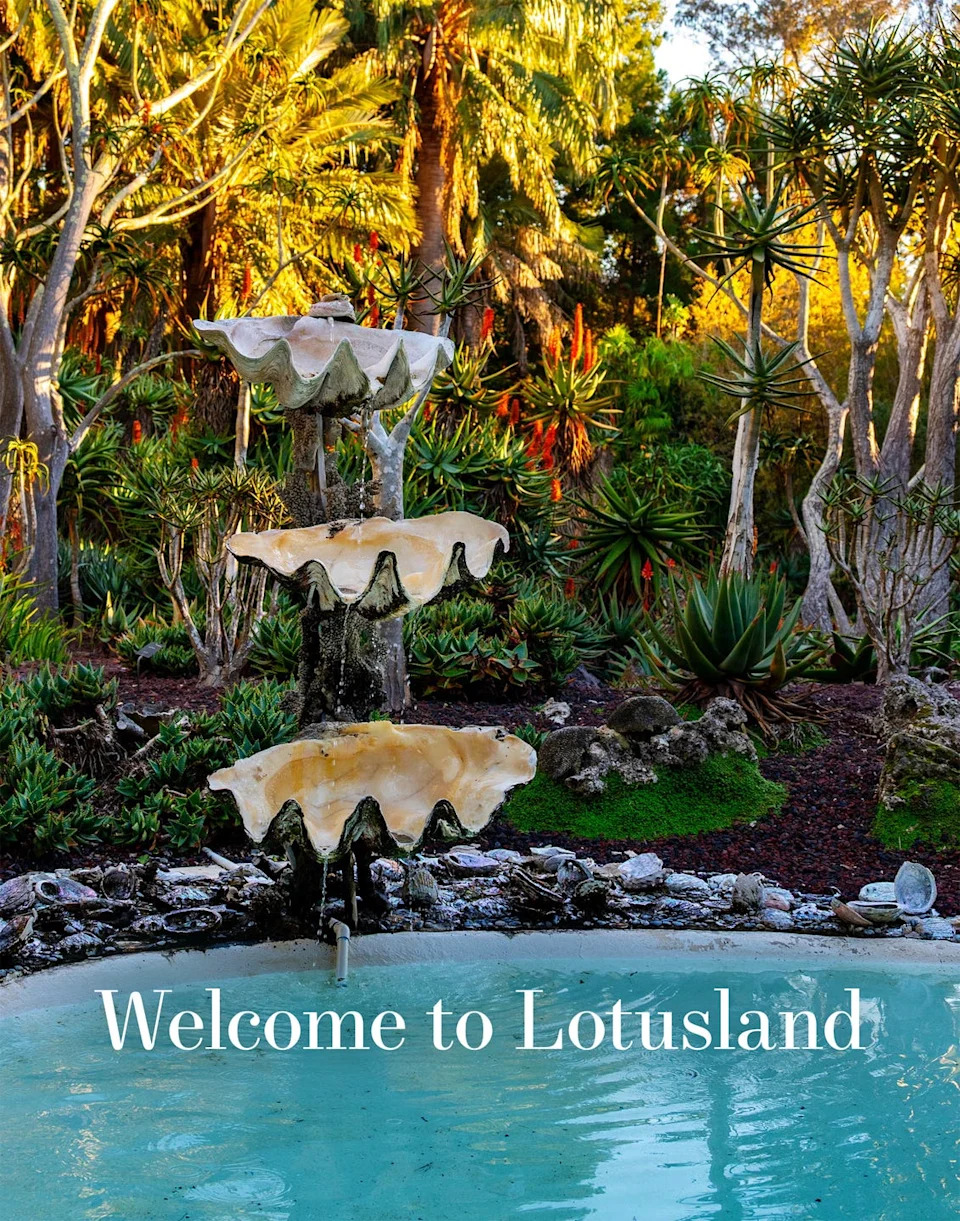
Photo credit: Lisa Eisner
Like many horticulturalists of the era, Charles Glass, who made the sketches below, was impressed by what Walska had created at Lotusland. In the ’70s she persuaded him to join the club. He led the botanical garden until 1983, during which time he helped bring many of her idiosyncratic ideas to life. He helped redesign the Aloe Garden—with its clamshell and coral fountain pool and its abalone-studded border—as well as creating the iconic Cycad Garden, which hosts more than 450 specimens, including five species thought to be extinct in the wild.
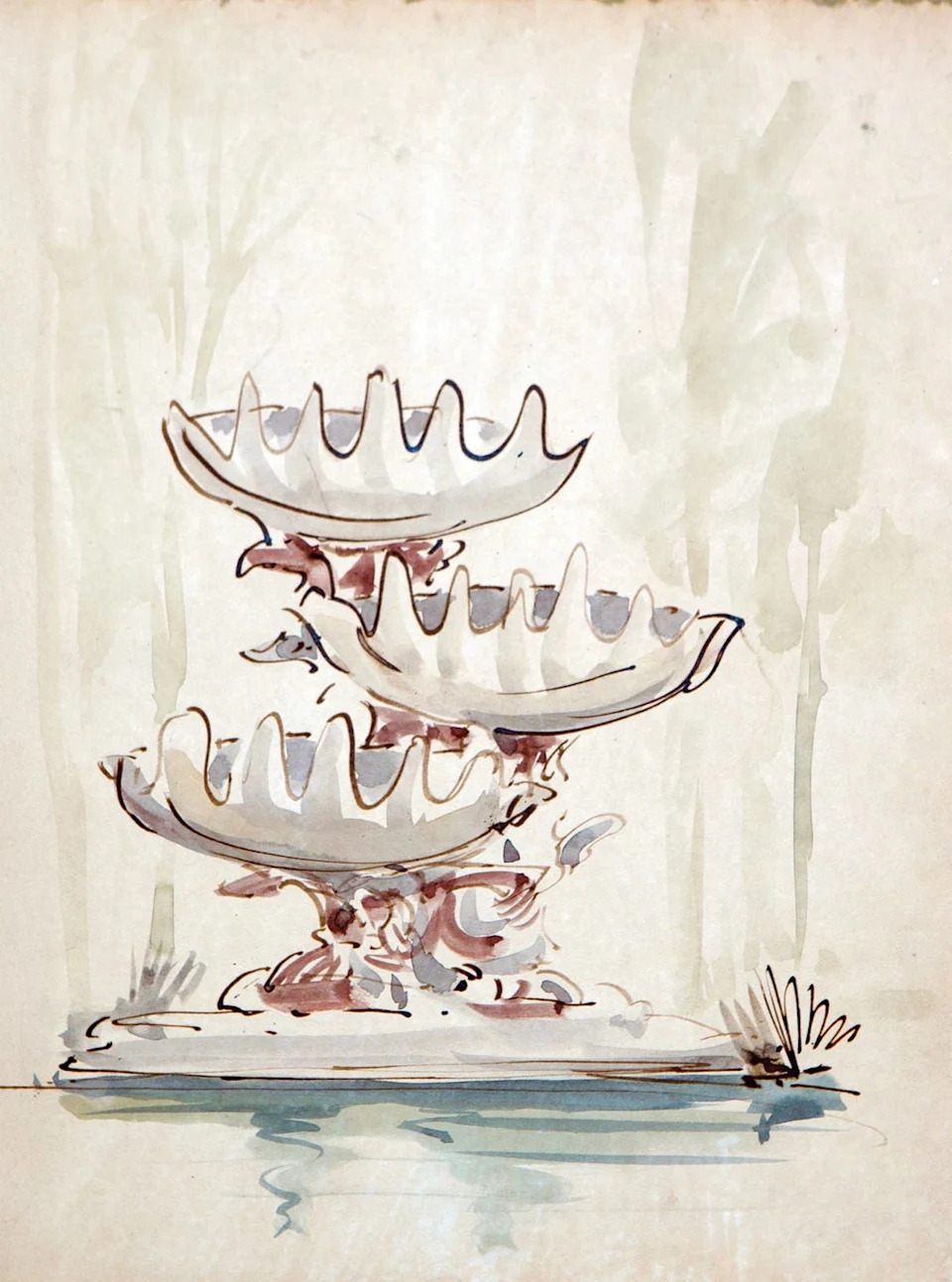
Photo credit: Charles Glass/Courtesy Ganna Walska/Lotusland
Illustration by Charles Glass.
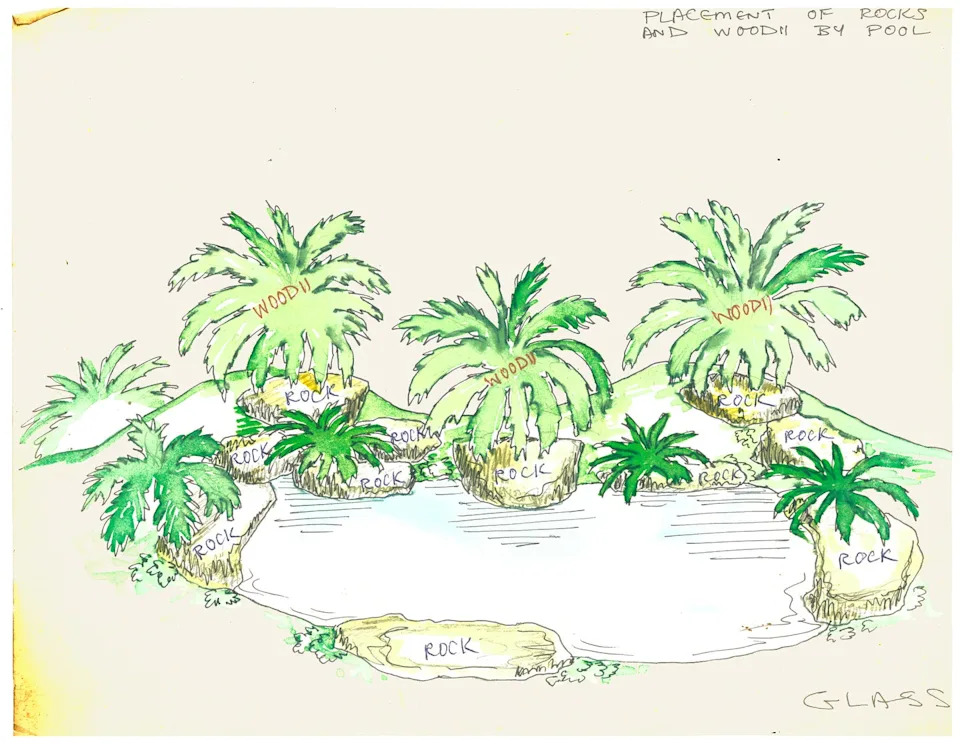
Photo credit: Charles Glass/Courtesy Ganna Walska/Lotusland
Illustration by Charles Glass.
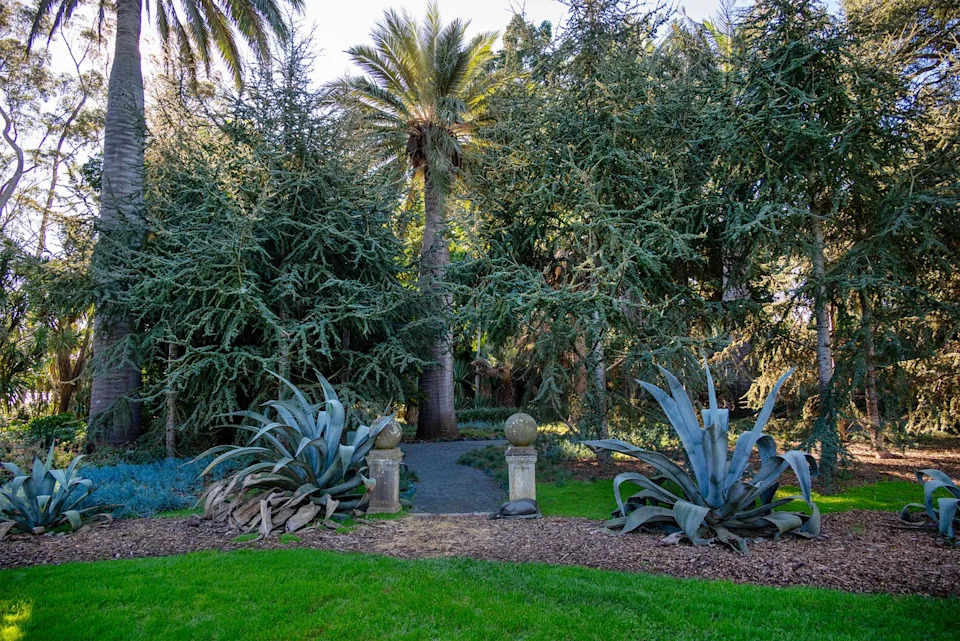
Photo credit: Lisa Eisner
Walska was singularly devoted to her point of view. In the Blue Garden she planted tonally appropriate blue agave, blue Atlas cedars, and blue palms.
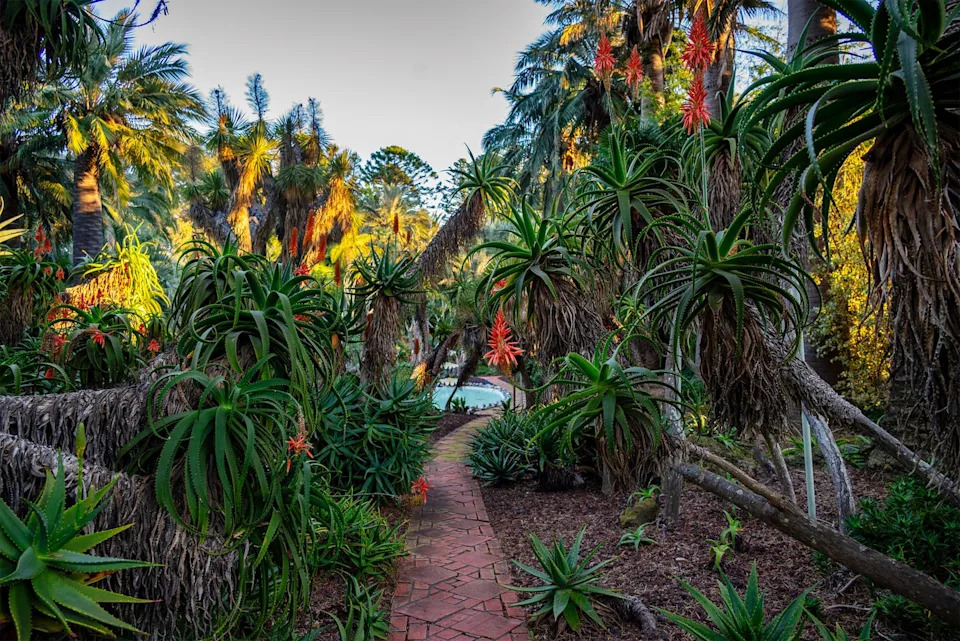
Photo credit: Lisa Eisner
On the path to the Abalone Pond, the bright red flowers of the Aloe Garden evoke coral.
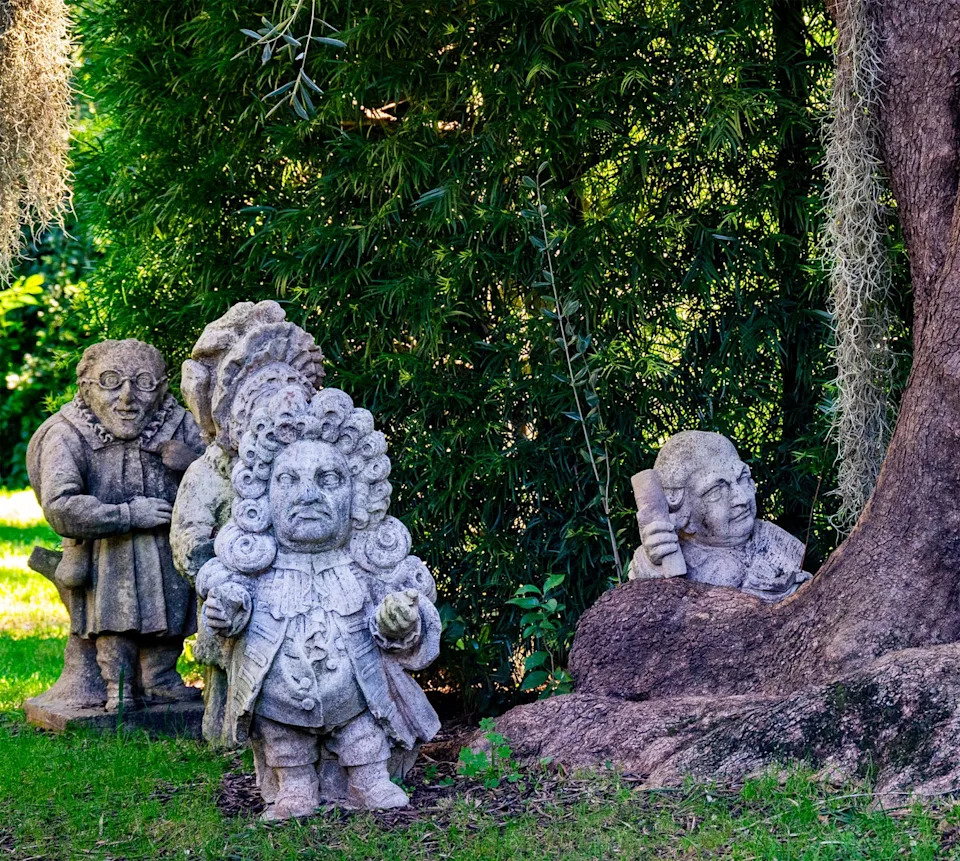
Photo credit: Lisa Eisner
During WWII Walska fled France, leaving behind a trio of stone statues. They were later shipped to Lotusland, and she added more for the Theatre Garden.
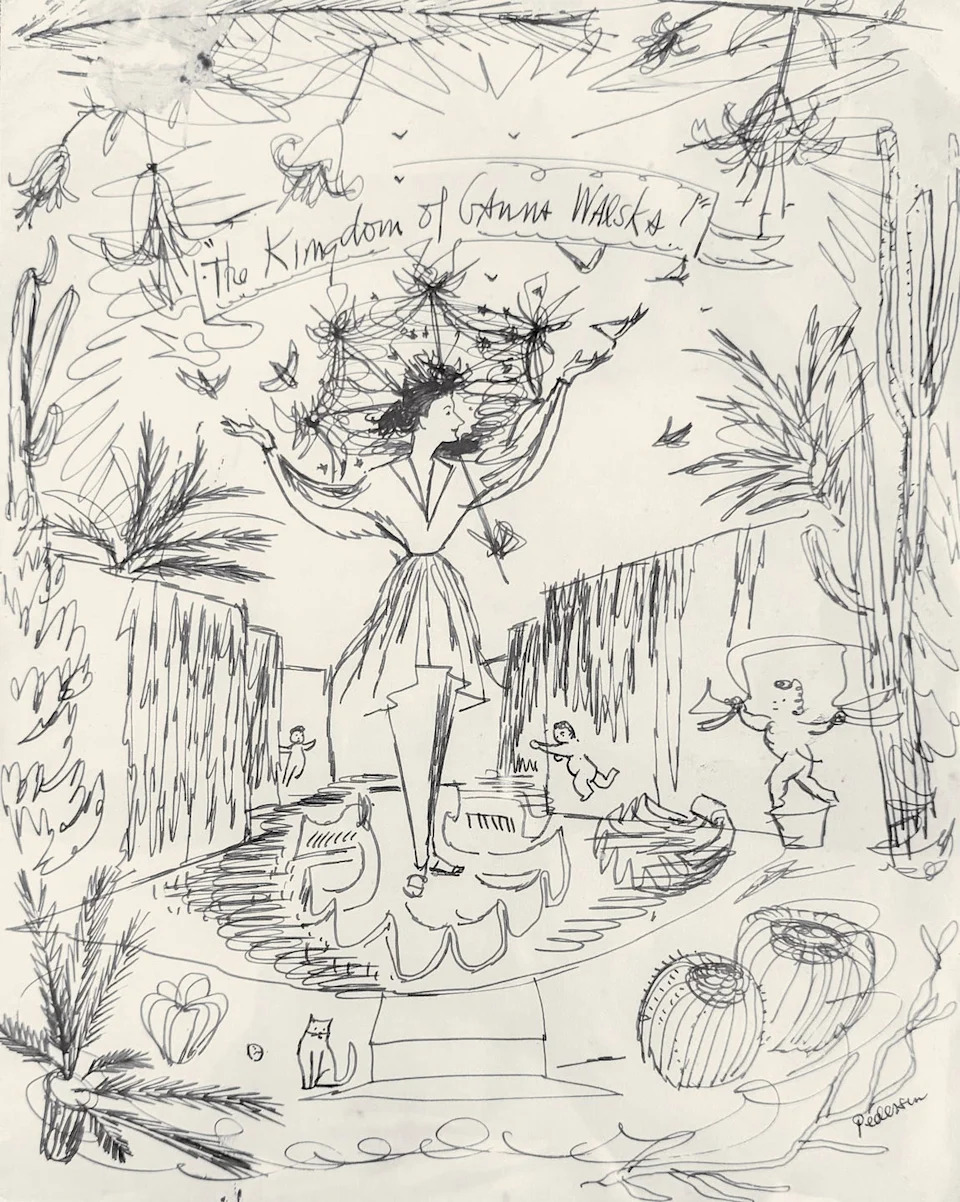
Photo credit: Charles Glass/Courtesy Ganna Walska/Lotusland
Madame Walska, depicted in the sketch by Charles Glass as ruler of her botanical kingdom.
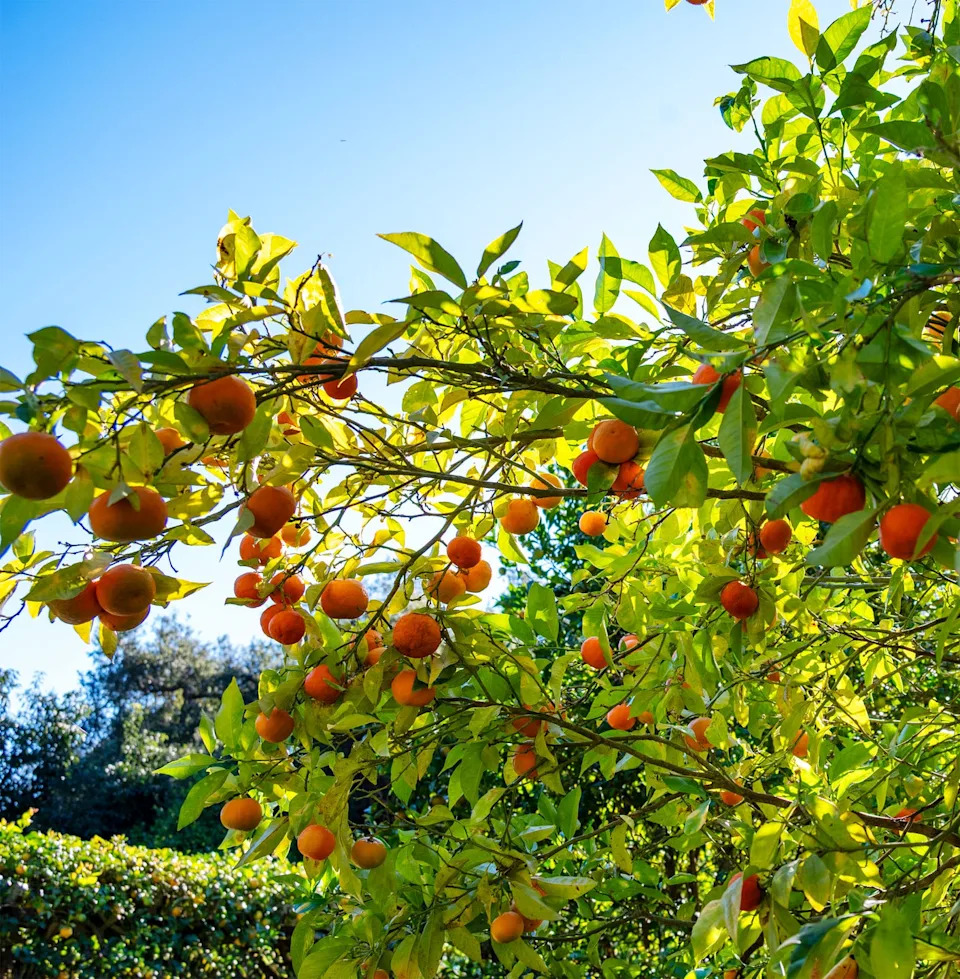
Photo credit: Lisa Eisner
Walska collected a spectacularly diverse array of plants, including the citrus trees seen here.
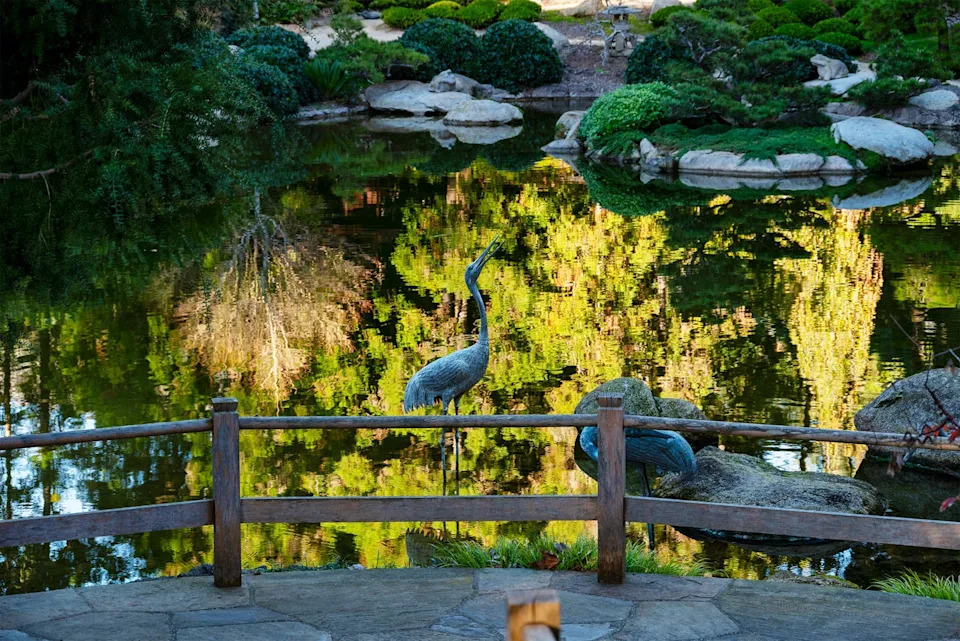
Photo credit: Lisa Eisner
The Japanese Garden is anchored by a serene Reflection Pond.
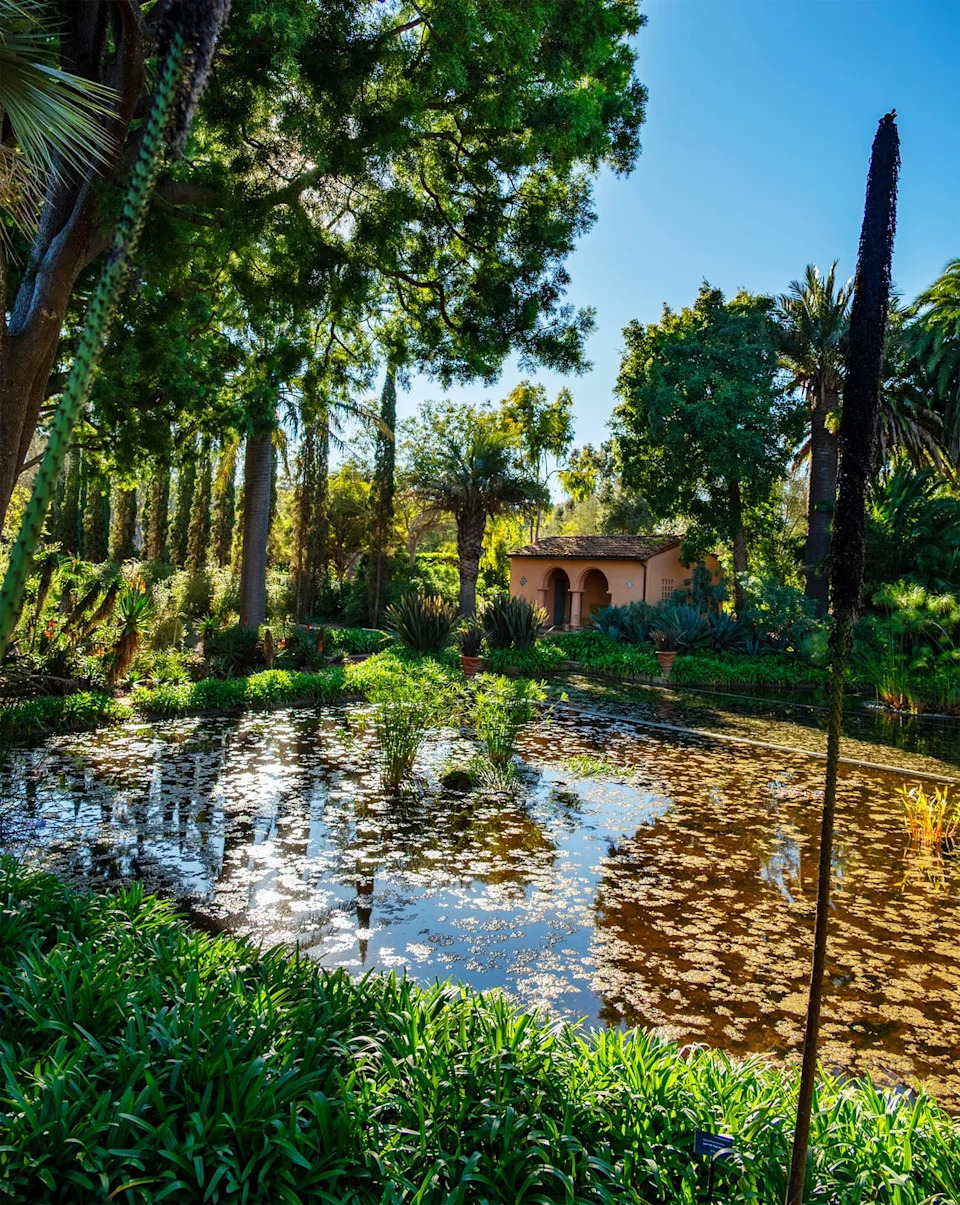
Photo credit: Lisa Eisner
Walska transformed the home’s original swimming pool into her Water Garden, filling the pond with lotuses and a variety of waterlilies. Ever the nonconformist, she swam among the flowers.
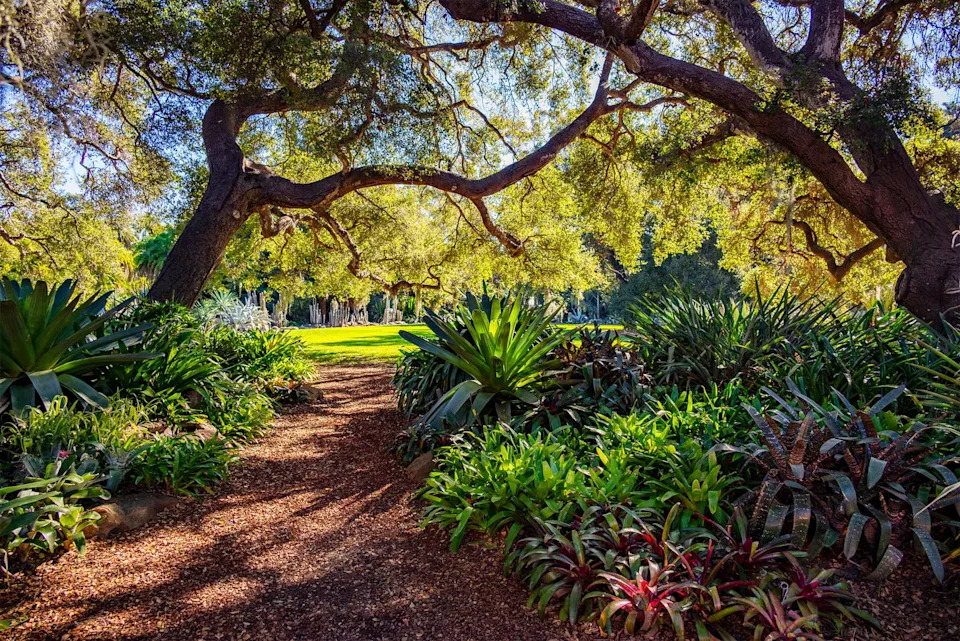
Photo credit: Lisa Eisner
Oaks provide shade for the colorful array of bromeliads.
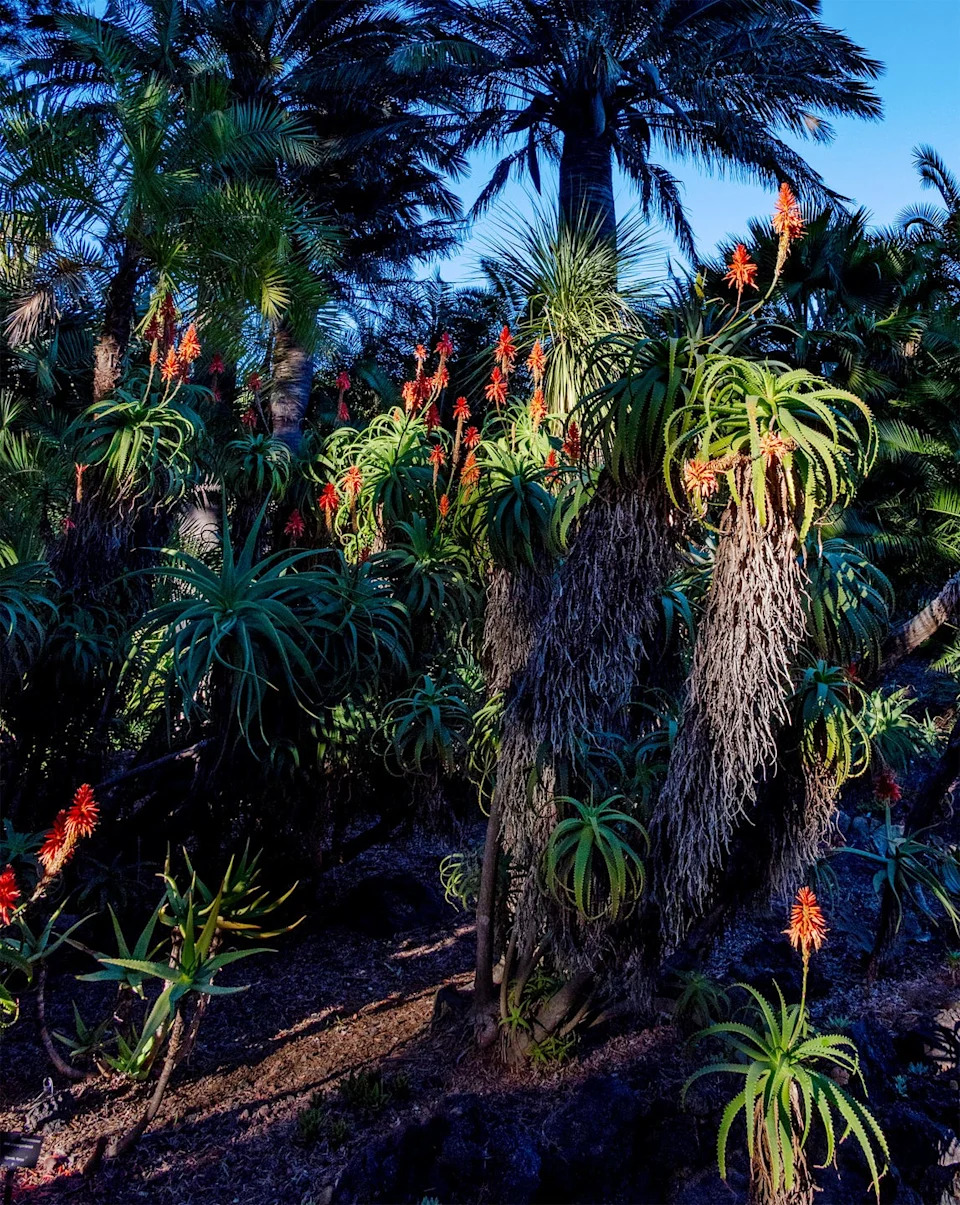
Photo credit: Lisa Eisner
Walska spent decades perfecting her botanical fever dream at Lotusland.
This story appears in the April 2026 issue of Town & Country. SUBSCRIBE NOW
You Might Also Like
Comments are closed.