
Nothing, I think, says spring quite like Easter.
I always associate this significant date in the calendar with the wild primroses and violets that my mother used to decorate our home-made Easter simnel cake during my childhood, each fragile petal hand-painted with a barely-there film of egg white and then lightly dusted with icing sugar.
Never a fan of Christmas, throughout her life she loved the deep and ancient symbolism of Easter, with its sweet promise of rebirth and regeneration, and its whispered reassurances that winter was finally over. It took me until adulthood to see it through her eyes. But now I can sense its newborn magic in everything, from the lacy clouds of cherry blossom and drifts of delft-blue grape hyacinths, to the silvery songs of the garden’s resident starlings. Proudly announced from their lofty rooftop perch outside, their extravagant clicks and chirrups echo down through our kitchen chimney, all part of their intricate spring courtship rituals.
New growth is everywhere this month, an electric April green disappearing the monotonous greyness of bleak midwinter with such speed that it’s hard to keep up.
If you’re a kitchen gardener, then this is the time – if you haven’t already done so – to get seed potatoes in the ground, as well as plenty of pots of freshly sowed vegetable seed at the ready to guarantee a bountiful harvest this summer.
First-early, second-early and maincrop varieties of potatoes are all suitable. Just make sure to give the baby tubers a very fertile, weed-free, moist but free-draining soil and a sheltered spot in full sun, ideally enriched with well-rotted manure (see geeup.ie) and some handfuls of a good-quality, slow-release organic fertiliser such as Topmix. To dodge the risk of blight damaging maincrop varieties, try to focus on those with a proven high resistance to this destructive disease. If you’ve already planted potatoes and their young shoots are pushing through, then make sure to earth them up in the coming weeks to protect against late frosts, as well as to encourage heavy cropping.
As for direct-sowing other kinds of traditional vegetables outside in the garden such as carrots and parsnips, it’s best to wait until early May to do this unless your garden is a mild and sheltered one. The exceptions are especially hardy types such as broad beans, turnips, early peas and radish.
But you can still get a very valuable head start this month by sowing seed of winter leeks, lettuce, chard, spinach, cabbage, calabrese, Brussels sprouts, beetroot and Swiss chard under cover. Just make sure to place the pots or trays on a bright windowsill, or in a light-filled porch or frost-free glasshouse or polytunnel for pricking out into modules and then transplanting outdoors in late May or early June.
Again, bear in mind that a combination of bright but indirect light and not too much heat is key to prevent them from becoming weak and leggy before they can be planted outdoors into their permanent positions.
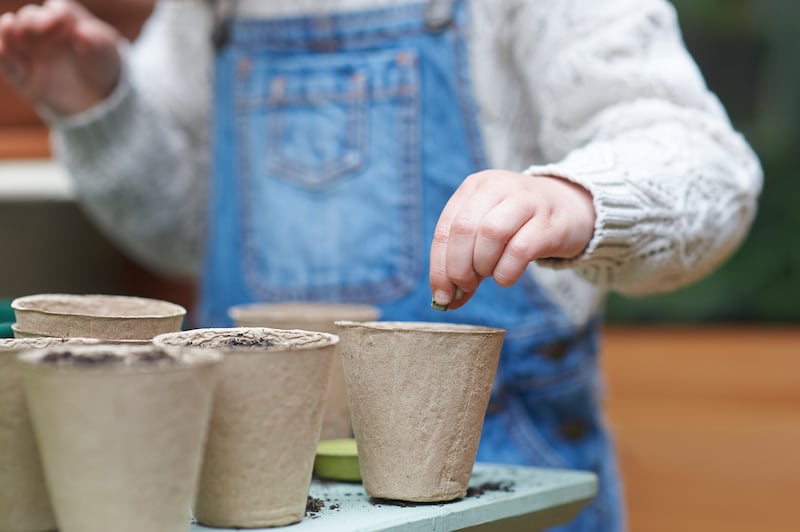 Give pots a warm, bright spot to encourage good germination rates and healthy growth
Other heat-loving, frost-tender species such as courgette, squash, cucumber, pumpkin, French beans and sweetcorn can also be sowed under cover from mid-April for pricking out and then transplanting into their final growing positions in early summer. Just make sure to give the pots or trays a warm, bright spot to encourage good germination rates and healthy growth.
The same goes for sowing seed of many kinds of half-hardy flowering annuals such as amaranthus, cosmos, nicotiana, tagetes and zinnia; summer-flowering perennials such as achillea, echinacea, delphinium, linaria, verbena and lupins; and culinary herbs such as fennel, dill, parsley, chervil and coriander, all of which can be sowed this month under cover and with gentle heat.
Early April is also a great time to plant strawberries, raspberries, grape vines, fig trees, asparagus and globe artichokes, as well as to feed blackcurrant, redcurrant and gooseberry bushes and all kinds of fruit trees to encourage healthy growth and great crops.
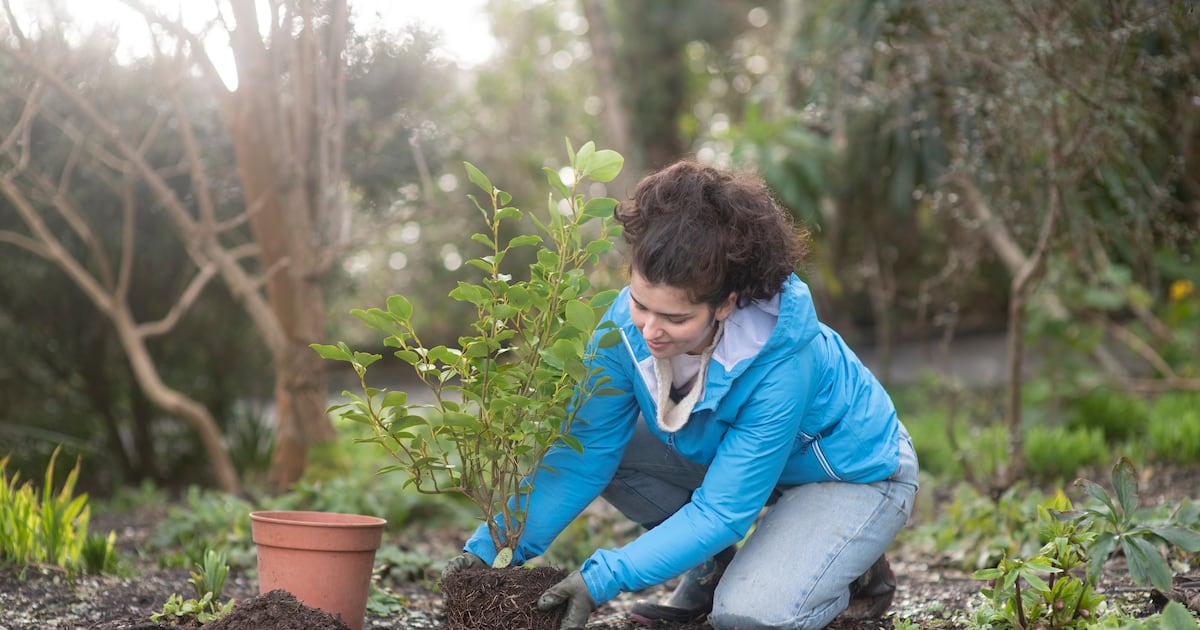
While bare-root season is officially over, you can also still plant all sorts of container-grown ornamental plants, from trees, perennials, alpines and hardy annuals to shrubs and hedging. Just make sure to prepare the ground well in advance by thoroughly digging out any weeds and breaking down any large clods of soil into a crumbly tilth. Work some well-rotted manure or home-made garden compost into the planting hole and pre-water it. Then soak the plant’s rootball thoroughly in a bucket or barrow of water before planting, followed by another generous watering immediately afterwards.
[ Spring has sprung, so here’s what to prioritise in the gardenOpens in new window ]
Finally, if you have some covered growing space available after all the above and really like the idea of getting ahead of the posse, then consider planting up a few summer containers. For a traditional summer bedding effect, choose species such as surfinia, petunia, fuchsia, calibrachoa, coleus, bidens, pelargonium and lobelia. For something a little more contemporary, try frost-tender bulbous species such as dahlia, gladiolus and begonia as well as tender summer perennials such as salvia, plectranthus and the castor oil plant, Ricinus communis. Give them the brightest, frost-free spot under cover that you’ve got, take care not to overwater, and be prepared to mollycoddle them lovingly with some horticultural fleece or bionet during any chilly spring nights. Come late May, all you’ll need to do is harden them off and then wheel them outdoors.
The moral of this week’s column? Put the hard work in during this magical month and your garden will reward you in a myriad of ways come summertime.
This week in the gardenKeep trays of freshly emerged seedlings sufficiently watered and protect them from cool night-time temperatures where necessary. Once their first set of true leaves has emerged, seedlings will need to be individually pricked out into modules, root trainers or small pots to encourage healthy growth and good root development.Watch out for early signs of slug damage on emerging herbaceous perennials and take suitable timely precautions.Dates for your diary
Zoom talk by gardener, educator, author and plantsperson Jimi Blake, Thursday, April 8th (7.30pm-9pm). See rhsi.ie.
Great Plants for Every Garden and How to Use Them, Altamont Walled Garden, Co Carlow; Sunday, April 11th (11.30am-1pm). An illustrated talk by the Kilkenny gardener and author Des Doyle, pre-booking essential. See altamontplants.com.
Spring Plant Fair, Arboretum & Gardens, Fota House, Co Cork; April 19th (11am-6pm). See fotahouse.com.
Comments are closed.