
Find tips from readers for backyard perennials, indoor gardens for kids, repurposed gift wrap, and upcycled seed starting containers.
A well-rounded homestead should include some perennial crops. They’re valuable in the kitchen, can provide fresh food before your annuals come up in spring, and are fun to grow! Here are some of my favorites.
Aronia. Let’s start with a superfood. Many fruits thus characterized (e.g., açaí berry, mango, and pomegranate) grow in tropical climates. Aronia offers a temperate zone alternative. Aronia melanocarpa berries are dark purple and high in antioxidants, particularly anthocyanins. They’re great sources of fiber, manganese, potassium, and vitamins C and E. Also called “black chokeberries,” their astringent flesh dries out your mouth. Commonly baked or processed (into juice, jams, etc.), we use frozen or dehydrated fruits in our oatmeal, yogurt, and muffins. But honestly, dead ripe and right off the bush really grows on you.Horseradish. This Brassica family member is hardy, low-maintenance, and easy to grow. Indeed, Armoracia rusticana is so vigorous you’ll need to ensure it doesn’t take over. Horseradish sauce is a healthy and delicious condiment, and homegrown and homemade is the only kind worth having. Make your horseradish sauce in autumn after a killing frost or in early spring as green shoots are just beginning to show. Horseradish root is also a great addition to ferments.Bronze fennel. If you’re seeking that special “anise” taste, try this. Foeniculum vulgare ‘Smokey’ is worth space in the garden. It’s valued as an ornamental, and pollinating insects will appreciate the blossoms. Bronze fennel’s diminutive bulbs aren’t harvested. Instead, leaves, flowers, and seeds are added to savory dishes, especially fish, just as you’d work with dill.
Garden sorrel. Also called “sour dock,” Rumex acetosa has been relished for its tangy, lemony taste by many cultures over its long history of cultivation. A favorite for soup (whether in India, Armenia, Poland, or France), sorrel is also stewed with meat or vegetables or added to sauces. Cooking counteracts its oxalic acid content. Young leaves and shoots are the most palatable and are rich in vitamin C. Overly mature plants should be cut to just above ground level to stimulate regrowth. I prefer garden sorrel over French sorrel (R. scutatus), as it’s more cold-hardy, easier to cultivate, and more adaptable to variable soil and environmental conditions.
Honeyberry. Also called “haskap,” Lonicera caerulea is cold-hardy and ripens early; it’s usually the first berry of spring. They’re easy to grow and are resistant to pests and disease. These bushes can be productive for up to 50 years, a great return on your investment! Honeyberries are often contrasted with blueberries. Honeyberries require less maintenance and are more adaptable. They look like elongated blueberries, and they have a unique, sweetly tart taste likened to a blueberry-raspberry-strawberry combo, a not-so-tart tart cherry, and even kiwi! Plant at least two different cultivars for optimum pollination, prune every few years to maintain desired shape and productivity, and (because they’re loved by songbirds) use protective netting over ripening fruits.
Sweet angelica. Angelica archangelica is novel because it’s sweet. The stems, leaves, and seeds can be added to savory dishes, such as soups, salads, and sauces, but they’re also commonly used to reduce the added sugar in sweet recipes. Sweet angelica is frequently used to complement stewed fruit (from apples to peaches to tart cherries to citrus), and it also shines in tea, lemonade, and jams. We never make rhubarb sauce without it. Angelica’s hollow stems are also popularly crystallized and used in dessert decorating.
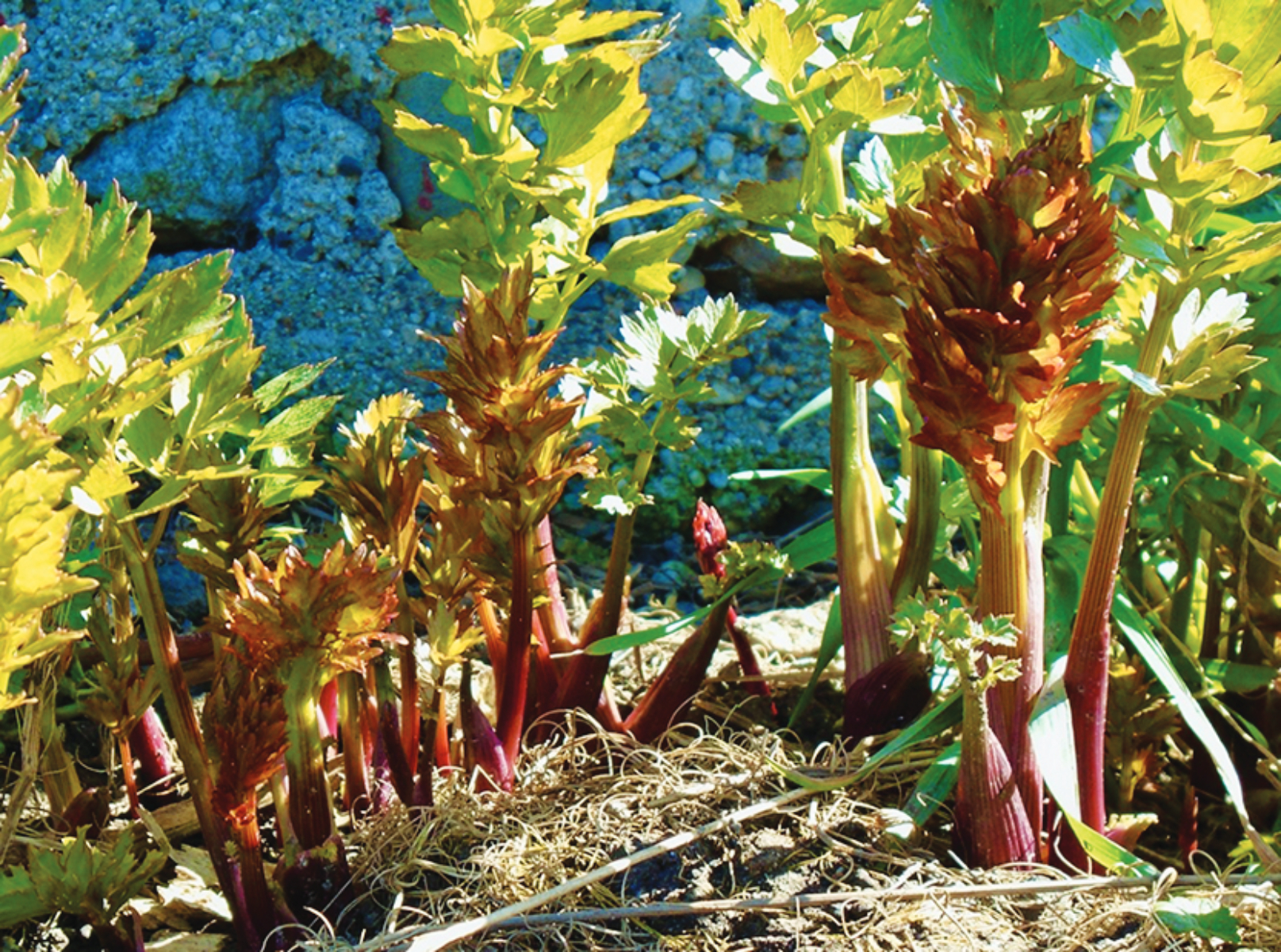
Lovage. Levisticum officinale is also called “sea parsley” or “love parsley.” A celery and parsley substitute, it tastes strongly of celery yet sweeter and more intense, with elements of parsley and anise; leaves are used sparingly. I add lovage to any green salad (it really makes a spring salad something special), vegetable salad, soup, or main course that calls for a garnish of celery leaves, parsley, or scallions. Leaves should be harvested when young; aging plants can be cut back two or three times during summer (prior to flowering) to encourage regrowth and another crop.
Egyptian walking onion. Allium x proliferum is a cross between the commonly cultivated onion (Allium cepa) and the Welsh onion (A. fistulosum). This perennial onion is best planted in early fall, but you can also plant in early spring once the ground can be worked. This scallion stand-in has an extraordinarily long shaft with a longer harvest window than annual scallions, and, should you harvest extra onions, they’ll last indefinitely in the fridge. Mature walking onions produce bulbils, which are little onions at the top of the plant. These either fall over and take root (hence the “walking” in the name), or you can pop them off and place them where you want them.
Leah, Michigan
Indoor Gardens For Kids
Sowing seeds in small starter pots filled to the brim with soil is often the first step for getting children excited about gardening. I’ve used recycled newsprint to form small pots that can then be planted directly into the garden once seedlings have sprouted and been hardened in our cool temperatures. Recently, though, I’ve begun using vegetables to start new growth with outstanding results and even more enthusiastic responses from the younger gardeners in my life. Green onions, leeks, bok choy, celery, and living lettuce can have second and third lives in water on my windowsill. Children are amazed at the quick regrowth they observe firsthand. This take on hydroponics requires minimal preparation and upkeep – you just need a rooted vegetable, a glass container, and fresh water that you’ll want to change every day or two. Place your regrowing vegetables in the windowsill. The sunlight will activate photosynthesis, and new growth will appear! Children love how quick it is. They can help nurture the plant, and the whole process is easily observed. My regrowing veggies have led to in-depth discussions about roots, needs of plants, and more. Once the soil warms with spring and can be worked, these vegetables can take their place in the garden once again.
Pam, Calgary, Canada
Repurposed Gift Wrap

If you have an outdated atlas, take out the staples and use the large piece of paper to wrap gifts. Maps also make nice gift bags.
Irene, Illinois
Upcycled Seed Starting
I like to use all kinds of recycled containers for pots. One of my favorites for starting seeds is clear clamshell boxes. With the lid closed, they’re like miniature greenhouses. I fill them with fine seed-starting soil and plant the seeds about an inch apart. I water well, close the lid, and wait as they grow. I closely monitor the root development. Just before the seedlings become root-bound, I use a small spoon to scoop out each seedling and transplant them to larger containers.
Danielle, Arkansas
We Pay for Top Tips
Do you have handy home, farm, or garden advice? We’ll pay you $25 for each tip we publish, plus another $25 if we use your photos. So, send your niftiest tips to us at Letters@MotherEarthNews.com.
Originally published in the April/May 2026 issue of MOTHER EARTH NEWS and regularly vetted for accuracy.
Comments are closed.