
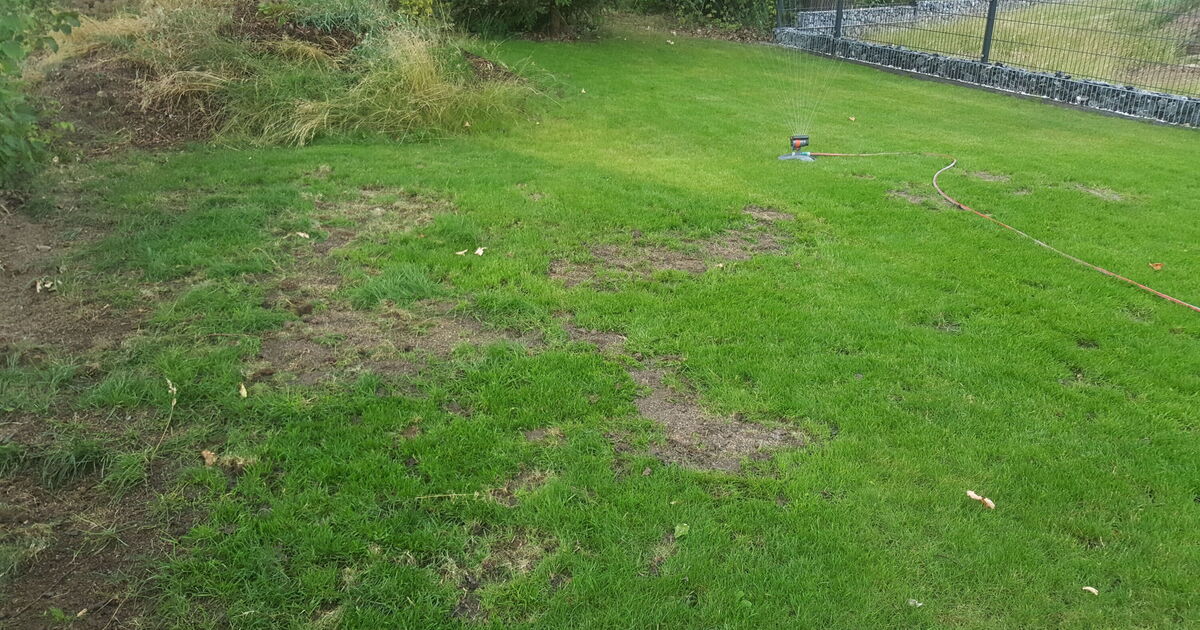
It’s always depressing when you head back outside after a long winter ready to get your garden in shape for the summer ahead and find your pride and joy lawn has deteriorated into a patchy, yellow mess.
Though grass is one of the hardiest plants in any garden, it still takes regular maintenance to keep it looking its best, especially if you’re an old school gardener who prefers an unnaturally neat look rather than a nature-boosting wild garden with a longer lawn.
According to experts at Whitehall Garden Centre, which is a fourth-generation family business based in the South West of England, there is one quick task you can undertake in April in order to boost your lawn and banish unwanted patches.
In its advice on ‘Lawn care tips for April’, it says: “If your lawn has bare patches, now’s the time to tackle them.
“It’s now also ideal to sow seed for new lawns, as the soil has started to warm up. Before sowing, prepare your soil by breaking it up with a garden fork and raking it over to produce a level surface with a fine, crumbly texture.
“Sow the seed and lightly rake it in. You may need to net the area after sowing to stop birds from eating all your grass seed! If there is no rain for a couple of days, water the site using a sprinkler or a watering can with a fine rose.”
And to remove moss, rake over the lawn with spring tine rake: “Tackle moss in your lawn by raking it with a spring tine rake. If necessary, you can apply moss killer (always following the manufacturer’s instructions) and rake out the dead moss once the moss killer has taken effect. Dead moss takes a long time to break down, so it’s best not to add it to a compost heap.
But the garden centre says that it’s better for wildlife if you leave the lawn a bit longer.
It adds: “Consider mowing less often for a more wildlife-friendly lawn, and leave your lawnmower blades on a higher setting. This allows low-growing plants like self-heal, buttercups, clover and other wildflowers to thrive, providing pollen for bees and other pollinators. If you prefer the look of a neatly mown lawn, why not leave a small area unmown as a wildlife haven?”
Comments are closed.