
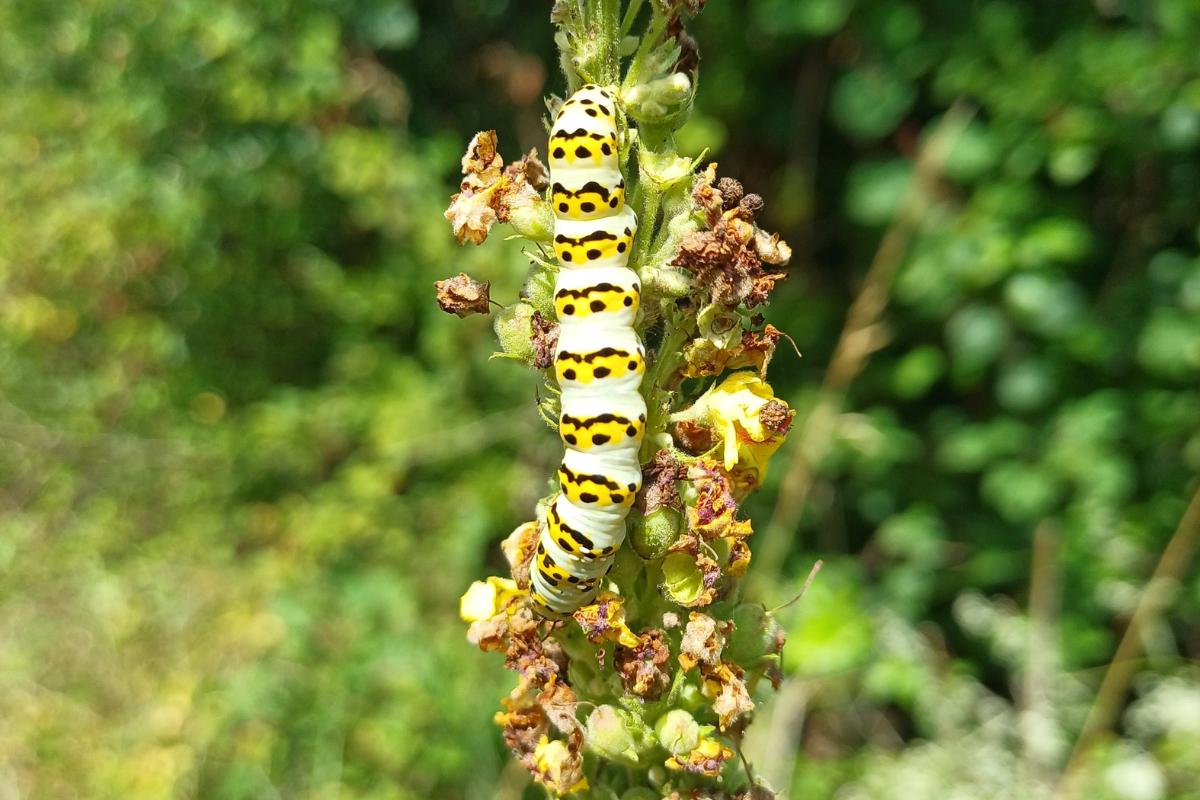
A simple gardening choice could help safeguard one of the UK’s rarest moths.
Hampshire & Isle of Wight Wildlife Trust is encouraging residents in Hampshire to plant dark mullein (Verbascum nigrum) to support the nationally scarce striped lychnis moth (Shargacucullia lychnitis).
The caterpillars of this moth rely exclusively on the dark mullein plant for food, making its survival closely tied to the presence of the wildflower.
READ MORE: Old life rings bring joy to giraffes at Marwell Zoo
Fiona Haynes, reserves officer at Hampshire & Isle of Wight Wildlife Trust, said: “The chalk soils around Winchester provide the ideal growing conditions which dark mullein prefers and, consequently, the striped lychnis moth.
“Dark mullein is easy to grow from seed. For best results, start seeds in trays to grow plug plants before planting out.
“A single plant in a sunny corner of a garden or community space can provide an important food source, while also supporting many other pollinators too. It’s a small action with a big impact.”
Once common in southern England, the striped lychnis moth has declined due to habitat loss and the disappearance of dark mullein.
For the last three years, striped lychnis caterpillars have been recorded on restored habitat at a Hampshire & Isle of Wight Wildlife Trust nature reserve.
The caterpillars are easily recognised by their bold black-and-yellow stripes and their presence on the tall flower spikes of dark mullein.
READ MORE: Hope for falcon pair at Romsey Abbey as new male arrives at nest
The moths lay their eggs on the plant in June, and the caterpillars emerge in July to feed until they drop into the soil to pupate, sometimes remaining underground for more than one winter.
Dark mullein is well suited to chalky soils, and is low-maintenance once established.
It will also tolerate a wide range of soil conditions with good drainage, such as those found in Romsey, Eastleigh, and Southampton.
It also attracts other pollinators, including bees and hoverflies, with its tall spikes of yellow flowers and pink stamens.
Seeds and young plants can be purchased from wildflower nurseries and online suppliers.
Hampshire & Isle of Wight Wildlife Trust offers free gardening advice to help residents create wildlife-friendly spaces.
Comments are closed.