
Credit: Imagine Saturations / Getty Images
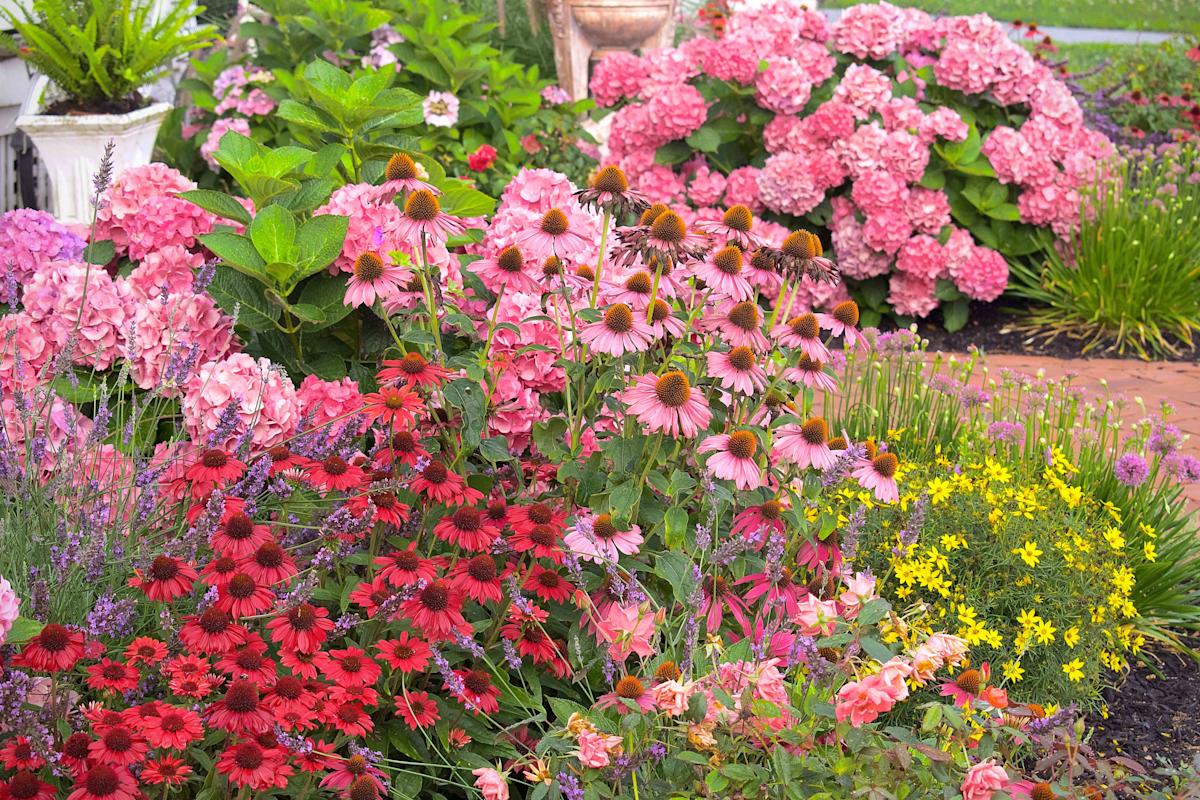
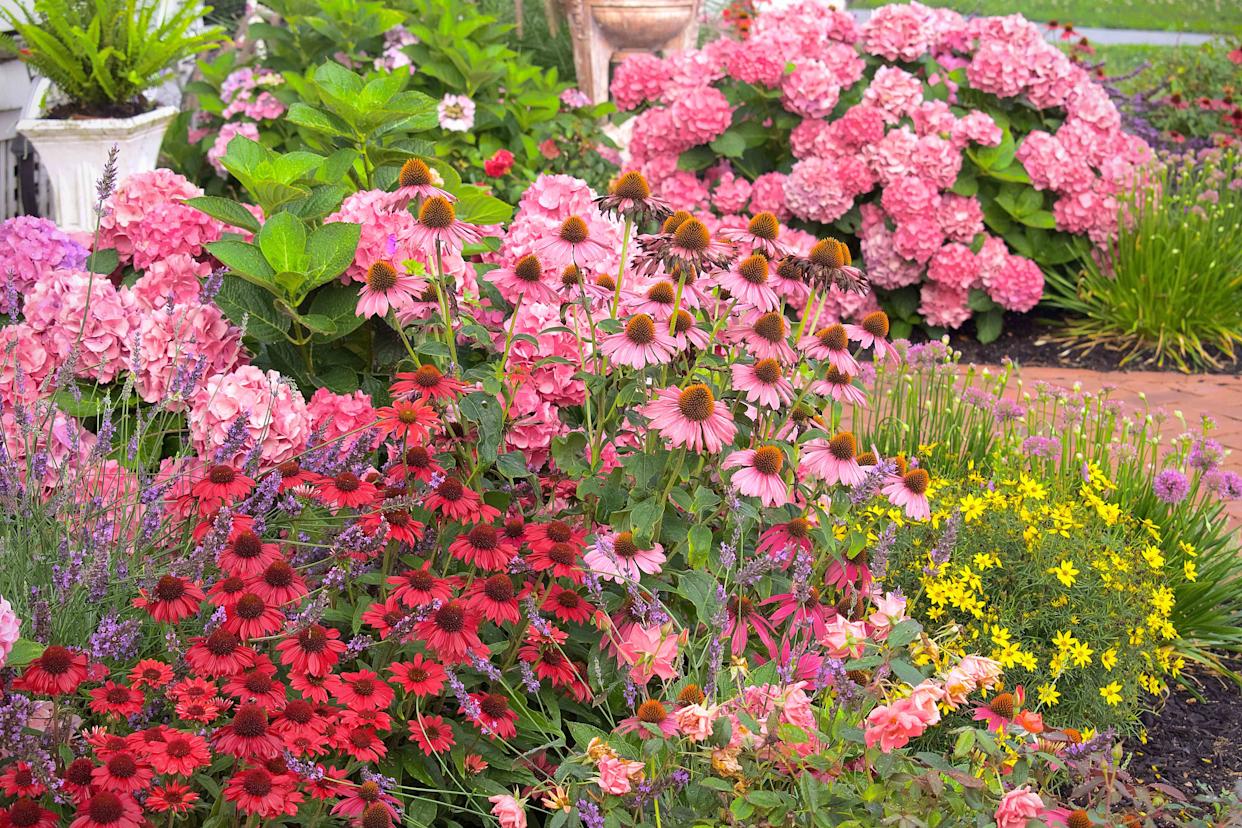
Hydrangeas are versatile landscape plants that bring a touch of English cottage garden aesthetic to a yard. One way to make sure your hydrangeas look their loveliest is to plant them alongside suitable companion plants. Companion planting is the practice of growing different plants together in mutually beneficial combinations. Here are some favorite companion plants to grow alongside hydrangeas, according to a garden designer. Some of these plants are companions for sun-loving hydrangeas; others are better for shade-loving hydrangeas.
Meet Our Expert
Laura Najman Janney is a garden designer and owner of The Inspired Garden in New Jersey.
Picking a Companion Plant
Most hydrangeas thrive in filtered shade or morning light, but some contemporary varieties like ‘Limelight’, ‘Quick Fire’, and ‘Moon Dance’ have been bred to thrive in partial-to-full sun conditions. Choose companion plants with an eye to how much sun your hydrangeas need.
“Picking plants according to the growing conditions they need is the most important thing when planning a garden,” says Laura Najman Janney, garden designer and owner of The Inspired Garden in New Jersey. “A beginner thinks, ‘Will this color look pretty with that color? If so, I’ll put them together.’ However, your top concern should be picking plants that need the same growing conditions and the same amount of sunlight and water.”
Tips
Your garden will look more bountiful if you plant seeds for annuals like zinnias, poppies, and snapdragons in the bare spaces in your garden. “Choose bigger, looser annuals and tuck them into your garden,” Janney says. “Perennials take a few years to fill out in a garden while annuals fill out faster and make a garden look colorful and abundant, quickly.”
01 of 13
Allium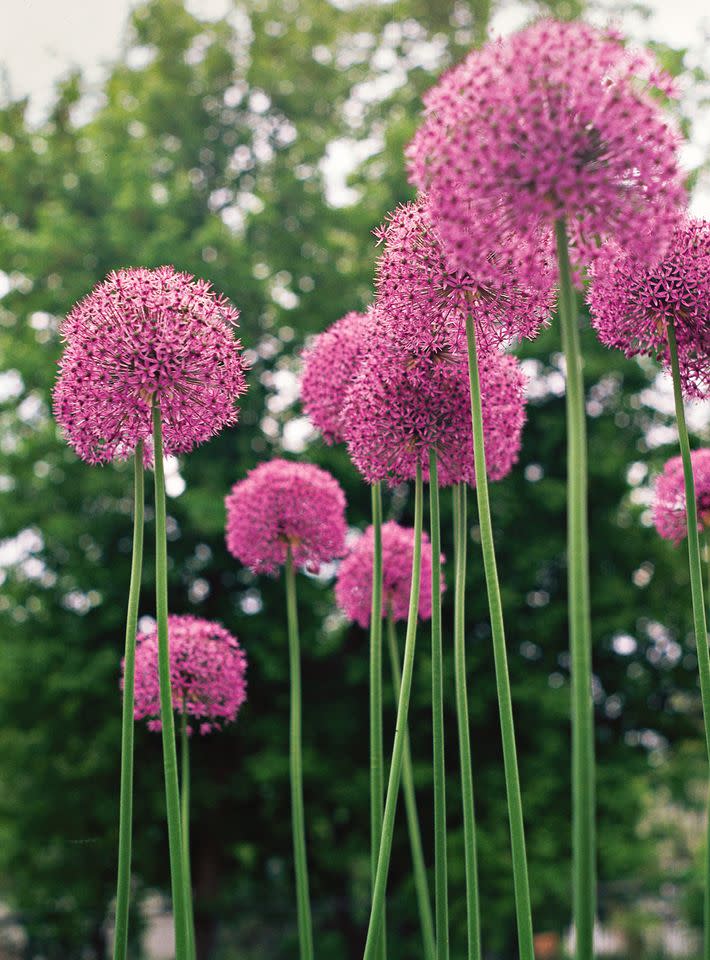
Credit: Mark Kane
Alliums have showy, globe-shaped blooms that make a big statement when planted alongside hydrangeas. “I love ‘Globemaster’ because its flowers are giant,” Janney says. Allium is an ornamental onion that comes in similar colors to hydrangeas and likes well-drained soil and full sun, so it’s a good companion plant for hydrangeas that like more sun.
Growing Conditions: Full sun and well-draining soil
Size: 1 to 4 feet tall, 3 to 10 inches wide
Zones: 4–10
02 of 13
Astilbe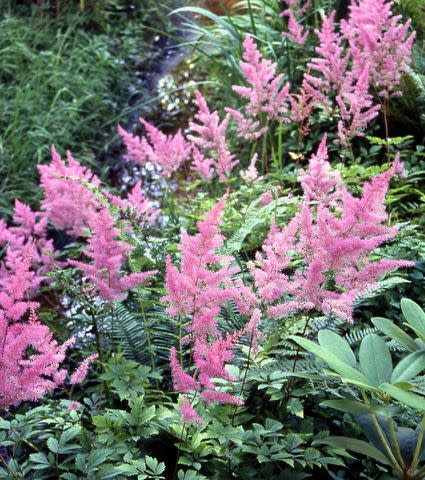
Credit: Karlis Grants
Astilbe is a good companion plant for hydrangeas that prefer shade. Their plumed blooms in pink, red, white, and purple, and their fern-like leaves add visual contrast when planted with hydrangeas. “Astilbe blooms before hydrangeas, so they extend your color,” Janney says.
Growing Conditions: Part to full sun, but shade tolerant; loamy soil
Size: 6 to 24 inches tall, 12 to 60 inches wide
Zones: 3–8
03 of 13
Bachelor Button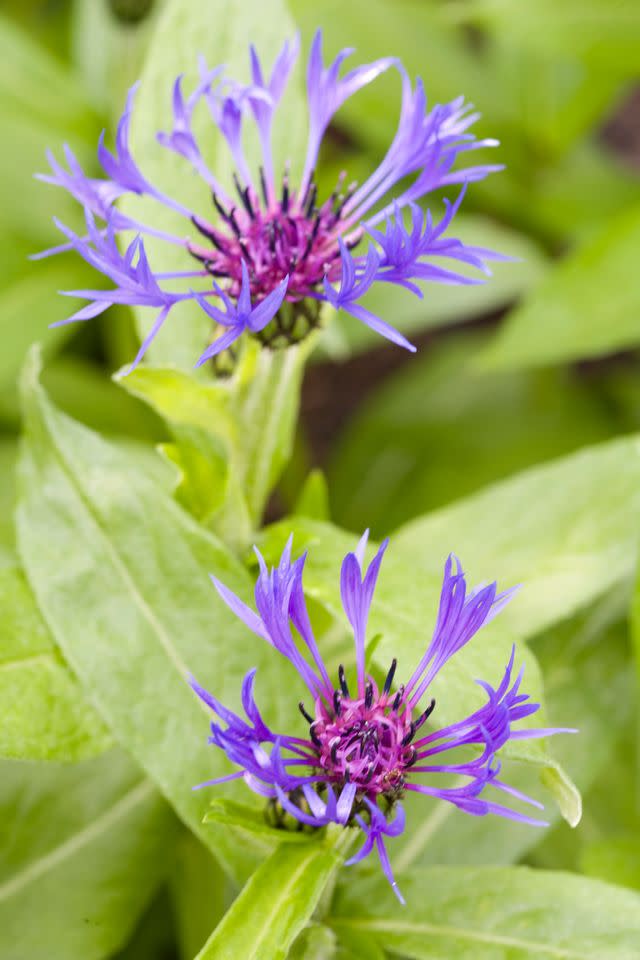
Credit: Bryan E. McCay
If you have hydrangeas growing in full sun, consider pairing them with bachelor buttons (Centaurea montana), a perennial flower that loves full sun, attracts pollinators, and produces striking blue flowers. “These have such a classic cottage garden look, and they bloom before hydrangeas,” Janney says. “Best of all, they keep blooming all summer if you deadhead and water it well.” While bachelor buttons are most known for blue blooms, some varieties produce pink, purple, burgundy, white, and two-toned blooms. Plant them in masses for an explosion of color. There’s also an annual bachelor button (Centaurea cyanus) that looks good as a companion plant for hydrangeas.
Growing Conditions: Part to full sun, well-drained soil
Size: 24 inches tall, 12 to 24 inches wide
Zones: 3–8
04 of 13
Boxwood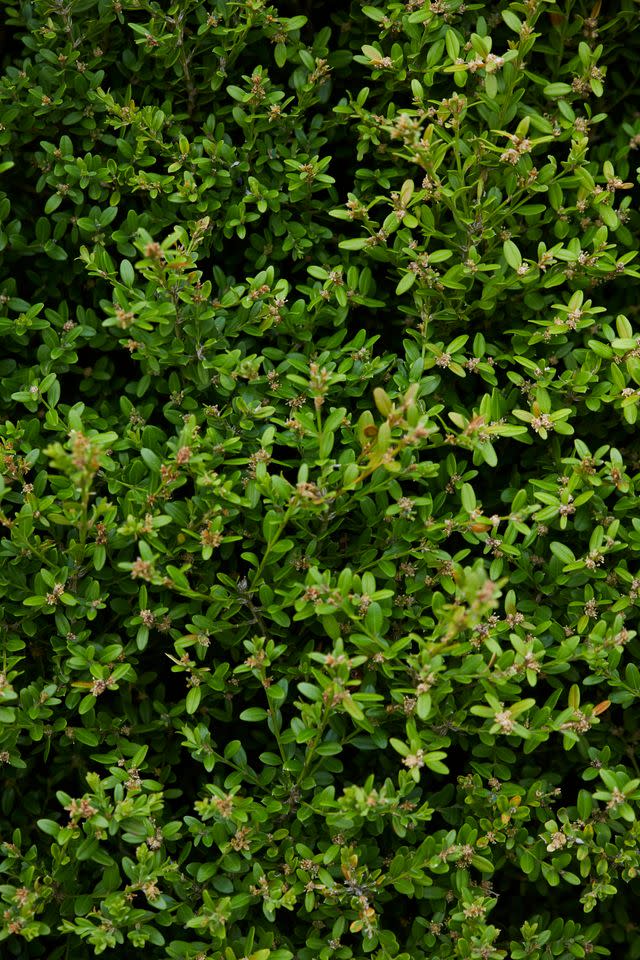
Credit: Carson Downing
Boxwoods are classic and popular hedge shrubs that add visual interest and architectural lines to a garden or yard. Trim them to clean, neat geometric shapes to contrast with the biomorphic shapes of hydrangeas. Boxwoods are easy to grow, green year-round, and long-lived.
Growing Conditions: Part to full sun; loamy soil, well-drained soil
Size: 2 to 8 feet tall, up to 8 feet wide
Zones: 5–9
05 of 13
Coneflower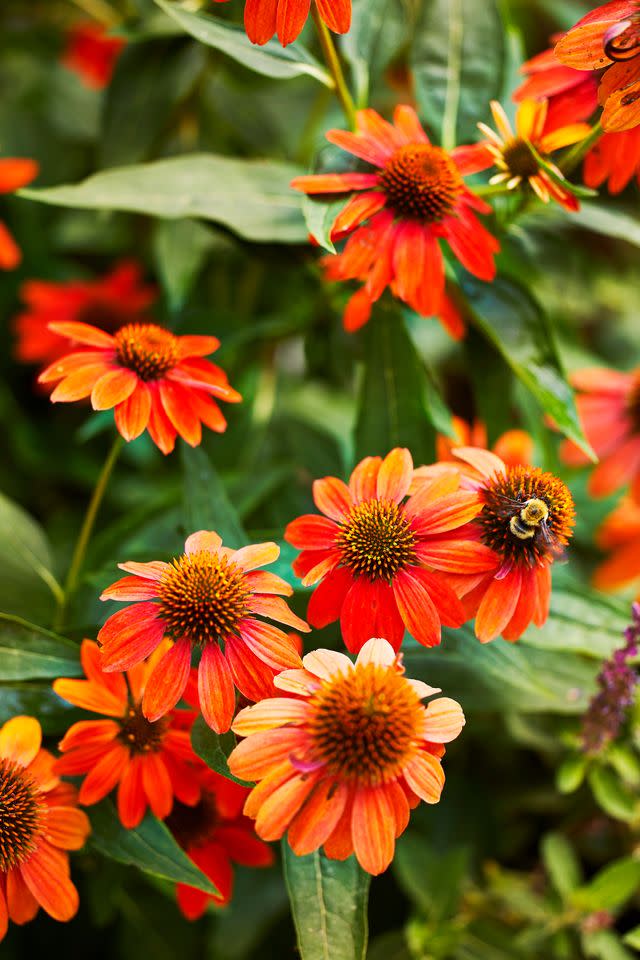
Credit: Carson Downing
This pollinator favorite is a perfect pick for planting alongside sun-loving hydrangea. Coneflower (Echinacea) produces daisy-like blooms in yellows, purples, reds, and whites. Janney recommends planting them in masses in the middle of a mixed border where they’ll bloom all summer until frost. Janney likes ‘Raspberry Truffle’ and ‘Pow Wow,’ a deep pink variety. “They make great cut flowers, too,” she says. “Bring them inside and enjoy them indoors as well as outdoors.”
Growing Conditions: Full to partial sun, loamy soil, well-drained soil
Size: 3 to 4 feet tall, 1 to 2 feet wide
Zones: 3–8
06 of 13
Coral Bells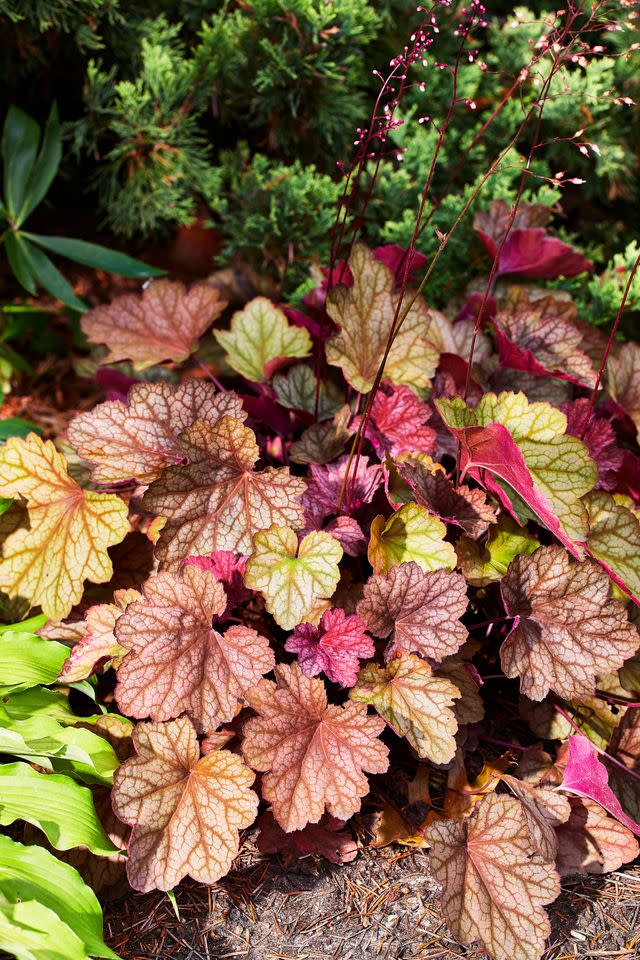
Credit: Carson Downing
Coral bells (Heuchera) are perennials with gorgeous foliage in orange, silver, red, green, purple, black, and chartreuse, along with tiny clusters of bell-shaped blooms. Their blooms attract butterflies and hummingbirds, and heuchera will cover the ground and suppress weeds. Plant them in groups of three.
Growing Conditions: Part to full sun, well-drained soil
Size: 8 to 18 inches tall, 12 to 14 inches wide
Zones: 4a–9a
07 of 13
Ferns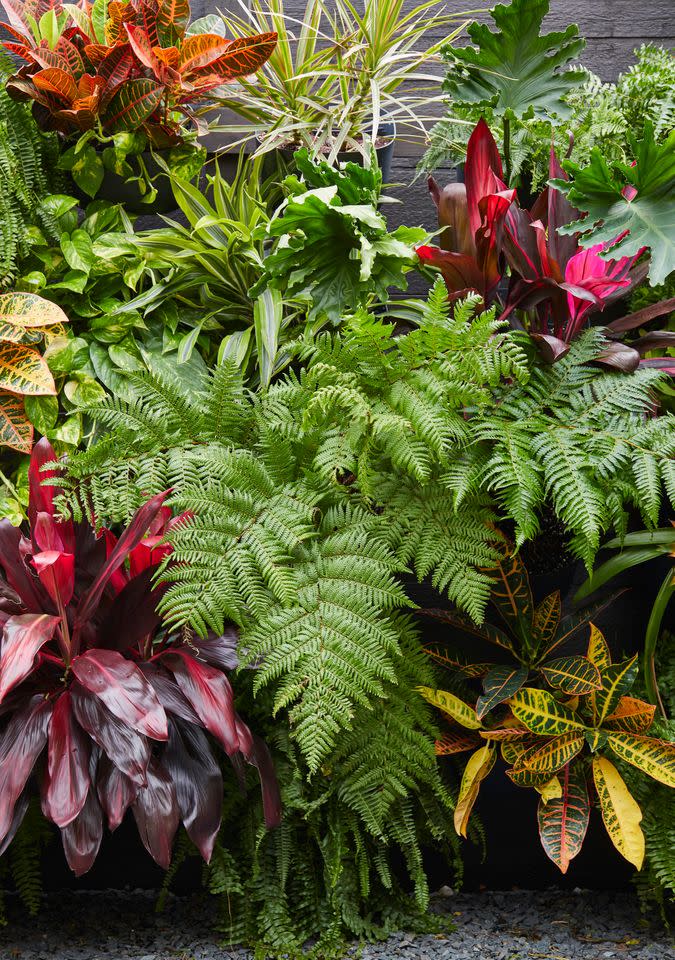
Credit: Marty Baldwin
Ferns bring lovely greenery to a garden full of blooming hydrangeas. Like some hydrangeas, ferns like a shady spot. And while hydrangeas only bloom in summer, ferns will add interest and color when hydrangeas aren’t full of flowers. Janney recommends lady ferns for their feathery foliage and Christmas ferns because they’re evergreen in most climates. “I like Christmas ferns because they will be green when hydrangeas and other plants are bare wood,” Janney says. “It’s nice to look outside in January and see green ferns.”
Growing Conditions: Part sun to shade, well-drained soil
Size: 1 to 3 feet tall and wide
Zones: 2–10
08 of 13
Geranium/Cranesbill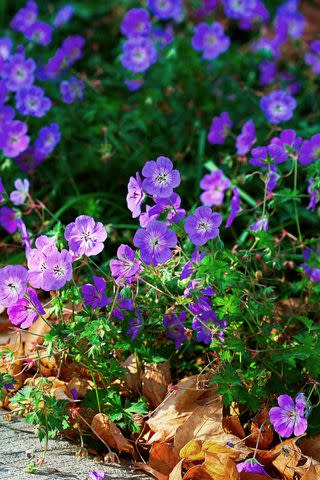
Credit: Justin Hancock
Perennial geranium, commonly known as cranesbill, is a long-time garden favorite known for its tiny, jewel-toned blue, pink, and purple flowers. It has a low, mounding habit, so it’s a good pick for a weed-suppressing groundcover in a garden alongside hydrangeas. “Perennial geranium does well in full and part sun, so it can go with a lot of types of hydrangeas,” Janney says. They provide complementary color and texture to hydrangeas, too.
Growing Conditions: Full sun to shade, average soil
Size: 9 inches to 2 feet tall, 1 to 2 feet wide
Zones: 4–8
09 of 13
Geum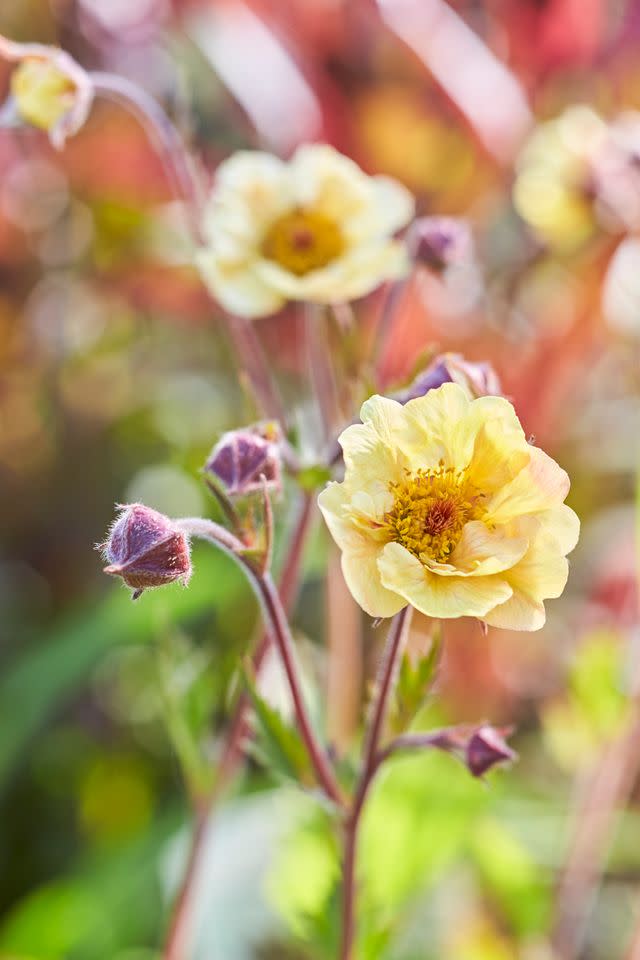
Credit: Kim Cornelison
Geum, also called avens, is a blooming perennial with dark green leaves and blooms in red, gold, orange, pink, and white that likes shady, moist areas, like hydrangeas. “I love this plant because it blooms in early spring, after tulips and dafodils but before hydrangeas,” Janney says. “It keeps blooming for much of the summer, so it helps pack more color into your garden season.” Geum works well as a groundcover planted alongside hydrangeas. It has a mounding habit and attracts pollinators. “It looks beautiful alongside hydrangeas,” Janney says.
Growing Conditions: Part shade to full sun, loamy soil
Size: 9 to 18 inches tall, up to 18 inches wide
Zones: 5–7
10 of 13
Hosta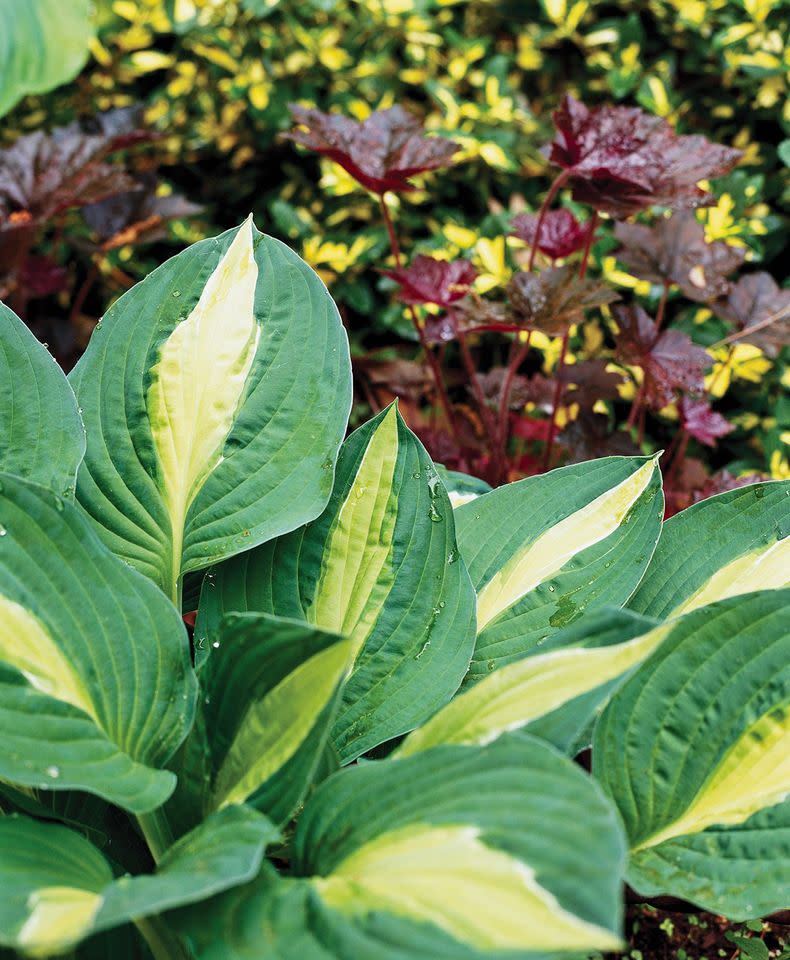
Credit: Matthew Benson
Hosta is grown for its bold, shapely foliage that looks tropical and comes in an array of colors, shapes, and patterns. Hosta’s spreading habit complements the elegant, upright shape of hydrangeas. Pair shade-loving hostas with hydrangeas to create a mixed or woodland border in your garden. If deer frequent your garden, you may want to reconsider hostas, Janney says. “They’re a deer salad bar.”
Growing Conditions: Part sun to shade, well-drained soil
Size: 6 to 48 inches tall, 1 to 5 feet wide
Zones: 3–9
11 of 13
Phlox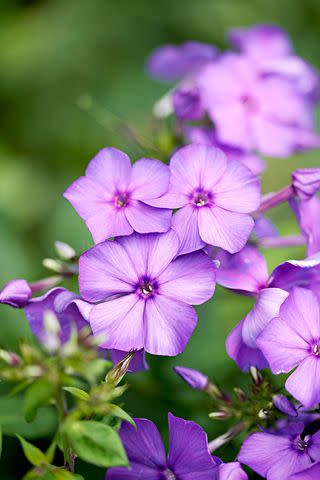
Credit: Marty Baldwin
Phlox and hydrangeas are a classic English garden combination, Janney says. Phlox is a perennial that has clusters of blooms that mirror the look of hydrangeas, and phlox comes in similar flower shades of pink, purple, and white. Depending on the variety, phlox can be low-growing and used as a weed-suppressing groundcover, or it can be a tall plant that grows up to 4 feet high. Garden phlox (Phlox paniculata) blooms all summer long and grows to 4 feet tall, while creeping phlox (phlox subulate) and woodland phlox (Phlox stolonifera) are shorter varieties that stay under a foot tall.
Growing Conditions: Part shade to full sun, moist soil
Size: 9 inches to 4 feet tall, up to 24 inches wide
Zones: 4–8
12 of 13
Speedwell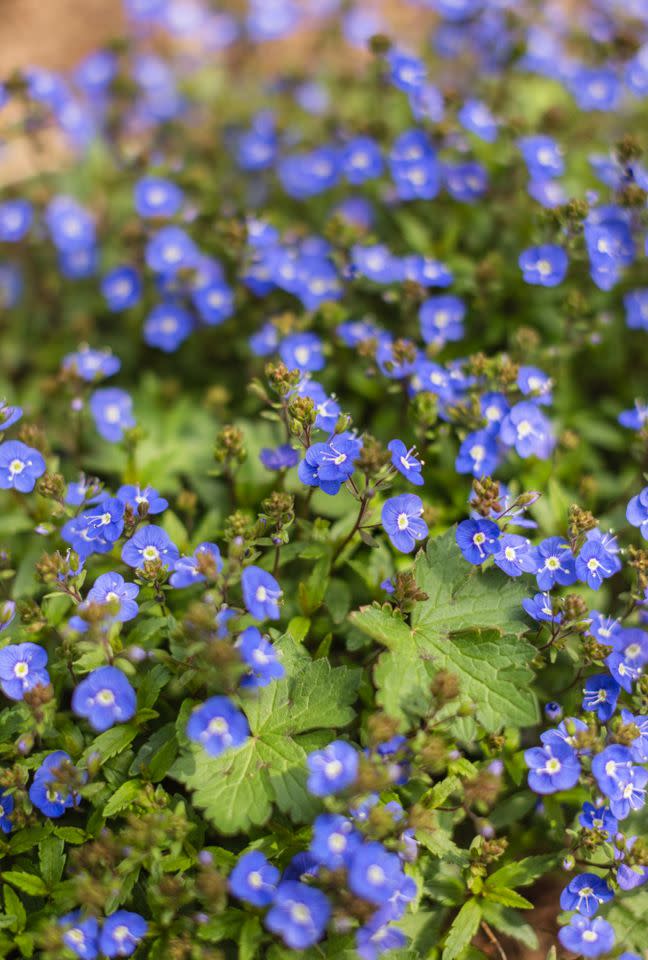
Credit: Bob Stefko
Speedwell (Veronica spp.) is a perennial that produces spiky flowers in shades of white, pink, purple, or blue. Speedwell is tolerant of different growing conditions and comes in groundcover varieties as well as taller, upright varieties. “I love this plant because it’s very hardy and its spikey flowers give a nice contrast to hydrangea blooms,” Janney says
Growing Conditions: Part shade to full sun, loamy soil
Size: 3 to 48 inches tall, 18 to 24 inches wide
Zones: 3–9
13 of 13
Spirea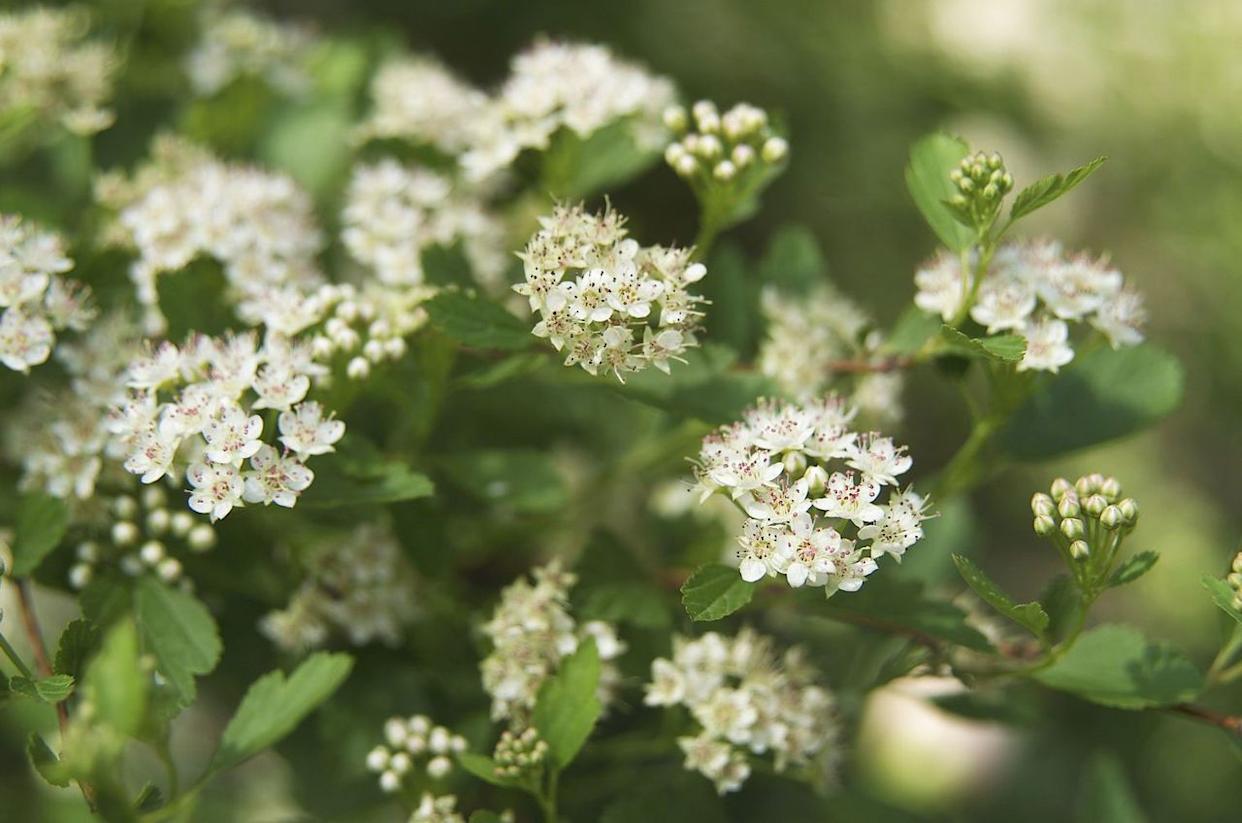
Credit: Marty Baldwin
Spirea is a dense shrub covered in blooms in the spring and is a nice complement to hydrangeas. Most spirea grow tall enough to protect hydrangeas from the sun, so it’s a good companion plant for classic, shade-loving hydrangeas. There are lots of varieties of spirea. Janney likes ‘Blue Kazoo’, a compact variety of spirea that grows only 2 feet tall and has blue foliage and white bloom; and ‘Goldflame,’ a medium-sized variety that grows 3 feet tall and has yellow-green foliage and rosy red flowers. If you want a larger spirea, go with Double Reeves spirea (Spiraea cantoniensis ‘Lanceata’), a classic white-blooming spirea that grows to 8 feet tall.
Growing Conditions: Part to full sun, well-draining soil
Size: 2 to 8 feet tall, 2 to 6 feet wide
Zones: 6–9
Read the original article on Better Homes & Gardens
Comments are closed.