
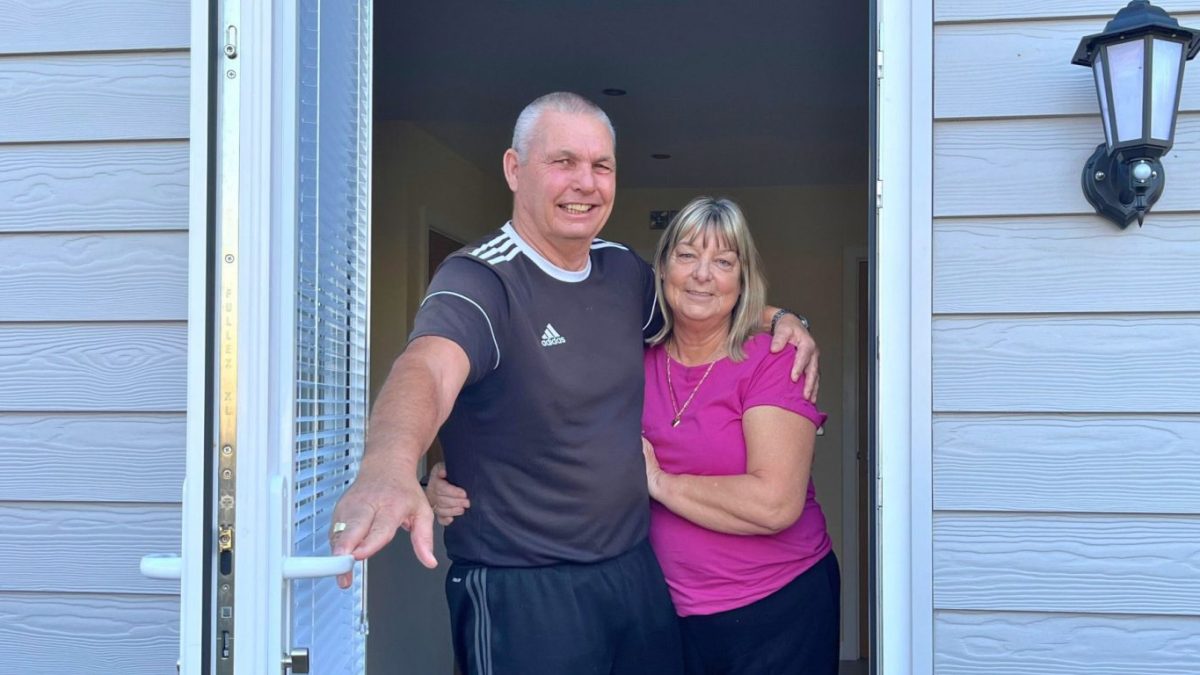
Chris Woods, and his wife Jan, decided to downsize from their three-bedroom house in Basildon, Essex, when Jan was diagnosis with fibromyalgia, a few years ago. At first, like many downsizers, they looked into buying a bungalow.
“We were worried about Jan with stairs in the future,” says Chris. “But they were very expensive for what they were.”
The couple’s daughter, who is married with three children and was also looking to move, came up with the idea of pooling their resources and buying a multi-generational home.
New FeatureIn ShortQuick Stories. Same trusted journalism.
The family bought a five-bedroom house with a large garden for £650,000 in 2023, the idea being that they could build an annexe in the garden for Chris and Jan.
The two generations paid 50 per cent each towards the property purchase. Chris and Jan were mortgage-free, but their daughter and her husband still had a mortgage, and one unexpected complication was that their lender wouldn’t allow Chris and Jan to be named on the deeds.
“My daughter and her husband are on the deeds of the house, and we had to get a Trust Deed, confirming that we have contributed half,” says Chris.
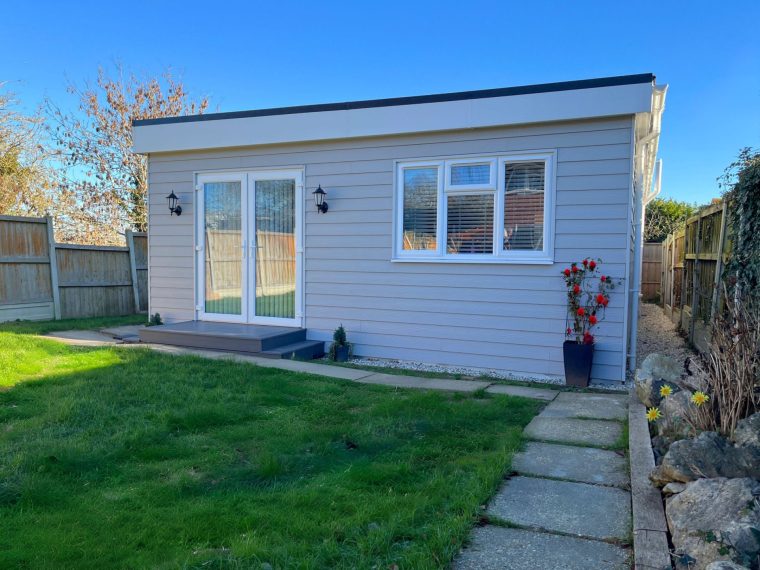 The annexe is a good size for Chris and Jan to live in (Photo: Jess Withington/iHus Annexe)
Initially, the family all lived together in the main house while they were getting building quotes and waiting for planning permission, but they quickly hit problems.
“Originally, we were looking for brick-built annexe but that was going to be so expensive,” says Chris. “[It] was also turned down for planning permission – we don’t know why.”
They then found out about iHus Annexes from a friend and went to take a look. “For all annexe builds, we submit two forms on planning requests, a householder application and a certificate of lawfulness,” says Rob Harris of iHus Annexes.
“This second route is slightly different and means that, for planning purposes, the annexe is treated as a mobile home and has to be built to set limitations, often resulting in the annexe being constructed in two parts and inspected as such before being joined together.”
The Woods’s application was refused under householder application but approved under the certificate of lawfulness. Using this dual application method, iHus Annexes has a 94 per cent application success rate and are able to offer a money-back guarantee on the planning process.
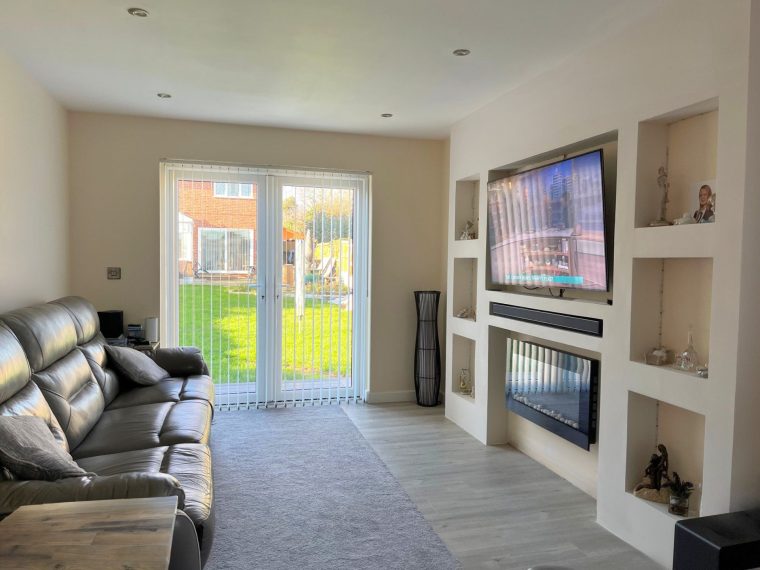 The lounge looks out on to the main house where their family lives (Photo: Jess Withington/iHus Annexe)
Under the certificate of lawfulness, the annexe is considered as a temporary structure, which has no limitation on the length of time it can remain in place indefinitely, provided it is continuously used for ancillary purposes to the dwelling and does not result in a change of use.
“It has to be able to be transported by road. It’s the same structure [as those built with householder application] but there is a join down the middle that you don’t notice,” says Chris.
The couple’s iHus Annexe measures 6.5 metres x 12.5 metres and has two bedrooms, a shower room, utility room and open-plan kitchen, dining and living room. It cost £150,000. Again, Chris and Jan contributed half, with their daughter and her partner paying the rest. “Once it started, it took about two months to build as a lot of it is prefabricated,” says Chris.
“Right at the beginning, we decided on things like the flooring, carpets and kitchen, we had everything the way we wanted it. I really enjoyed the design process; we could decide where we wanted the TVs and the sockets.”
The couple moved in two years ago and split all the bills 50/50 with their daughter and her family. Despite the addition of an annexe, the family’s council tax bill has remained the same, as have other expenses.
“We’ve never been charged more council tax; we’ve been told this is because we are family staying there. If it had been for profit, the council would have charged us extra,” says Chris.
“And for things like insurance, it’s classed as a garden building.” The monthly bills come to £800, with each family paying £400.
There are advantages other than financial to the family’s multi-generational set-up. “We have three grandchildren, aged 19, 18 and 15, and we can help with picking them up from places,” says Chris. “They are also there if we need help later in life, although we don’t at the moment.”
While Jan has retired, Chris still works full-time as an Asda delivery driver, having previously been a taxi driver. “I couldn’t just retire and stay at home. At 70, I might turn it down a bit and go part-time.”
The Woods are pleased with how things have worked out and would recommend if to others, depending on how well they get on with family members. “We have our own living space but, on Sundays, our daughter does a big roast, and we all go round there for lunch.”
Comments are closed.