
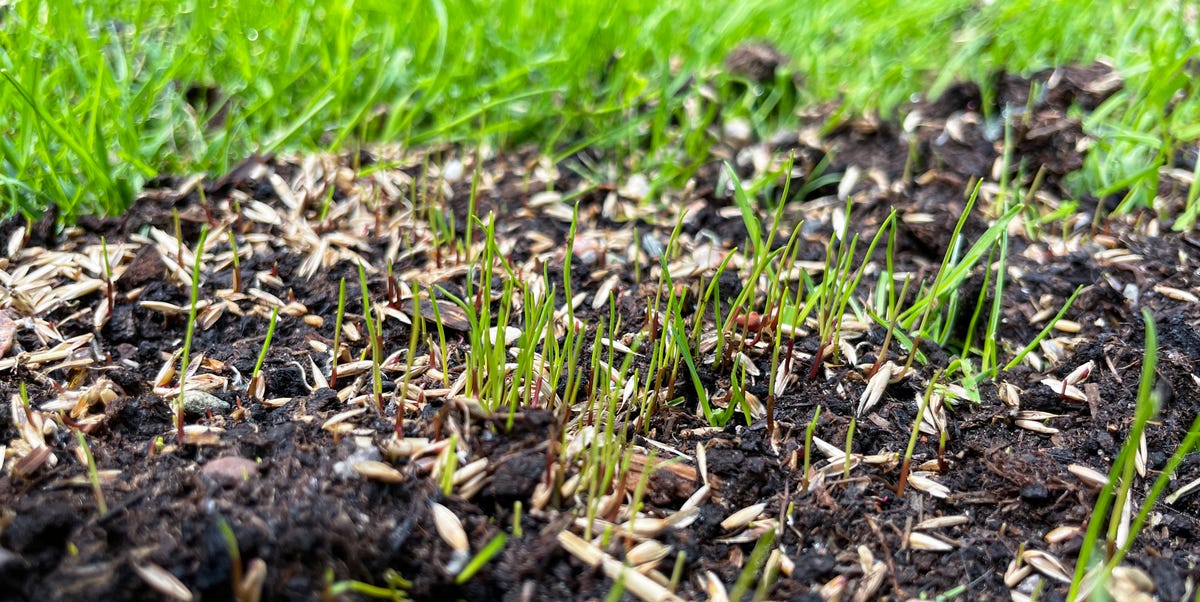
Overseeding is one of the simplest ways to revive a tired lawn in spring, helping to fill in sad-looking spots as well as improve grass colour and thickness.
But before you reach for the seed, a little preparation goes a long way.
“Overseeding is one of the easiest ways to bring a tired lawn back to life, filling in bare patches and boosting both thickness and colour,” says Peter Chaloner, managing director of Cobra Garden Machinery.
“Yet many gardeners make the mistake of scattering seed straight onto the grass without preparing the soil first, which can hinder the results.”
Here’s how to get your lawn ready for the best possible results.
Clear and prepare the surface
“One of the most important steps before overseeding is properly preparing the lawn surface,” Peter explains. “Many gardeners simply scatter seed over existing grass, but if the soil underneath isn’t exposed, the seed struggles to make good contact and germinate.”
While it’s usually best not to mow too short early in the season, Peter advises trimming slightly shorter in the areas you plan to overseed.
“This allows the new seed to reach the soil more easily and improves the chances of successful germination.”

Maksims Grigorjevs//Getty Images
Remove moss, thatch and debris
A build-up of thatch can prevent new grass from establishing.
“That layer of dead grass, moss and organic matter can act like a barrier between the seed and the soil,” Peter says. “If it’s too thick, new grass seed won’t be able to establish properly.”
Raking or lightly scarifying the lawn helps remove this layer and creates small grooves for the seed to settle into.
“Using a scarifier or a sturdy spring-tine rake can make a big difference to how well the new grass grows.”
Loosen compacted soil
If parts of your lawn feel hard underfoot, compaction could be the issue.
“This restricts airflow, water movement and root growth, making it harder for new grass to establish,” Peter explains.
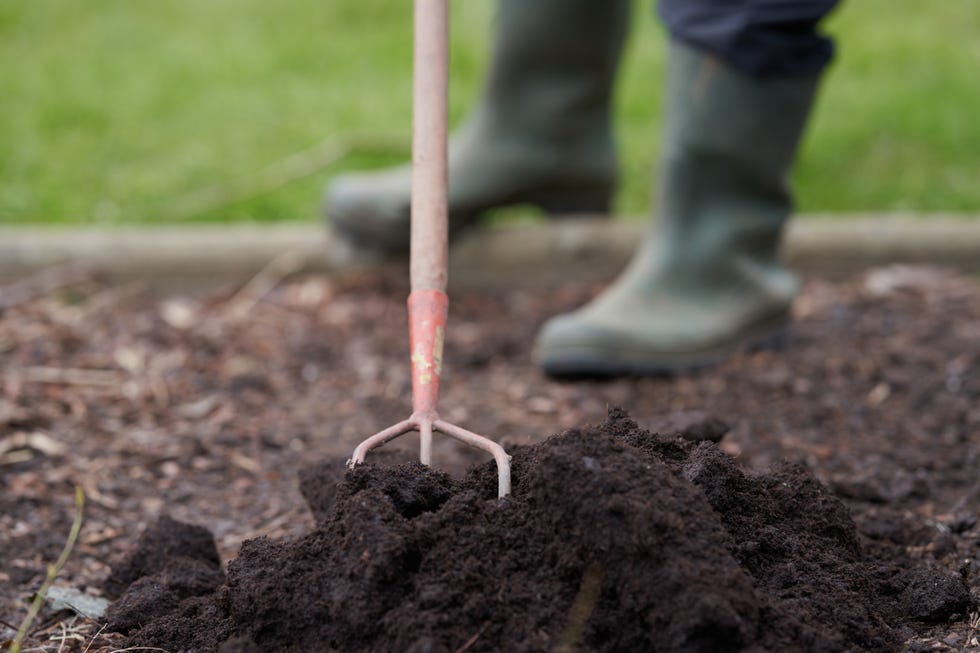
Light aeration using a garden fork or aerator can help improve drainage and create better conditions for fresh seed.
annick vanderschelden photography//Getty Images
Level and improve the soil
Uneven or bare patches may need a little extra attention before sowing.
“Bare or uneven patches can be topped up with a thin layer of good-quality lawn topsoil before sowing seed,” says Peter. “This helps create a smooth surface and provides the new grass with the nutrients it needs to establish quickly.”
He advises keeping it light: “It’s important not to bury existing grass – just a light dressing will help create the ideal seedbed.”
Water and protect new growth
Once you’ve finishing overseeding, aftercare is key.
“Keep the soil consistently moist while the new grass establishes,” Peter says. “Avoid heavy foot traffic during this period, as young seedlings are easily damaged.”
“With the right preparation and aftercare, overseeding can quickly transform a patchy lawn into a thick, healthy green space.”
Gardening must-haves Filberts of Dorset Gardeners Hand Salve
 Haywards Garden Bee and Butterfly Water Stations, Garden Décor, set of three colourful bee water cups .
Now 17% Off
 Home Sussex Handmade Peg Apron
 Painted Garden Label/Marker
 The Fae Potter Wild Bird Feeder ceramic hanging
 WhinnyPoo WhinnyPoo Box of 3 Plant Feed
Comments are closed.