
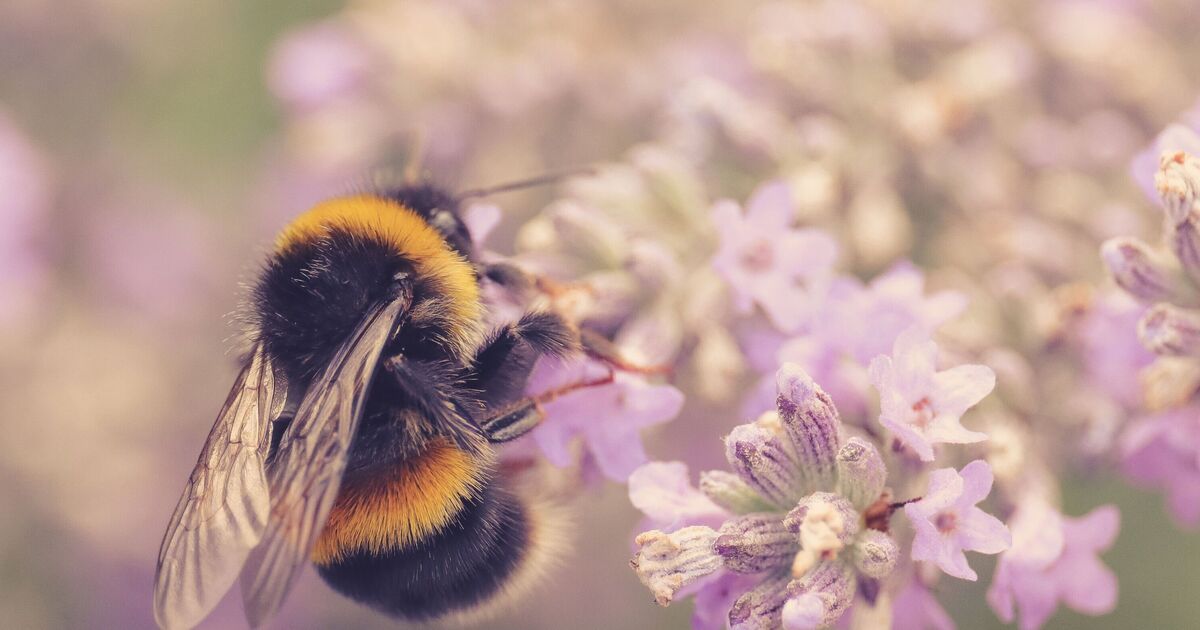
Gardeners across the UK are being urged to plant one flower in their garden which bumblebees love in order to hand a boost to these endangered pollinators.
The UK’s Bumblebee Conservation Trust, a charity dedicated to campaigning for the humble bumble, has warned that these key pollinators are in crisis.
It warns that two species of bumblebee have already gone extinct in the UK, while another third of our remaining 24 species are listed as a conservation priority due to large scale population declines.
It says that this is due to the UK losing a staggering 97% of wildflower meadows in the past century, as well as the use of pesticides and problems caused by climate change.
The World Wildlife Foundation backs this up. It says online: “Bumblebees are crucial for pollinating crops, fruits and plants, and they always make me smile when I see them. They’re vital for maintaining a healthy environment and for our food production.
“Unfortunately, like many insects, bumblebees are in decline due to habitat loss linked to land use change, pesticides, and pollution, all made worse by climate change.
“Bumblebees also have a furry coat and much prefer cooler climates as they can easily overheat and become unable to fly or forage. They also struggle in times of extreme heat as the flowers providing them with nectar and pollen may start wilting and drying.”
The WWF adds that “flowering plants in shady areas will be a welcome relief for bumblebees”.
One such flower is lavender, which can be bought from garden centres and even supermarkets throughout the spring, summer and autumn.
Bumblebees go nuts for lavender, and it’s not unusual to see as many as 10 to 20 bumblebees on a large patch of lavender.
Garden expert Richard Jackson, from Richard Jackson Garden, explains: “Lavender is a classic bee plant and a fantastic plant for every garden for many reasons. When in flower it looks and smells wonderful. It’s a great source of nectar for butterflies and bees. It’s semi-evergreen so it has a structure and a presence through the winter.”
Comments are closed.