
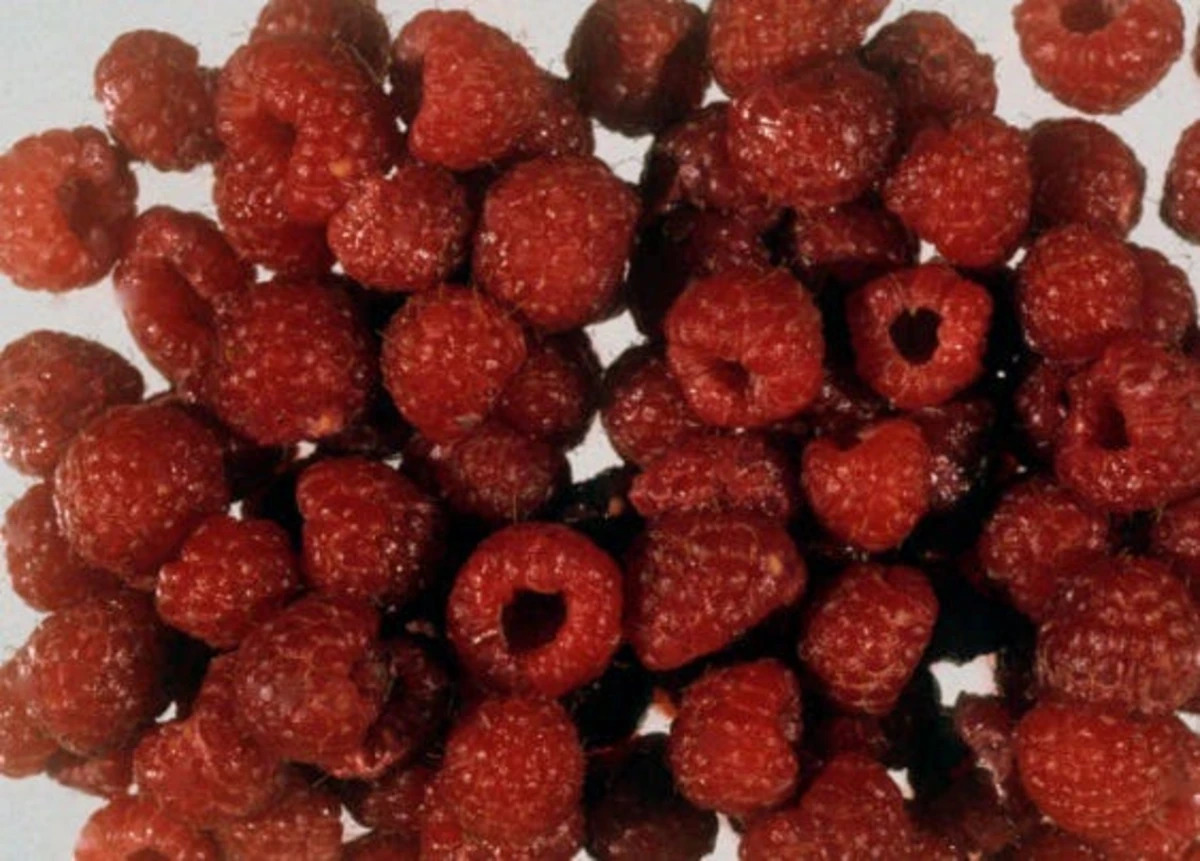
The only thing better than eating a bowl full of ripe raspberries is being able to harvest those raspberries from bushes in your own garden.
While raspberries do not last long once they are ripe, if you can’t keep up with eating the ripe berries from your bushes, you can freeze them for later use in pies or fruit salads or turn them into delicious jams and jellies.
While pruning raspberry bushes can be complicated, these plants are relatively tough and forgiving, allowing you to learn as you go.
 Summer bearing vs. fall bearing
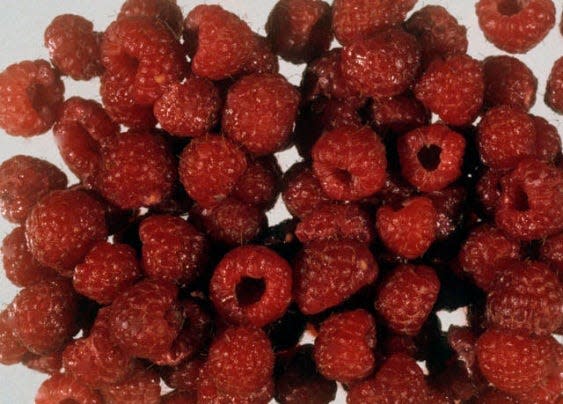
Raspberries (Rubus spp.) are a type of bramble or prickly, thorny shrub. Raspberries come in four different colors: red, black, purple, and gold. More importantly, raspberries come in two different types: summer bearing and fall bearing. Fall-bearing raspberries are sometimes called everbearing.
Summer-bearing raspberries have two types of stems which are called canes. Floricanes are woody, brown canes from the previous year that bear fruit in the current year from late June to August and then die. New green canes that grow in the current year are called primocanes and won’t bear fruit until the following year.
Fall-bearing raspberries bear fruit on the current year’s new, green canes, allowing you to harvest berries in the first year of planting, Fall-bearing raspberries can be pruned so that they provide a small summer crop on the canes from the previous year, and a larger fall crop on the current year’s canes. Thus, the term everbearing.
Summer-bearing and fall-bearing raspberries have different care and pruning needs, so if you plant both types of berries, be sure to plant them in different rows or groups in your garden or landscape, which will make it easier to prune each type differently.
 Planting and culture
Raspberries should be planted in early spring. Plants will be available in containers at local garden centers and can also be ordered online from specialty berry growers. For a list of recommended raspberry varieties for Ohio, go to ohioline.osu.edu.
Like so many other plants gardeners love, raspberries do best when planted in a full-sun location in the garden or landscape, in sandy loam soils with a high organic matter content.
When planting raspberries in clay soils with little organic matter, be sure to amend the soil prior to planting with compost or peat moss in the fall before the spring in which raspberries will be planted. Raspberries do not do well in locations with poor drainage, so avoid these types of locations.
Avoid planting raspberries in locations where solanaceous crops such as tomatoes, peppers, potatoes, and eggplant have been grown in the past few years, as the soil may contain fungal organisms which can kill raspberry plants. Also avoid locations where strawberries have been grown in recent years.
Raspberries should be planted in rows with 2 feet of space between each plant. If you plant more than one row, have 8 feet of space between the rows to allow for good air circulation, which will help prevent fungal diseases from developing.
Do not plant raspberry plants too deeply, as raspberry plants have shallow root systems. After planting, prune the canes back to 6 inches and keep the soil moist for one to two weeks after planting. This is especially important if dry weather occurs at the time of planting. Adding a thin layer of mulch over the root zone of raspberry plants will help maintain soil moisture and control weeds.
Fertilizing raspberry plants with a complete fertilizer such as 10-10-10 will provide needed nitrogen, phosphorous and potassium. Top dressing the root zone of raspberry plants with compost or well-rotted manure will also provide nutrients and improve the quality of the soil.
 Support needed for canes
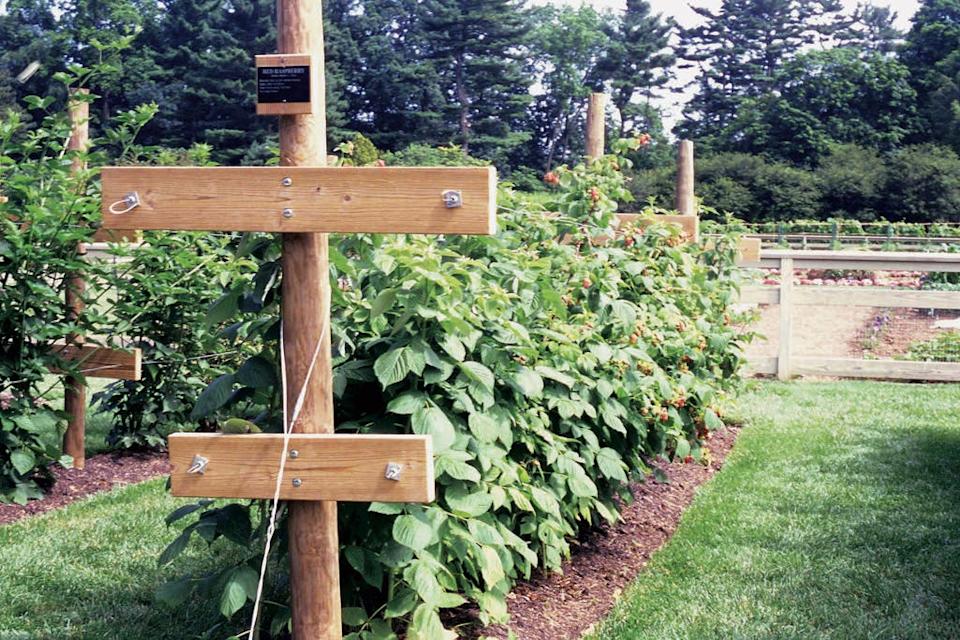
Most types of raspberries will require some type of trellis system, especially those varieties called trailing varieties. Steel t-posts available at garden centers and home stores work best for developing a trellis system for raspberries. Posts that are 7 feet tall should be placed 8 feet apart and buried at least 12 inches in the ground.
Two or three horizontal guide wires should be attached to the posts to provide support for the canes. Individual canes can be tied to the guide wires with cotton string, which will make harvesting much easier.
Pruning is critical
Pruning is critical to maintaining healthy, disease-free raspberry plants. Summer-bearing raspberries should be pruned immediately after the fall harvest ends. The canes which just finished fruiting should be cut to the ground, and remaining canes should be thinned out in the spring, with three or four of the largest canes remaining in each foot of row.
While fall-bearing varieties of raspberries can be pruned to yield two crops each year, you will get a more bountiful crop if you prune to encourage a single harvest in late summer. To do this, cut all canes to the ground in the fall. Then in the spring, after the new canes have started growing, but before the end of July, thin out the new canes to leave just three or four canes per foot of row.
With proper pruning and management, raspberry plants will persist in home gardens for many years.
Mike Hogan is Extension Educator, Agriculture and Natural Resources and associate professor with Ohio State University Extension.
hogan.1@osu.edu
This article originally appeared on The Columbus Dispatch: Grow raspberries in your home garden
Comments are closed.