
Dennis McNamara
| Special to MyCentralJersey.com

4 reasons you shouldn’t throw away dog fur
Dog fur gets everywhere, but these simple tips show you ways you can reuse it around your home and garden.
Problem Solved
The author outlines spring gardening tasks, including turning compost and preparing raised vegetable beds.A growing commitment to native plants has led the author to reduce vegetable production.Native plants support local wildlife, require less water, and thrive without fertilizers or pesticides.The author created a small rain garden and planted native species in drifts to attract pollinators.
After the long, intense winter New Jersey just endured, I feel an equally intense urge to get my hands back into the garden soil. Welcome, wonderful spring.
Now that daytime temperatures are reliably above 40 degrees, the first thing on my list is turning the compost pile. Nothing in my garden is more valuable. All winter long, kitchen scraps have been quietly breaking down, and when that compost is ready, it becomes a nutrient‑rich supplement for everything I plant.
There are plenty of effective ways to compost, but I’ve relied for years on a Monmouth County–issued Earth Machine. If you’re interested in getting one, the Monmouth County Recycling Office can be reached at 732‑683‑8686, ext. 8967, or through visitmonmouth.com.
These days, only a small portion of my garden is dedicated to vegetables. When I do grow them, raised beds are my go‑to method. The soil warms and dries faster in spring, allowing for earlier planting, and seeds and seedlings can be spaced closer together, leaving less room for weeds. Raised beds are also easier on the back — and easier to manage when gardening with my grandchildren, who I’m lucky enough to live with.
They’ve learned one of the most important rules quickly: never step into the bed, which compacts the soil. They carry their watering cans carefully — although on warm days, “careful” sometimes turns into enthusiastic splashing.
The reason I’ve scaled back vegetable production is my growing commitment to native plants. Native species require significantly less water and generally thrive without fertilizers or pesticides. They also support the insects and birds that evolved alongside them.
In the front of my home, I installed a modest oval rain garden, about 16 feet in circumference. I redirected a downspout more than 15 feet away from the foundation into a shallow basin I dug myself. Living close to the bay, the sandy soil made the job easier than expected.
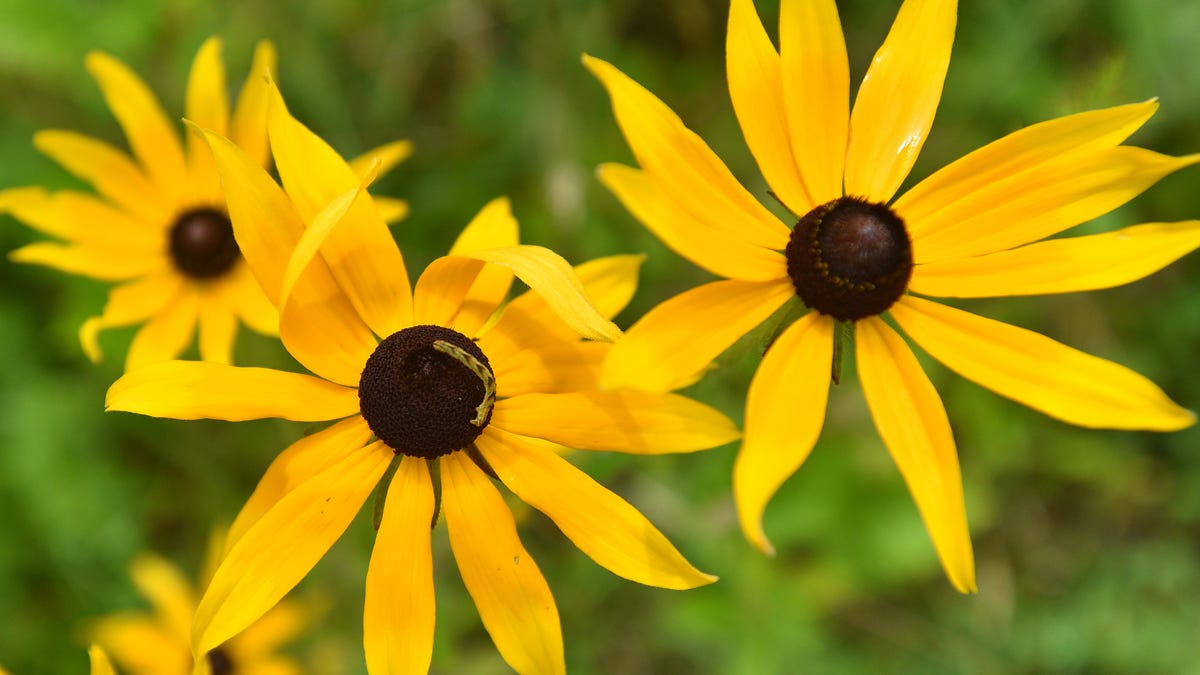
In the wettest part of the rain garden, I planted swamp milkweed, blue flag iris and spicebush. Around the edges, I added buttonbush, mountain mint, black‑eyed Susans, coreopsis, purple coneflower, goldenrod and butterfly weed.
I prefer planting in drifts rather than scattering individual plants. Grouping three, five or seven of the same species in organic, sweeping shapes mimics how plants grow naturally. It also makes it easier for bees and butterflies to spot their targets from a distance, conserving the energy they need to survive.
With limited space, I can only add a small sampling of native plants, but I still follow the advice of University of Delaware entomologist and ecologist Doug Tallamy, who encourages homeowners to create their own piece of a “homegrown national park.” His work promotes restoring native plants at a national scale, one yard at a time. More information is available at homegrownnationalpark.org.
Whether your landscape is large or small, sunny or shady, wet or dry, there are excellent New Jersey–specific resources to help homeowners transition to native plantings. Two standouts are JerseyYards.org and a Rutgers Cooperative Extension fact sheet (njaes.rutgers.edu/fs1140), both of which offer practical guidance for creating a high‑functioning ecosystem at home.
Native plants form the foundation of local food webs. Unlike many non‑native ornamentals, they provide the precise nutrition native insects and birds require. They’re also better adapted to New Jersey’s varied soils, from the sandy Pinelands to the rocky Highlands. Once established, natives typically need less water and fewer chemical inputs, helping protect local waterways from runoff.
By providing a succession of blooms from early spring through the first hard freeze of November, I hope to create not just seasonal beauty, but curiosity. “Look there, Quentin,” I said recently, “under the yew, beside the budding azalea — hellebore and crocus are waking up.” Quentin turns 3 in May.
Dennis McNamara is an agriculture program associate at the Rutgers Cooperative Extension of Monmouth County.
Comments are closed.