
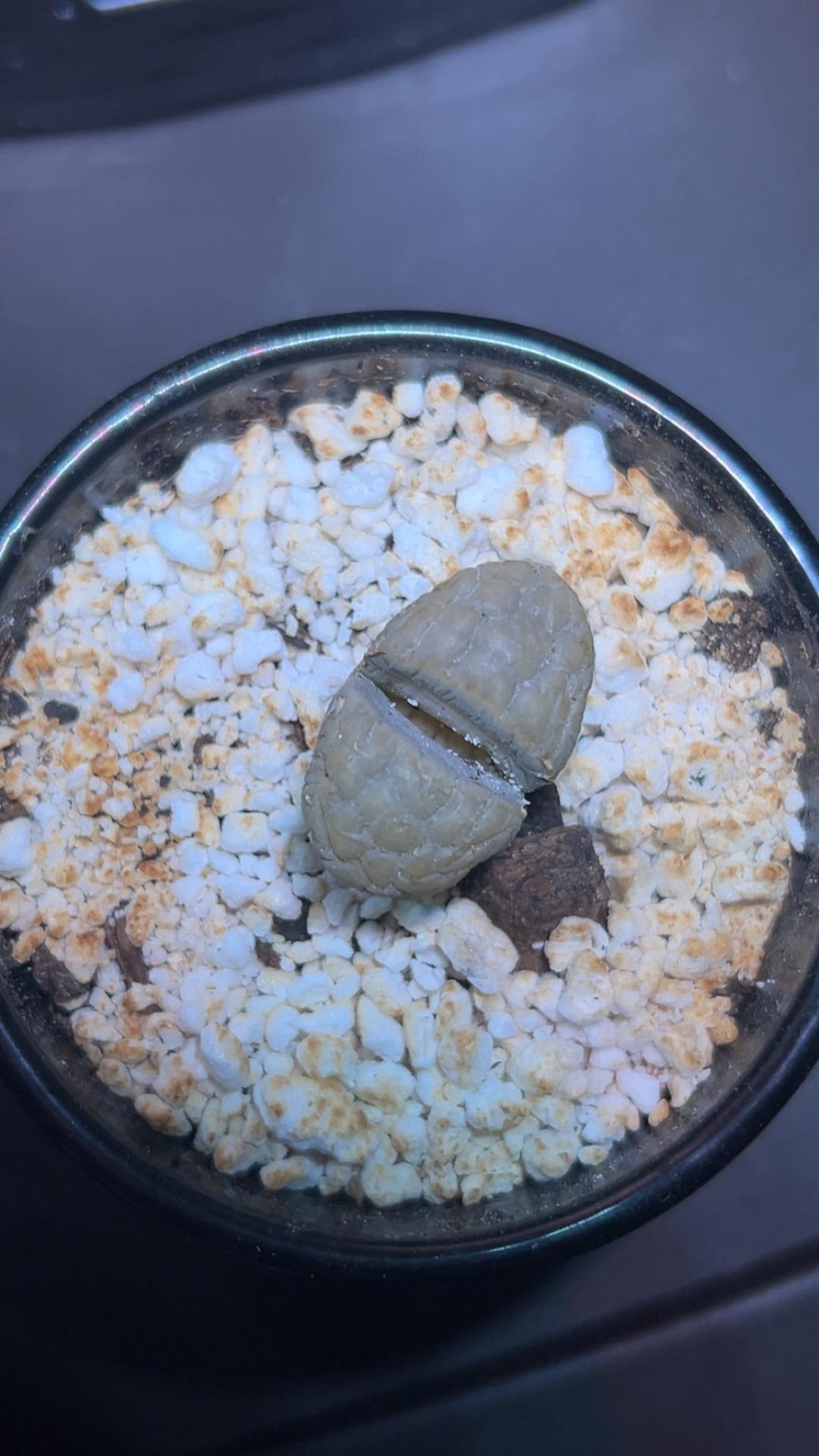
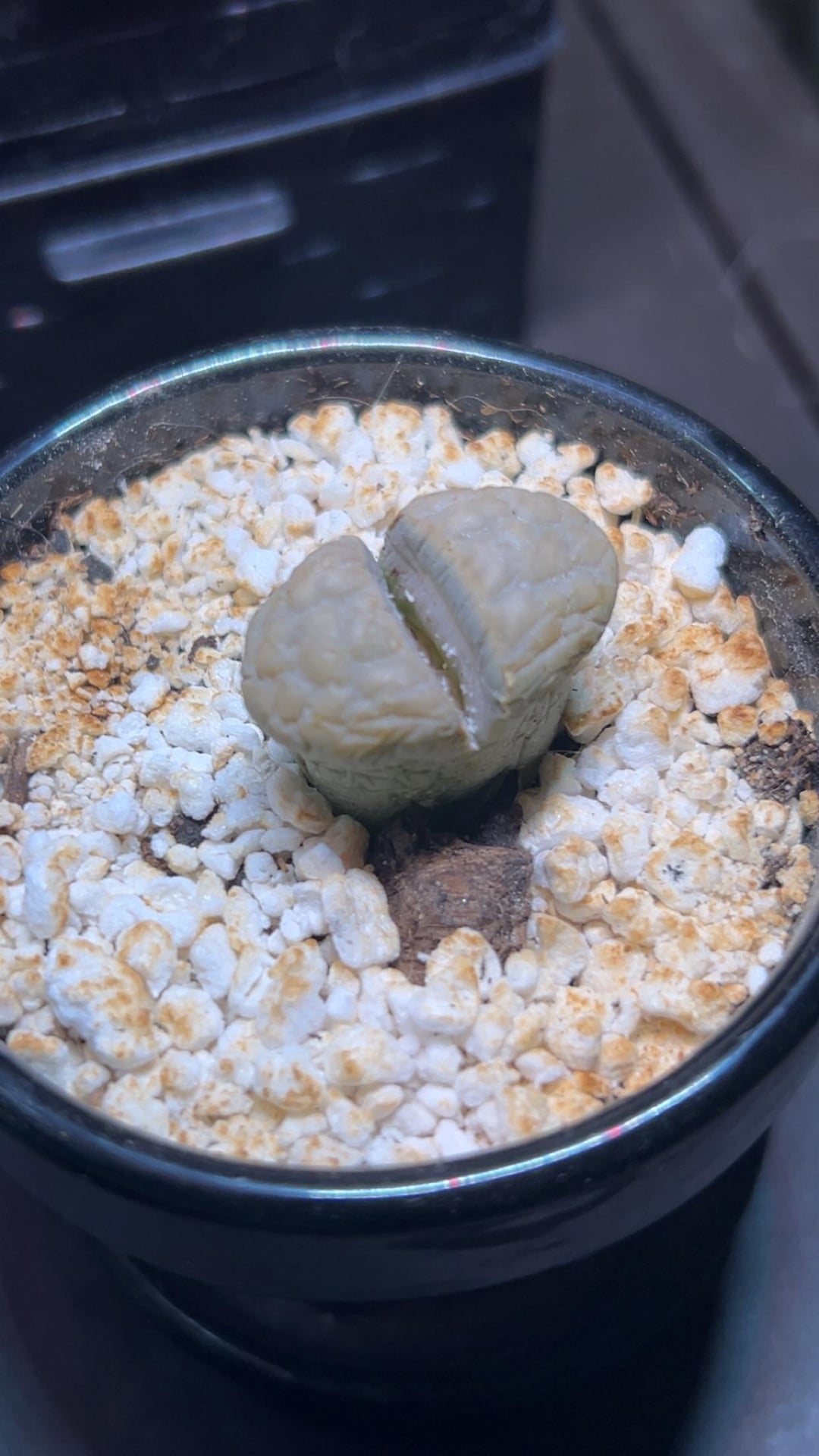
I've had this lithop for about a year now. I watered it a few weeks ago, for the first time in awhile and a few days later it opened!! But now it doesn't seem to be doing much more. I heard you shouldn't water it while its doing this and let the old parts dry out and fall off, but I just want to be sure? It hasn't really changed or opened more since then so I don't know if maybe I do need to add water or something, but also its very hard and stiff so i think it already has a lot of water in it. Does it normally take awhile for it to dry out? I am scared and don't want to kill it
by zekkuzenka
3 Comments
It can take a while for it to fully open. Don’t water, it will be fine.
It’s splitting, no water until the outer leaves are dried up paper like husks. It will take a while.
Understanding the lithop growth cycle makes for a successful outcome.
Lithops in their native surroundings (northern regions of South Africa’s Western Cape and to the north, southern areas of Namibia), are pure survivors. Primary water source is the fog that moves inland off the cold currents of the Southern Atlantic. Very hot summers and near freezing winters are the rule. They are slow growers. Patience is key for anyone raising them. Grown in cultivation, where water is more available, their true beauty of color and patterns become evident.
After a lithop flowers (usually late summer into late Autumn/early winter), its growth cycle slows down. Here water is withheld. The small roots the plant has grown from its tap root during its growing season start to wither as their job is done. If you water a lithop while it is in this rest phase, it will usually rot due to the lack of roots. Yet, within a couple of months the plant appears to split. Actually, energy stored in the plant’s tap root starts to produce new leaves. These leaves derive all the moisture they need from the previous season’s leaves. As more of this moisture is absorbed by the new leaves, the more withered the old leaves become. Eventually, the old leaves are devoid of moisture, falling to the side of the plant. If necessary, this is a perfect time to repot the plant using a very gritty mix of pumice, perlite, akadama (volcanic clay) with a small amount of cactus soil. This mix ensures that any excess moisture is absorbed by the grit material. Water sparingly at this stage (once every 10 days or so), making sure water drains fully from the pot. As an aside, sometimes an additional set of leaves appears in the split. This is how the plant expands its capacity to take in more sunlight.
In this growth phase, direct sunlight is paramount. Yet, too much Sun can make the plant stress, and possibly fail. Here in the southern parts of South Africa’s Western Cape, I grow my plants outdoors under a covered deck, and protected by 50% shade cloth.
At some point in the mid-to-late summer, the plant enters a pause state, where water is withheld. Here, the plant is preparing to flower. Upon the appearance of a flower bud emanating from the split, watering commences. The flower usually appears a week after the bud appears (either yellow or white depending on variety). The flower will open in the mid to late afternoon, then close at night. This blooming phase lasts about 5 days. If you want to create a seed pod, use a small paint brush to pollinate the bloom.
Once flowering is complete, the growth phase continues for another few weeks before the long winter rest commences, where water is withheld. And so the cycle repeats.
Lithops like a deeper container to accommodate their tap root. The health of that tap root is critical to the plant’s growth cycle.
Here’s a portion of my mesemb collection (lithops are a member of this family) from this past January (mid-summer here) to illustrate the variety these fascinating plants offer. Good luck with your lithop!
https://preview.redd.it/ppzxfmn9bjrg1.jpeg?width=4032&format=pjpg&auto=webp&s=5aea981bb4ef63e92c95863e26b35a2ffa3ab121