
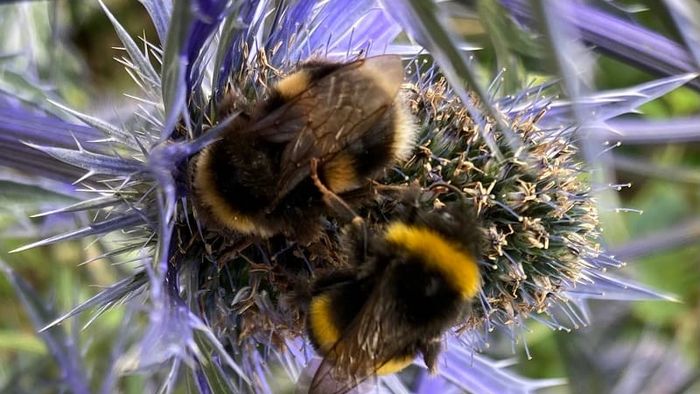
I have been watching a huge bee dibbing around the primroses in my garden, and as my wildlife-friendly garden grows, I know the place will be buzzing in summer.
It’s all about planning, having created scruffy woodpiles in corners of the garden where insects can overwinter, making sure there are plenty of early spring plants and opening my nectar cafes, full of plants like lavender, cosmos and other flowers that pollinators love.
The early, enormous bees are queens, having been the only members of the colony that has survived this mild winter.
They are visible now, feeding on early nectar and pollen before seeking a nesting site where they breed and raise their young.
READ MORE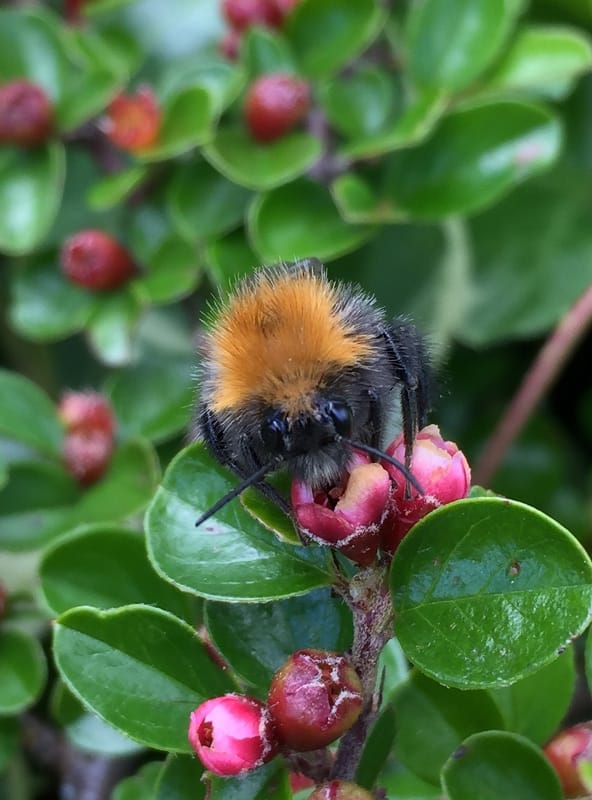 Tree bumblebee (Image: Alan Wright)
This will usually be in a hole in the ground, but tree bumblebees will nest in birdboxes.
So, the larger queens you are seeing now will vanish for the rest of summer, with worker bees and drones being more visible.
Those drones have one role in life, to mate with the queen. We should call them nookie bees.
There are more than 20 bumblebees and hundreds of types of wasp, bee and hoverfly that can visit your Manchester garden this summer.
They will create a hum as you wander into the garden and you will be able to sit and watch the many colours that they bring.
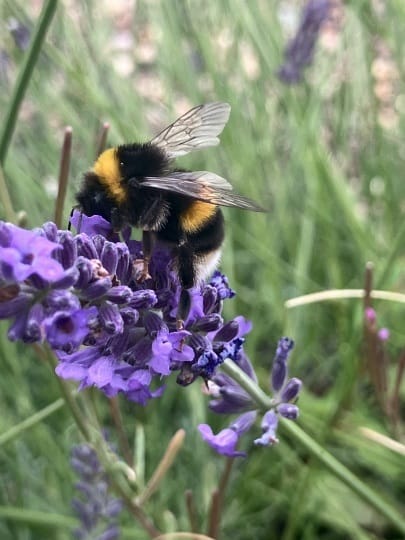 White tailed bumblebee (Image: Alan Wright)
All of these insects are safe if you let them get on with their work. I understand that some people can react badly to stings and bites, but you can generally sit in your garden surrounded by insects without any fear for your safety.
Bumblebees are everyone’s favourite insect and I can spend hours watching them squeezing in and out of foxgloves in my garden.
The ones I generally see are white-tailed bumblebee and buff-tailed bumblebee, which pretty much look the same, except the buff-tailed’s tail is “white but not quite” and its bright stripes are more orange compared to the bright yellow of its cousin.
It’s fairly obvious that you will see an early bumblebee in spring, it is a much smaller bee and males are compact with a yellow colouring on their heads.
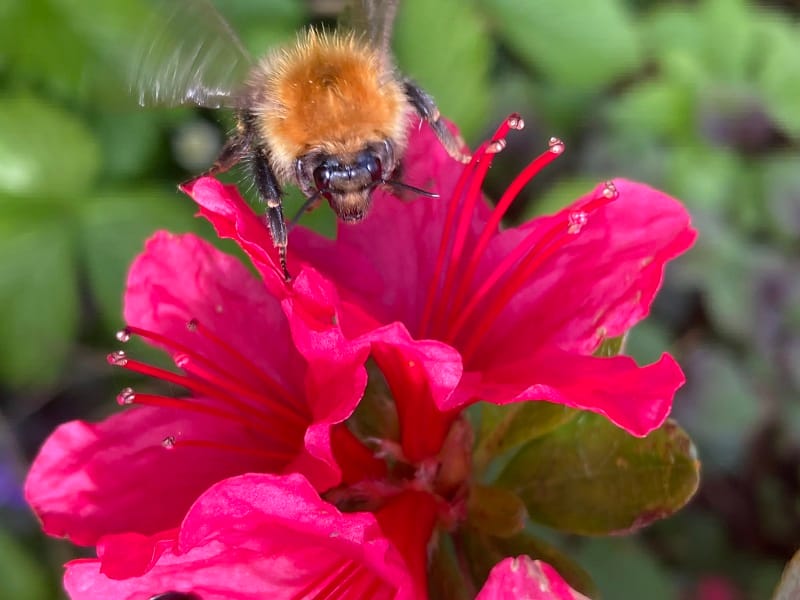 Tree bumblebee (Image: Alan Wright)
The tree bumblebee arrived on our shores in 2000 and can be seen in many gardens and nesting in birdboxes.
They are easy to identify with their orange “Tam O’Shanter” at the top of a black body and white tail.
In my Mum’s garden in Salford, she often gets red-tailed bumblebees on her plants, and they are lovely, showing off their red bottoms all over the place.
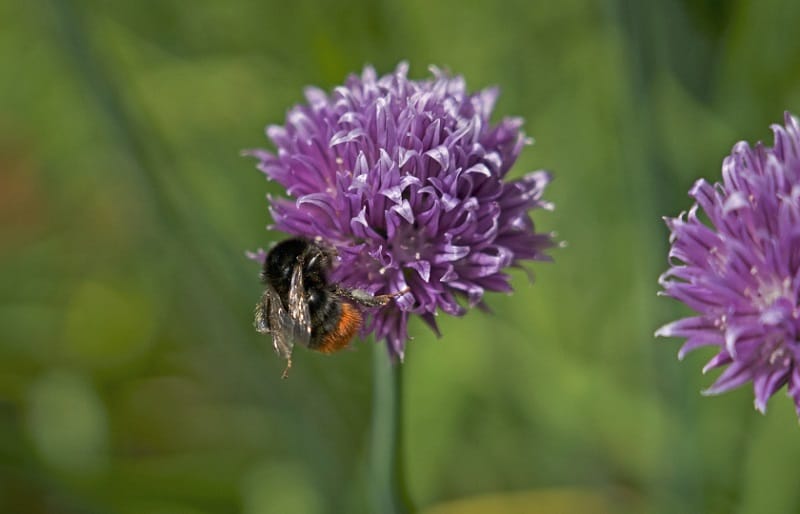 Red Tailed Bumblebee (Image: Tom Wright)
This is a real nectar café with lots of Bohemian insects popping in to pollinate.
It is important that you support local wildlife by adding plants and water features that will attract birds and bugs and some wonderful mammals.
Take some pictures of your visitors and share them with our social media sites, then we can look at just how healthy nature is in Manchester.
I almost shouted for joy when I spotted my first queen bee of the spring this week and I can now look forward to wonderful sunny days in my garden, which will be all abuzz from the early hours.

By Alan Wright from The Wildlife Trust for Lancashire, Manchester and North Merseyside.
To become a member, go to the website at www.lancswt.org.uk or call 01772 324129.
For more information about Cheshire Wildlife Trust call 01948 820728 or go to www.cheshirewildlifetrust.org.uk.

READ MORE:
Comments are closed.