
Florida’s lush, subtropical climate supports gardening and outdoor living year-round. However, these are also ideal conditions for invasive plants.
Research shows many property owners are unaware of a plant’s invasive potential and rarely consider it in purchasing decisions unless the plants are clearly labeled or restricted. That knowledge gap is the focus of a recent episode of Rooted in Florida on PBS South Florida, titled “Invasive Plants in Florida You Should Know About.”
In the episode, experts from the University of Florida Institute of Food and Agricultural Sciences offer guidance to help residents make informed plant choices before visiting big-box stores or local nurseries. Host and UF/IFAS Master Gardener volunteer Jeannie Schmiddle and Kimberly Moore, an environmental horticulture professor at the UF/IFAS Fort Lauderdale Research and Education Center, discuss common invasive plants.
Expanding on the episode, the experts offer guidance on the root of the problem and steps gardeners can take before buying. “Often by mistake, shoppers see a plant they like at the store and assume it is fine for their garden,” said Moore. “It is not the fault of the stores. They buy and sell what people want. Plus, we often do not know that something new and fun could become invasive.”
Schmidle said gardeners often are drawn to plants for their visual appeal — color, beauty or unique form — and that many, including herself, feel joy when surrounded by thriving gardens. That appreciation must be balanced with awareness because some attractive plants can be harmful, she said.
By identifying eight invasive plants commonly sold in retail garden centers and explaining why they should be avoided, experts aim to encourage gardeners to make choices that protect Florida’s native ecosystems.
Here are Moore and Schmidle’s top eight invasive plants:
Asparagus fern (Asparagus aethiopicus, also A. densiflorus)
This Category I invasive, listed by the Florida Exotic Pest Plant Council, spreads quickly through seeds and underground tubers, forming dense mats that outcompete native plants. The plants are difficult to eradicate, and once established, they displace native vegetation and alter ecosystems long-term. Birds spread the berries, helping the fern invade hammocks and Pinelands.
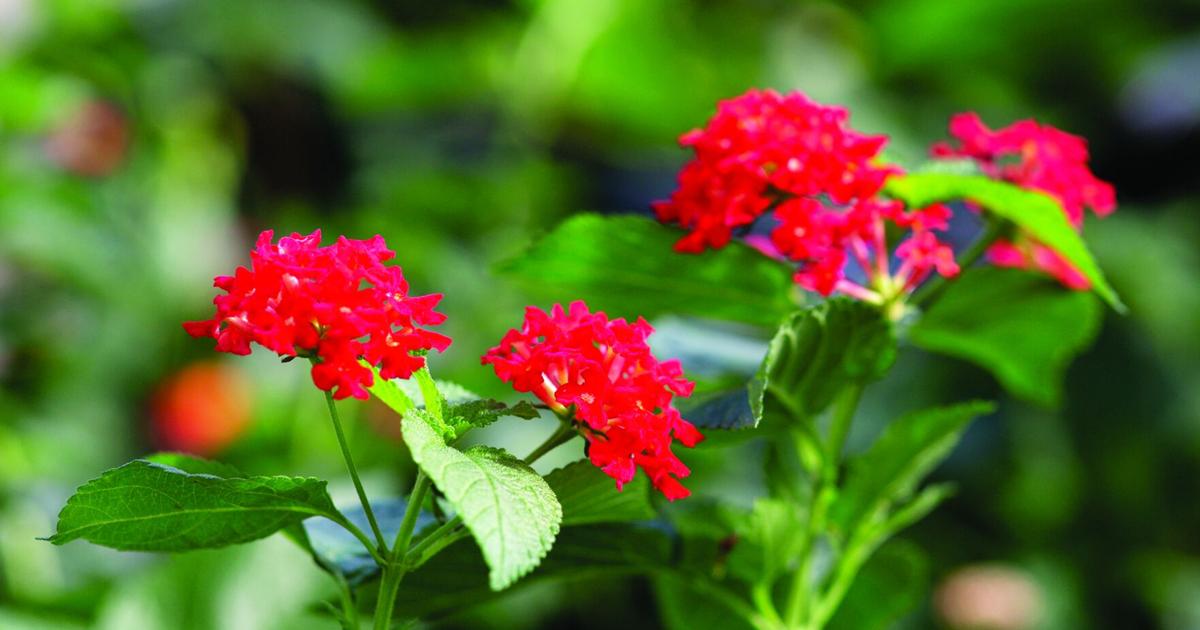
Lantana
Lantanas are invasive and toxic, capable of displacing native plants. Their leaves and berries are toxic to many animals, and the leaves are highly flammable, increasing wildfire risk in areas where the plant has spread.
Pothos (Devil’s ivy, Epipremnum aureum)
Widely sold as a houseplant, pothos can escape when discarded or moved outdoors. The plant contains toxic elements harmful to pets and humans. In South Florida, it climbs trees, smothers native vegetation, and forms dense vines that block light and stress or kill host trees. It is listed as a Category II invasive in Florida.
Water hyacinth (Eichhornia crassipes)
Water hyacinth can form a lush carpet of foliage with lavender flowers, creating a striking visual display. However, it can block sunlight needed by biologically important aquatic grasses.
Madagascar periwinkle (Vinca or Catharanthus roseus)
These brightly colored plants often escape cultivation through seeds, especially in disturbed areas. They can persist and spread along roadsides, natural areas, and urban interfaces, competing with native groundcovers and reducing plant diversity. Alkaloids in the plant make it toxic to pets and humans if ingested.
Wandering dude (Tradescantia zebrina)
This easy-to-grow plant is highly aggressive and, if not properly contained, can spread rapidly and outcompete native species. It is also toxic to pets if ingested.
Water snowflake or Snowflower (Nymphoides indica)
This Category I invasive escapes from ponds and water gardens into lakes, canals, and slow-moving waterways. It spreads rapidly through floating stems, fragments, and seeds, forming dense surface mats that block sunlight to submerged native plants. By reducing oxygen levels in the water, it alters habitats for fish and invertebrates. The plant is often misidentified or sold under benign-sounding names, which increases accidental spread.
Mimosa tree (Persian silk tree, Albizia julibrissin)
Mimosa trees are stunning, but their beauty can be deceptive. They produce abundant seeds that germinate quickly and spread into natural areas, displacing native trees and shrubs.
For information on UF/IFAS’s Assessment of Non-Native Plants, visit assessment.ifas.ufl.edu/.
Comments are closed.