
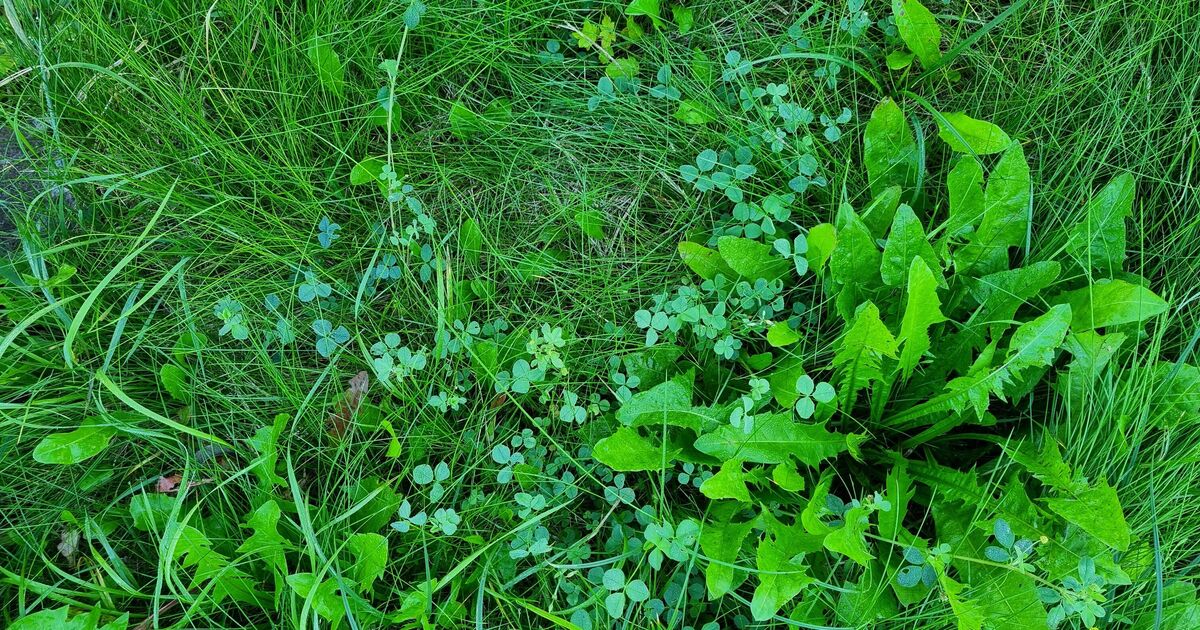
As the weather warms and the grass starts to grow again, weeds often show up fast in patchy, thin, or stressed lawns. They can be incredibly irritating because they spoil the look of a lawn, compete with grass for light, water, and nutrients, and spread into bare patches where the lawn is weak.
Weeds such as clover and dandelion can be hard to remove once established, but the RHS (Royal Horticultural Society) has shared a few simple ways of removing them. They point out that many of these weeds are native wildflowers and good for wildlife, but if you want a traditional, tidy lawn, they recommend several non-chemical solutions.
The RHS experts say lawn weeds are quick to colonise bare ground where grass growth is patchy, which is why spring lawns can suddenly look covered in weeds.
One tip recommended by experts is to rake the lawn before mowing. Raking over areas with creeping weeds before mowing helps the mower cut them and remove their stems.
This is especially useful for weeds like creeping buttercup and speedwell. This trick helps because weeds will otherwise hug the ground and can duch under the mower.
To rake the lawn, wait until the grass is dry and then lightly rake across the surface. Use short, gentle pulls, avoiding deep digging.
Focus on the weedy patches and rake in multiple directions to help lift the stems that lie flat. Once the weeds are lifted, mow as normal.
Dense grass is the best natural weed suppressant, which means undertaking lawn maintenance year-round. According to the RHS, regular mowing in spring helps to keep the lawn vigorous and discourages weed growth.
It is important, however, to avoid mowing very short. Cutting too low weakens the lawn and creates bare patches, an ideal spot for weeds to grow.
The RHS is quite clear that non-chemical methods are effective, and says there’s no need to use weedkiller for lawn weeds if you’re patient and persistent.
Comments are closed.