
When the weather warms up, it may feel like you are playing catch-up, but we have weeks of growing days ahead. Don’t panic!
I still have not started my leek seeds, but I will. I still have not planted peas, but I will. I was busy on the nice weekend day, and the skies turned gray on Sunday. Then, my hands got cold. By next week, you can sow leafy greens indoors or outdoors and root crops like carrots or radish now. They like the cold. Plus, if they don’t germinate well in the wet cold, you still have time to try again.
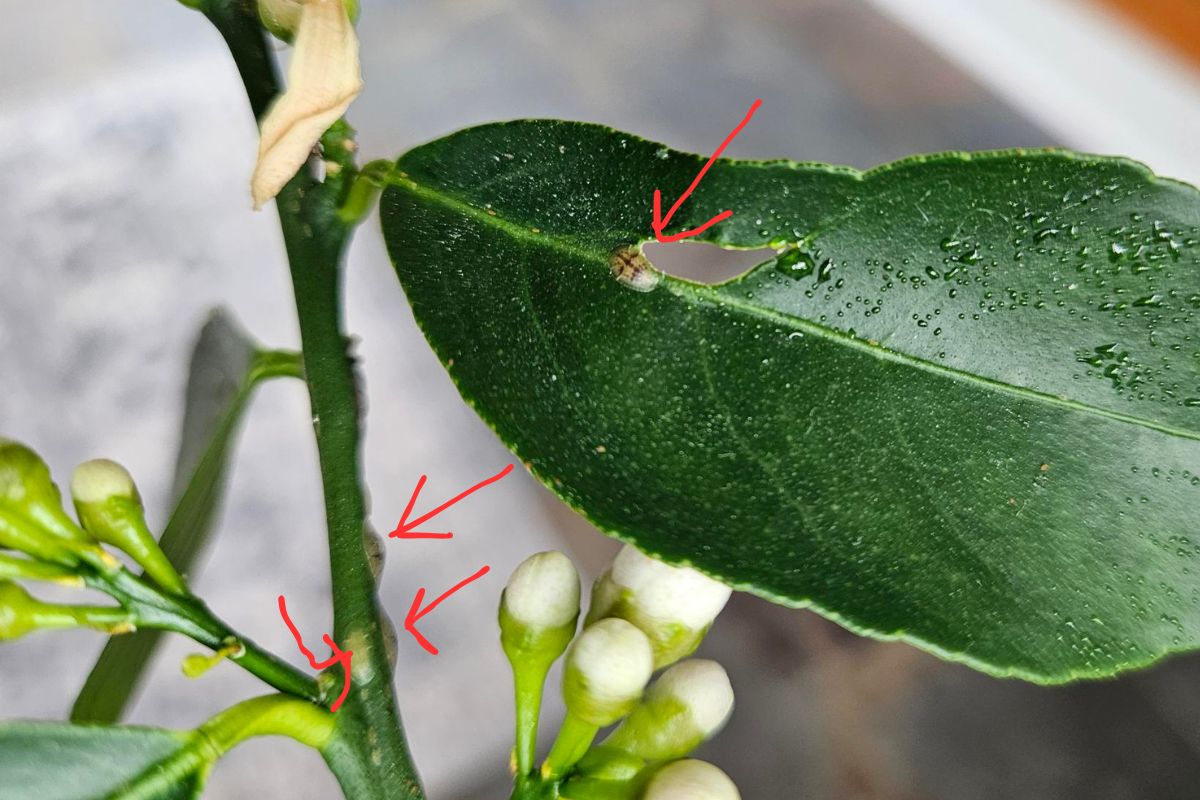
I really intended to start seeds on the rainy weekend day, but I was distracted by the infestation of scale on my lemon tree. Scale insects attach themselves to leaves or stems; their legs atrophy; they feed on the plant; they lay eggs; and then they die. They look like a waxy scab on leaf or stem surfaces. It is easy to miss them until the plant is overrun and a sticky residue (excretion from the insects feeding) makes the leaves, floor, or shelf very sticky.
Apply horticultural oil on plants suffering from scale or spider mites. Both pests show up often at this time of year when plants begin to grow actively. As a mechanical control, the oil disrupts the insect growth or blocks their breathing functions. It may also serve as a type of barrier for other pests. However, some plants are sensitive to oils. Always follow the product’s directions. Horticultural oil can cause phytotoxicity on plant leaves. And don’t use oil at the same time as sulfur fungicides. Wait at least 2 weeks between those different applications.
I pruned a bit last weekend until I grew too cold. Now through April is a good time to prune shrubs and trees. Pruning spurs fresh growth and more flowers. I’ve learned how my shrubs grow by pruning them, taking photos, and then looking at the results the next year.
I have continued to sculpt a peach tree that lost its leader two summers ago. The plant produced fruiting branches last year, and now I had to decide how to direct the plant’s growth. I have decided that there is not much I can do to form a new central leader on the plant. Sigh. But it will fruit for me if I keep the branches strong. I will do that by cutting back last summer’s growth by half, and then I will pick off excess flowers and fruit to prevent the branches from getting too heavy and splitting the trunk more.
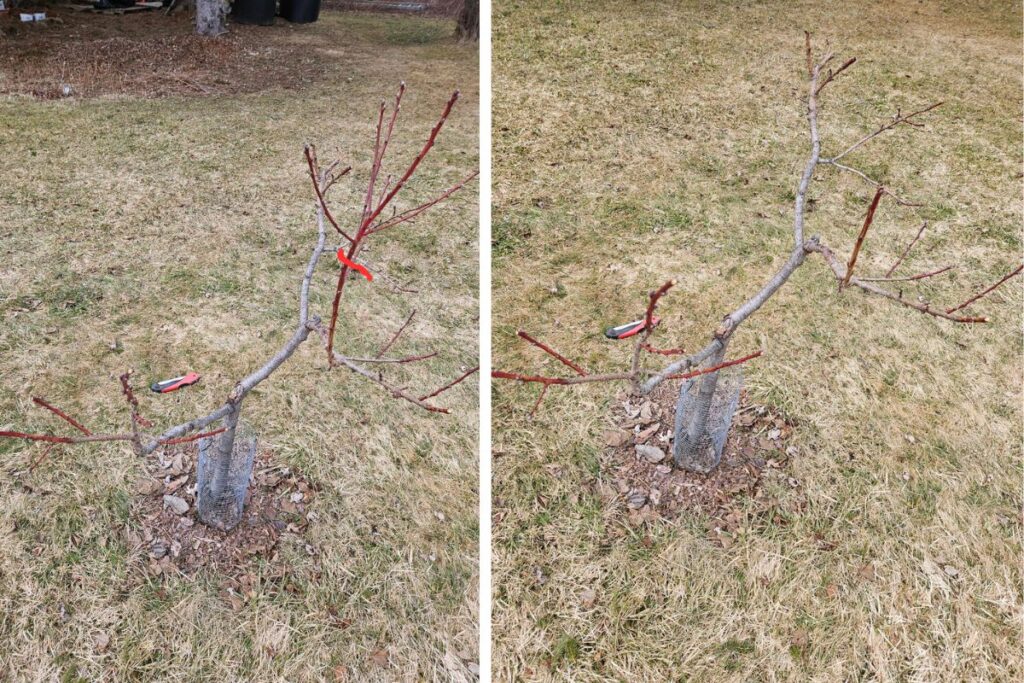 At left, the peach tree’s new fruiting buds will form on the red stems. By cutting back the long red stems by half (seen after pruning at right), the branches will be thicker and stronger.
Tip prune your summer-bearing raspberries to encourage fruiting side branches now as well. That is a good “tip” for all your summer-flowering shrubs and trees. By taking a little off last summer’s growth this spring, pruning back to a leaf bud or node, you will encourage new growth, branching, and flowering from that stem.
If your older shrubs have grown too big or stopped blooming, you should consider renovating them. To renovate, prune out about 20 percent of the oldest stems right to the ground and tip prune the remaining stems. Prune back twigs or branches that cross, rub, or head into the plant center. You will open the center of the shrub to more light and enjoy bigger blooms. This does not apply to Rhododendron or azalea! Tip pruning these broad-leaf evergreens and relatives will remove all your blooms in May. Wait until the moment blooms start to fade and prune then.
I took some cuttings from my forsythia a few weeks ago and brought the stems indoors (along with some serviceberry) to bloom. They opened beautifully! I hope that indicates that the shrubs will have a good supply of blooms. In the past few years, the shrubs had flowers at the bottom but not the top or blooms on one side. I blame changes in temperature and premature blooming. Save the stems pruned from any spring-flowering shrub or tree and try to coax them into bloom.
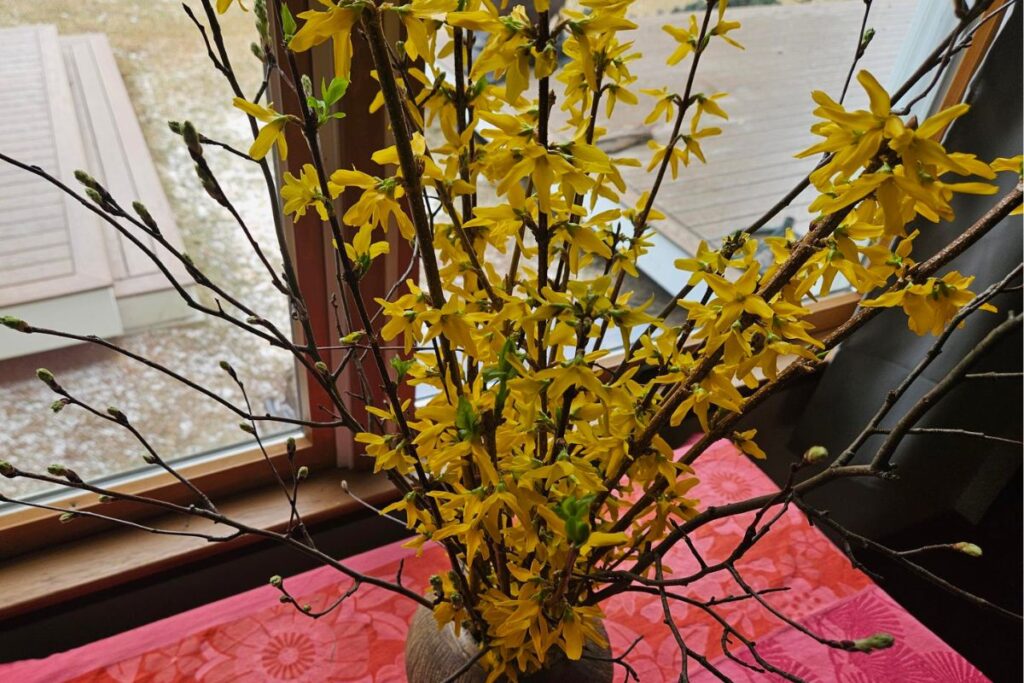 Forcing cut Forsythia stems into bloom indoors will brighten the gloomy wait for spring flowers outside. Serviceberry stems have started to bloom as well. Save the stems pruned from any spring-flowering shrub or tree and try to coax them into bloom.
I am eager to get my plants growing, but I have not done much since November. Be careful about launching into spring gardening tasks after a sedentary few months. Before heading out, stretch your limbs and warm up those muscles or you will be stiff the next day. I know I am.
Winter should be a time of rest. I am pleased that a geranium (Pelargonium hortorum) I saved from last summer has had a good rest. I dug it out of the garden bed, potted it, trimmed it back, and watered it sparingly through the winter. In late January, I brought it to a bright location and watered it more, and it started to grow again in earnest. Now it is blooming like crazy!
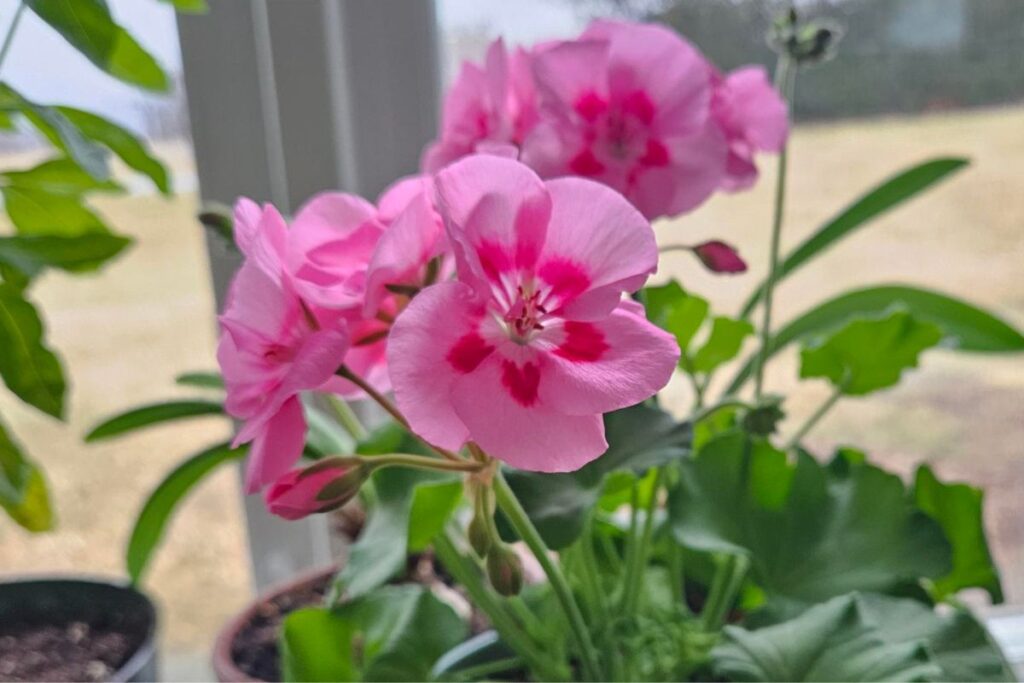 Annual geranium (Pelargonium hortorum) can be overwintered. Keep in low light for a few months to allow the plant to rest before bringing the plant to a bright location, watering, and fertilizing.
A few more things to keep in mind as you get outside and prepare your gardens for spring:
Apply animal repellents (use a different repellent from what you used last time) on your newly emerging bulbs like crocus and tulips. Mammals do not bother daffodils.
Ascetic vinegar is not a strong enough herbicide to kill the roots of perennial weeds. Dig those weeds out now while the soil is moist. I am repeating myself, but it sure works better now than later!
Place stepping stones in large borders or along common routes through your yard and garden. You will avoid compacting soil and maybe avoid some mud this season.
Ticks are active. Protect yourself outdoors with tick repellents, and tuck those pants into your socks. Tuck in your shirt, too! Besides looking tidy, you will deter the ticks. They go up not down and want to find someplace warm and dark to start feeding. Do a tick check every time you come back inside.
Lastly, compostable kitchen scraps should not go outside now where hungry wild animals can get to them. Continue to add to a bucket for delivering to a compost facility or service. Or you can bury them in the garden directly where they will eventually break down. I like to sort out eggshells and put them in the freezer after rinsing. I take the bags of washed, crushed eggshells to the garden and sprinkle around plants as a barrier against slugs. I also add some to the planting hole of tomato plants. They provide valuable calcium to the tomato roots!
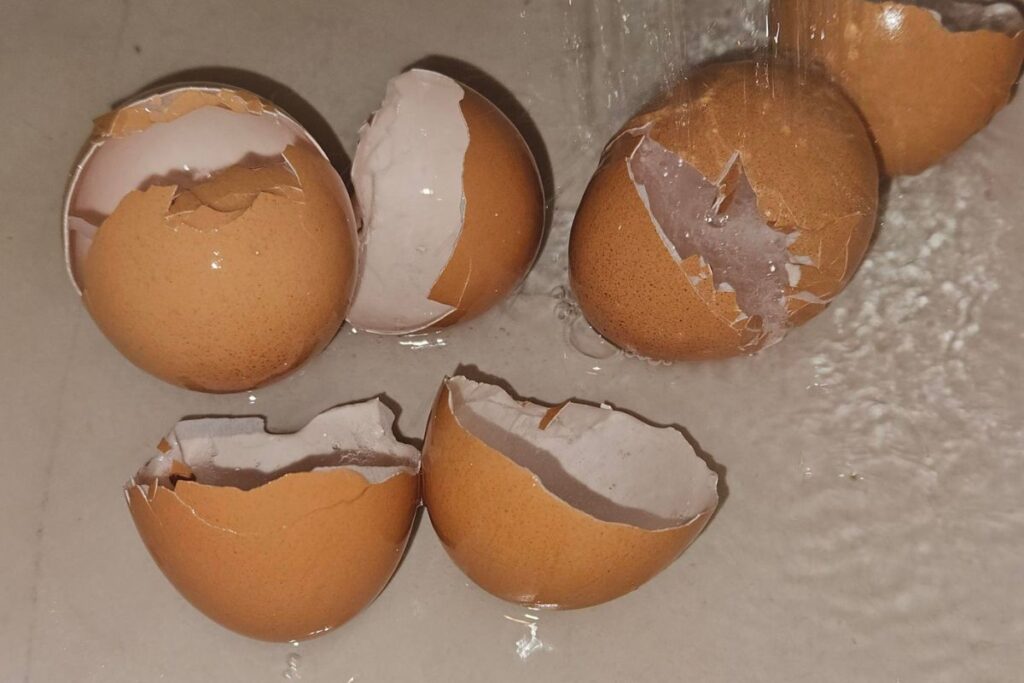 Egg shells are easy to rinse and store in a freezer until needed in the garden.
Have you signed up for some extra garden knowledge? I like nothing better than chatting with gardeners about their successes and expertise. Look into these garden symposia coming up on March 28 and April 11 at the Western Massachusetts Master Gardener website.
I call myself the Lazy Berkshire Gardener because I don’t want to work too hard in my gardens. I want to enjoy them. I find it easier to observe my landscape and let the compost happen, the water pool up, or daisies to self-sow. I look for ways to do the minimum task for the biggest impact. For example, mulching is better than spraying and much better than weeding all season. I look for beautiful, low-maintenance plants that thrive in or at least tolerate my garden conditions. Plus, I am willing to live with the consequences if I miss something.
Comments are closed.