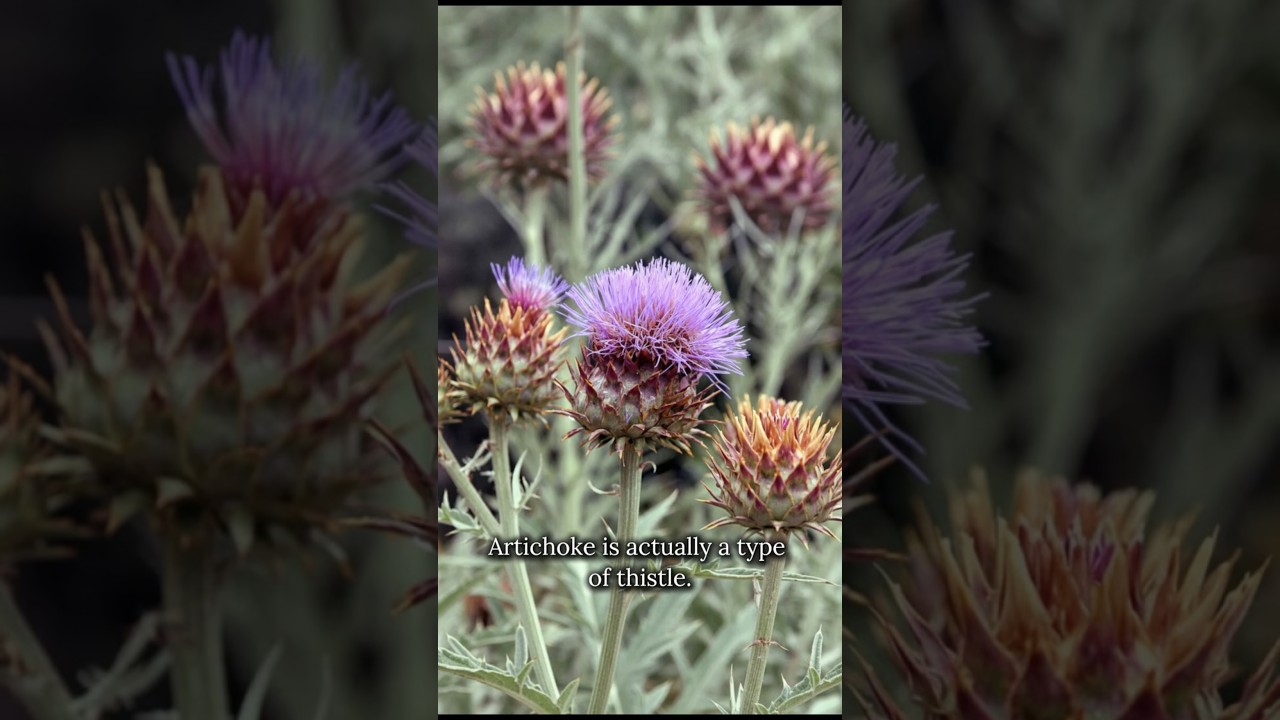
The story of the artichoke is not just about a vegetable, but about how humans shape and reinterpret wild plants over time. What we recognize today as artichoke began as a thorny wild plant native to the Mediterranean, gradually transformed through cultivation and selection.
Ancient texts suggest that this plant drew particular attention in regions like Sicily, while in Roman society it evolved from a common wild species into a refined ingredient associated with elite dining. Yet this prominence did not remain stable. After the fall of Rome, its widespread use declined, though it never fully disappeared.
Instead, knowledge and usage persisted across parts of the Mediterranean, especially in North Africa and Al-Andalus. Medieval culinary texts show that artichoke was not only known but actively prepared and valued, suggesting a continuity of agricultural and culinary traditions beyond the classical world.
With the Renaissance, the plant re-emerged more visibly in Europe. It spread from Italy into France, where it became associated with aristocratic cuisine, before reaching England, where its adoption remained more limited. This phase reflects how plants often travel through cultural exchange as much as through geography.
Later, European migration carried the artichoke across the Atlantic. In California, it eventually became a large-scale agricultural crop, completing its transition from a regional wild plant to a global food product.
In the 19th century, botanists proposed that the artichoke was derived from the wild cardoon. Modern research has since supported this idea, confirming a long process of domestication shaped by human selection.
________________________________________
SOURCES
Ancient & Medieval Sources
• Theophrastus – Enquiry into Plants (Historia Plantarum)
• Pliny the Elder – Natural History
• De re coquinaria
• Dioscorides – De Materia Medica
• Kitab al-Tabikh (Andalusian Cookbook)
________________________________________
Botanical & Historical Research
• Augustin Pyramus de Candolle – Origin of Cultivated Plants (1886)
• Claude Foury (1997) – Propos sur l’origine de l’artichaut et du cardon
• Leonhart Fuchs – De Historia Stirpium (1542)
• John Gerard – Herball (1597)
• Eugène-Humbert Guitard – Revue d’histoire de la pharmacie (1932)

Comments are closed.