
SALT LAKE CITY — It’s common to see mountainsides and canyons filled with maples, aspens and oaks in Utah. In the fall, those trees shift colors from deep summer green to brilliant reds, oranges and golds. Many Utah homeowners attempt to re-create this effect by planting similar species such as sugar maple, red maple, autumn blaze maple and dogwood. However, these trees often fail to develop the expected fall color.
The primary reason is soil chemistry. Soils in the arid west are typically alkaline, which reduces the availability of key micronutrients such as iron, zinc, and manganese. Because plants can only absorb nutrients in water-soluble forms, these deficiencies limit chlorophyll production and overall plant function.
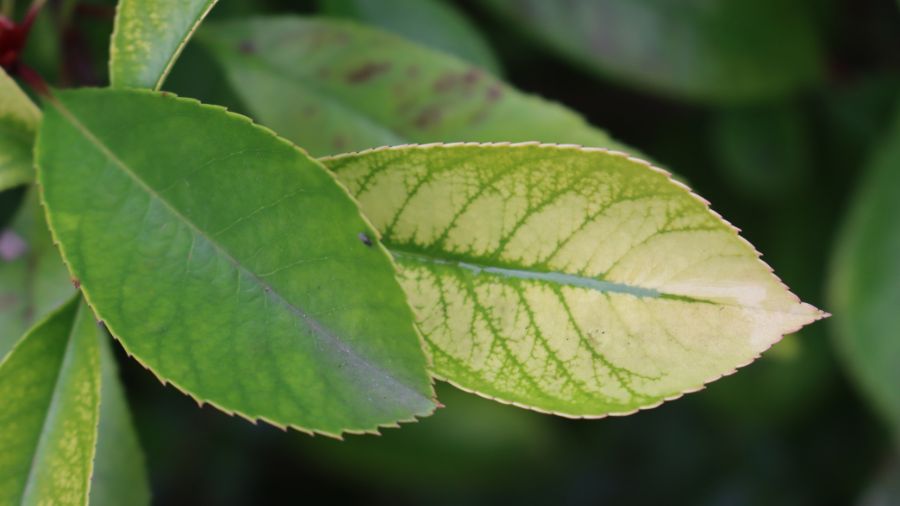
Iron chlorosis can be seen in summer with symptoms of yellow leaves with green veins. In severe cases, leaves may turn nearly white and develop brown scorch along the edges. This reduces photosynthesis, weakens trees, reduces their cold hardiness and limits fall color development.
Instead of vibrant reds and oranges, affected trees often display dull orange to yellow tones before leaf drop. Severe, long-term deficiencies can lead to decline or even death in trees.
Treating iron chlorosis
The most effective solution is to select species adapted to local soil and climate conditions. Trees such as pacific sunset and Norwegian sunset maple, along with serviceberry cultivars like ‘autumn brilliance,’ provide reliable orange to red fall color.
To get a yellow fall color, consider linden, state street maple and hedge maple. While these species still require proper care, they are more tolerant of alkaline soils and perform more consistently.
For existing, less-adapted trees, management can improve performance. Proper irrigation is critical. Apply water deeply and allow the soil to partially dry between irrigations to maintain adequate root oxygen.
Avoid frequent, shallow watering. Trees growing in turf should be watered more deeply, typically once or twice per week to a depth of 9 to 12 inches.
Micronutrient applications can improve tree performance where deficiencies are present. For iron chlorosis, apply EDDHA-chelated iron in early spring (March). This form remains available in alkaline soils more effectively than other iron products. Common options include Miller Ferriplus, Grow More Chelated Iron, and Sprint 138.
A micronutrient mix containing zinc and manganese may also be beneficial. Light nitrogen fertilization at the time of application can support overall tree vigor and may temporarily enhance nutrient uptake.
In addition, applying a granular or liquid humate beneath the tree canopy may provide short-term improvement in nutrient availability.
Other stories:
We want to hear from you.
Have a story idea or tip? Send it to the KSL NewsRadio team here.


Comments are closed.