
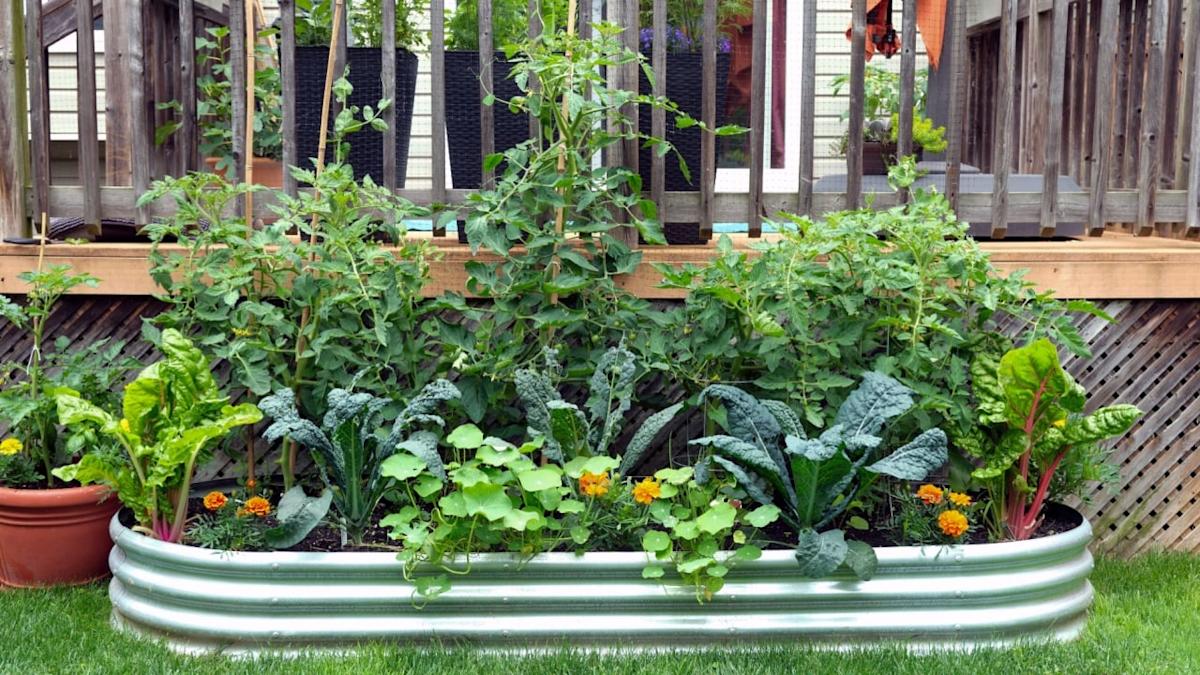
Companion planting is one of the oldest ideas in agriculture.
Long before synthetic pesticides, farmers around the world were placing certain crops next to each other deliberately, learning through observation which combinations thrived and which didn’t. Today, that ancient practice has made a full comeback in the home garden. The problem is that somewhere along the way, the good advice got buried under a mountain of folklore, and most people can’t tell the difference.
Gardening experts at institutions like Michigan State University Extension and West Virginia University Extension now agree that the vast majority of companion planting ‘rules’ circulating online and in popular books are based on little more than tradition and hearsay. That’s not an argument against companion planting. It’s an argument for being smarter about it. Because a handful of pairings are so thoroughly documented that even skeptics can’t argue with the results. Those are the ones worth your garden space.
Here’s what the evidence actually supports.
Tomatoes + Basil: The Classic That Actually Earns It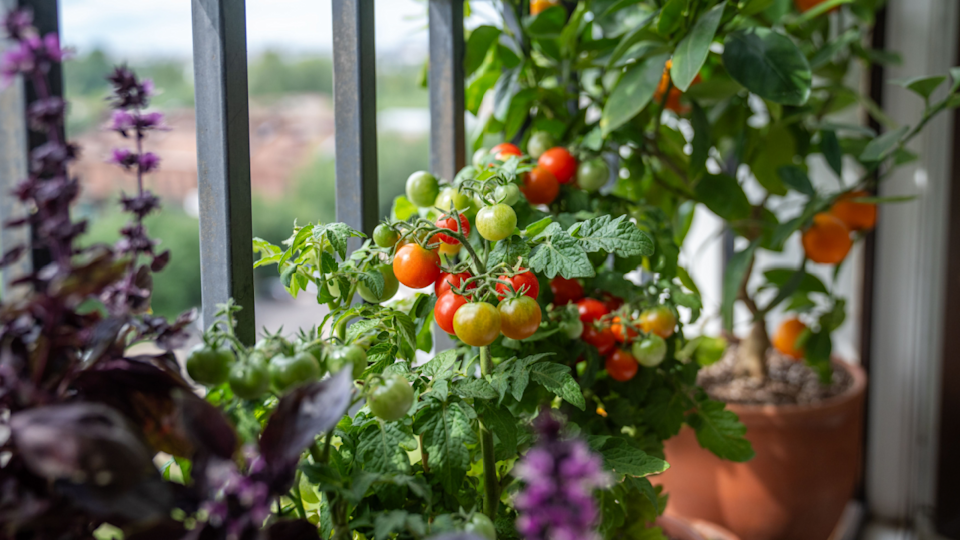
Image Credit: Shutterstock.
Tomatoes and basil have shared garden space for generations, and for once, the popular wisdom holds up. Research published in Plant Cell Reports shows that basil’s volatile compounds prime the tomato plant’s own defense system, enhancing its response to pest attack. The Old Farmer’s Almanac confirms that reduced pest pressure on tomatoes grown alongside basil, without any increase in pest predators as an explanation, suggesting basil’s scent directly camouflages tomatoes from insects that would otherwise find them.
Furthermore, basil also attracts bees, which improves pollination, tomato health, and overall fruit development. One note worth making is that the widely repeated claim that basil improves tomato flavor has no strong scientific backing. Plant it for pest protection and pollinator attraction, and enjoy any flavor benefit as a bonus.
Plant basil approximately one foot from each tomato plant, and let some of it flower toward the end of the season to maximize its insect-attracting power.
Corn + Beans + Squash: The Three Sisters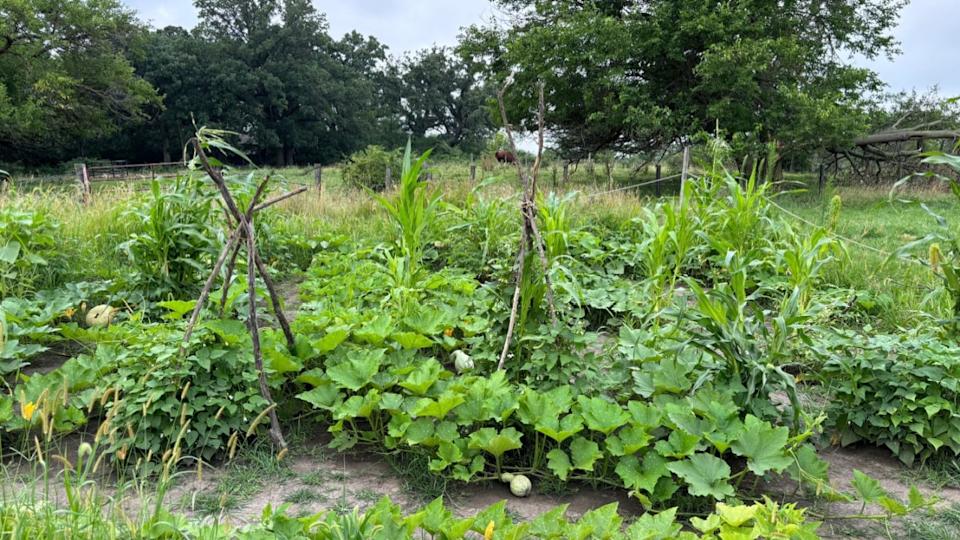
Image Credit: Shutterstock.
No companion planting combination has a deeper history or a stronger evidence base. Indigenous peoples across North and Central America, including the Haudenosaunee Confederation and the Cherokee, grew corn, beans, and squash together for thousands of years, calling them the Three Sisters because, like family, each contributed something the others needed. The National Agricultural Library has since confirmed the system’s effectiveness.
Corn provides a natural trellis for climbing pole beans. The beans fix atmospheric nitrogen in the soil, making it available to both the corn and the squash. Squash leaves spread wide along the ground, suppressing weeds, retaining soil moisture, and deterring raccoons and squash vine borers with their prickly texture.
One practical note for home gardeners: this system works best with enough corn plants for cross-pollination. A single row or a small cluster often produces poor yields. Plant corn in a block of at least four rows.
Nasturtiums + Almost Everything: The Ultimate Trap Crop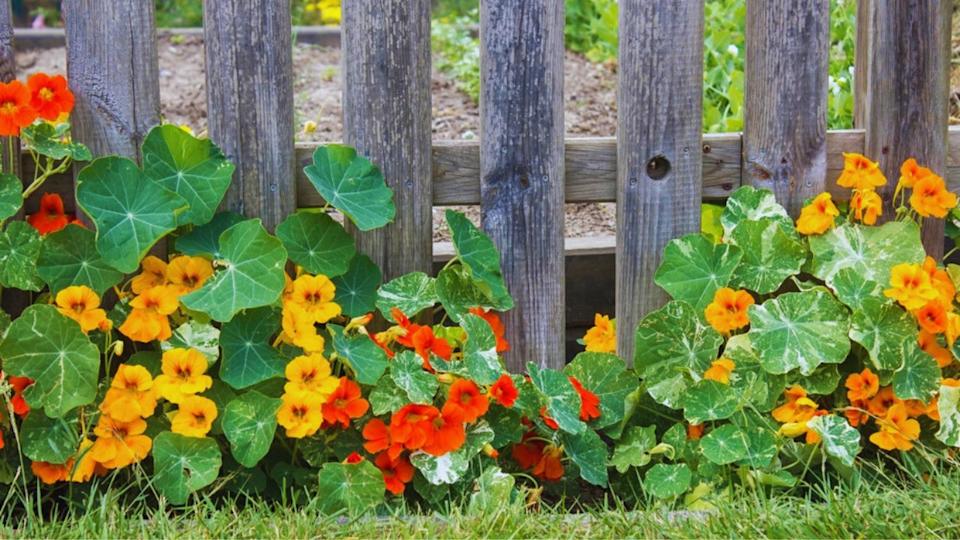
Image Credit: Shutterstock.
If you could add only one companion plant to your garden, nasturtiums would be the most defensible choice. They function as trap crops, meaning they attract pests away from your main crops and sacrifice themselves in the process. The Old Farmer’s Almanac supports their effectiveness against aphids, cucumber beetles, squash bugs, whiteflies, cabbage worms, and black flies, which makes them useful companions for cucumbers, squash, brassicas like broccoli and kale, and beans.
For cucumbers in particular, the climbing nasturtium variety is ideal. Grown in the same trellis as your cucumbers, it draws in the pollinators that cucumbers desperately need in early season, when poor fruit set is a frustratingly common problem. Amy Stross, author of ‘The Suburban Micro-Farm’ and blogger at TenthAcreFarm.com, notes in Country Living that nasturtiums have a unique scent that seems to confuse and repel pests while simultaneously making the trellis genuinely beautiful. Their flowers and leaves are also edible, with a peppery flavor that brightens salads.
Use the climbing variety for trellises; the bush variety is better as a low-growing border.
Marigolds + Tomatoes and Squash: The Truth About This Famous Pairing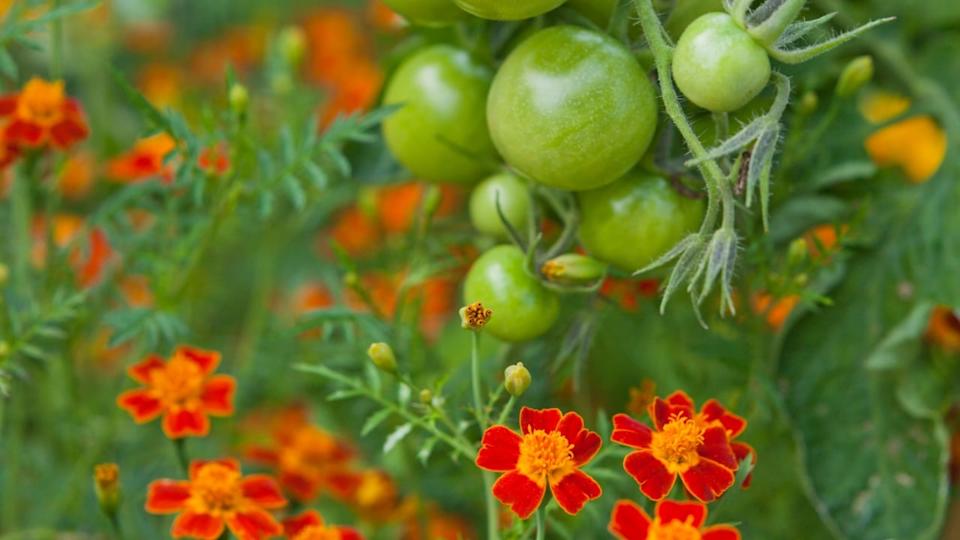
Image Credit: Shutterstock.
Marigolds are the most recommended companion plant in any gardening book or blog, and they do earn part of that reputation. Research published in PLOS ONE confirms that marigolds planted alongside tomatoes reduce whitefly populations. Marigolds intercropped with zucchini and squash show the best resistance to cucumber beetles, according to research from the Royal Entomological Society. They also attract beneficial insects, including ladybugs and parasitic wasps.
Here’s where the popular advice goes wrong: Marigolds planted as companion plants do not suppress root-knot nematodes. That benefit only occurs when an entire area is planted with marigolds as a dedicated cover crop, and then immediately followed by a vegetable crop in the same season. This is only practical in warm climates. For most gardeners, the nematode claim is one of the most persistently repeated myths in the home garden.
Grow marigolds for their real, documented benefits: whitefly and cucumber beetle deterrence, beneficial insect attraction, and sheer beauty. Skip them as a nematode solution.
Alyssum, Borage, and Calendula: The Underrated Trio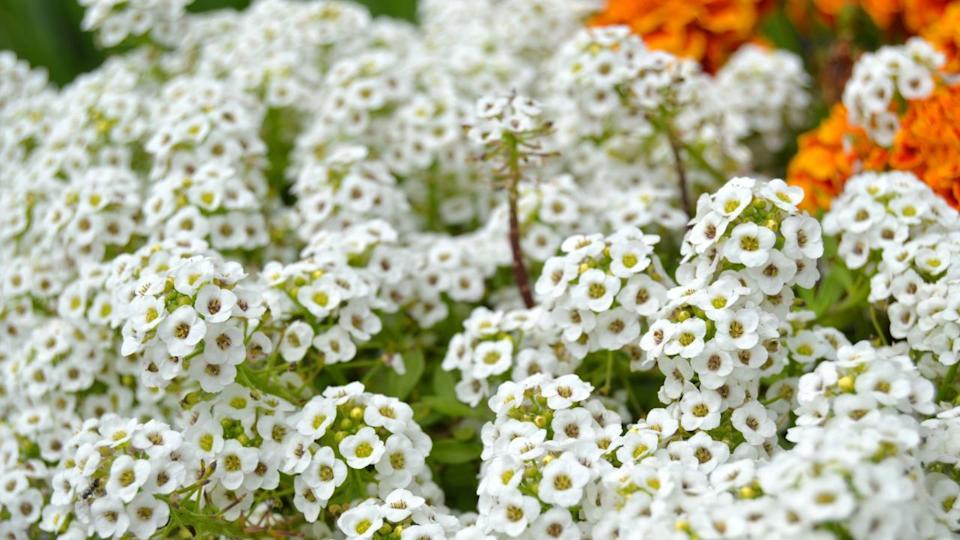
Image Credit: Depositphotos.com.
These three flowers collectively outperform most vegetable-to-vegetable pairings for pest management, yet they rarely get top billing in popular companion planting articles.
Sweet alyssum attracts hoverflies, whose larvae are voracious aphid predators. Research in Biological Control confirms its effectiveness when intercropped with lettuce and broccoli, two of the most aphid-prone crops in any garden. The flowers are low-growing and easy to direct-seed between rows.
Borage is the tomato’s best friend, according to evidence from multiple sources. It draws parasitic wasps that lay their eggs in tomato hornworm caterpillars, controlling one of the most destructive tomato pests without any intervention from you. It also attracts pollinators in large numbers and has been shown in research to enhance tomato growth and disease resistance when grown nearby. As the Old Farmer’s Almanac puts it, borage gives you a twofer: boosted pollination and biological hornworm control.
Calendula’s sticky stems physically trap aphids before they can reach your brassicas, according to Amy Stross in Country Living, who grows it consistently alongside broccoli. It also draws ladybugs to feed on any aphids that do arrive. Chop it down at the end of the season and leave it in place to decompose directly in the bed.
Additional Great Companion Plant Pairings for Your Vegetable Garden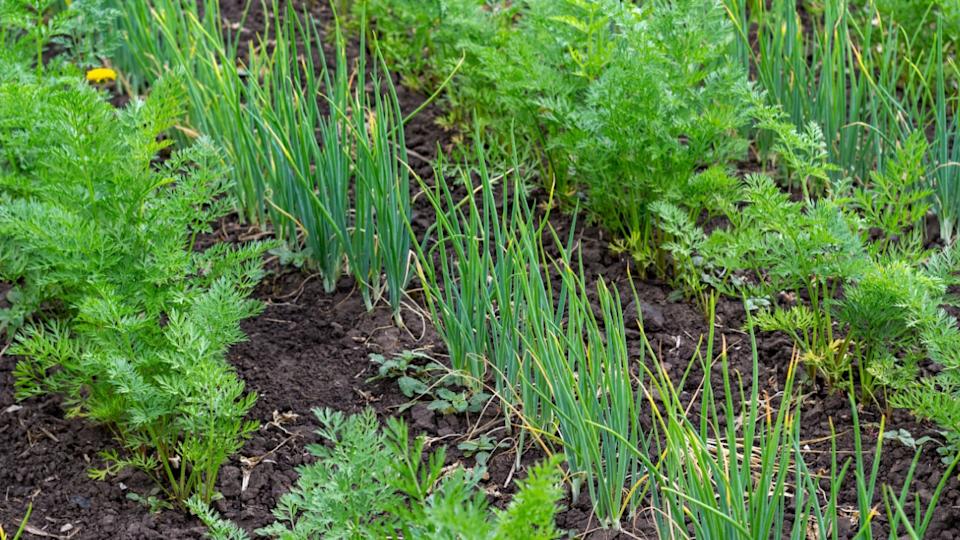
Image Credit: Shutterstock.
Once you’ve established the core companions above, these additional evidence-backed pairings are worth working into your layout.
Carrots + Onions. Onions intercropped with carrots significantly reduce carrot fly attacks, according to research published in entomological literature. Chives and leeks provide a similar protective effect through odor masking.
Radishes + Spinach. A combination shown to significantly improve the yield of both crops, optimize space use, and reduce pest populations. Radishes mature quickly and don’t interfere with spinach roots.
Lettuce + Tomatoes or Eggplant. Taller plants eventually provide shade for heat-sensitive lettuce, potentially extending your lettuce harvest into warmer months. Plant lettuce on the south side for maximum sun before the canopy fills in.
Beans + Sunflowers. Sunflowers act as living trellises for pole beans, and dwarf sunflowers planted near corn have been shown to attract armies of pest-eating ladybugs, according to the Old Farmer’s Almanac.
Cucumbers + Corn. Research confirms that corn intercropped with cucumbers reduces cucumber insect pests by more than 50% compared to cucumbers grown alone in tropical environments.
Potatoes + Garlic. A 3:1 potato-to-garlic ratio produced the best disease suppression for late blight and the highest yield gain in published agricultural research. Garlic also deters Colorado potato beetles.
Roses + Chives or Garlic. Strong-smelling alliums deter aphids and Japanese beetles from roses. Plant them at the base of rose bushes, where they also help suppress weeds.
Companion Pairings to Skip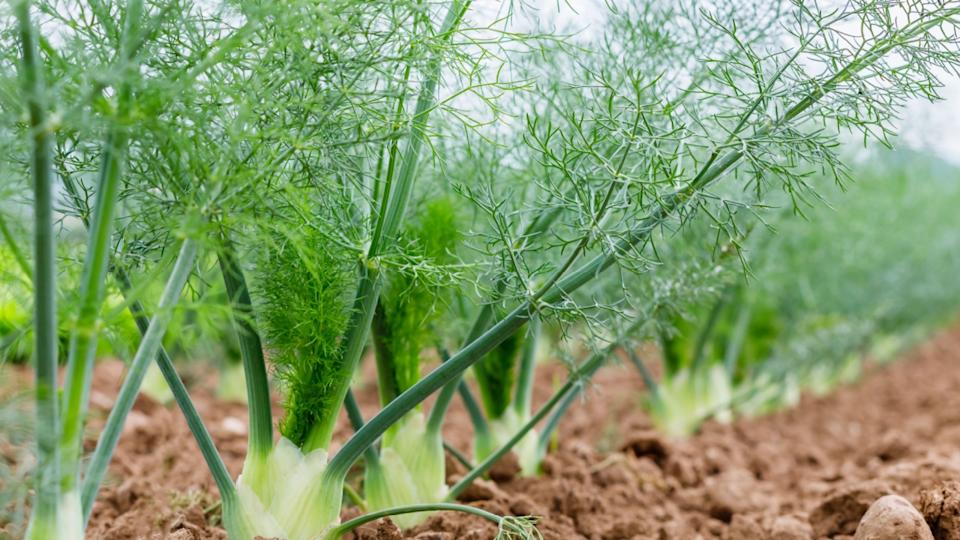
Image Credit: Shutterstock.
Not everything that gets passed around gardening circles is worth your time or space. These are the top pairings to avoid:
Fennel with anything. Fennel is genuinely allelopathic; it inhibits the growth of most neighboring vegetables and herbs. Give it its own container or a separate garden section entirely.
Beans near onions or garlic. This is one of the most consistently documented incompatible pairings. Onions stunt bean growth; keep them at least two to three rows apart.
Potatoes + zucchini. Both are fast, heavy feeders. Potatoes deplete soil nutrients rapidly, leaving zucchini struggling to establish. Landscape designer Melanie Rekola, quoted in House Beautiful, calls this one of the most common companion planting mistakes she sees.
How to Actually Use Companion Planting in Your Garden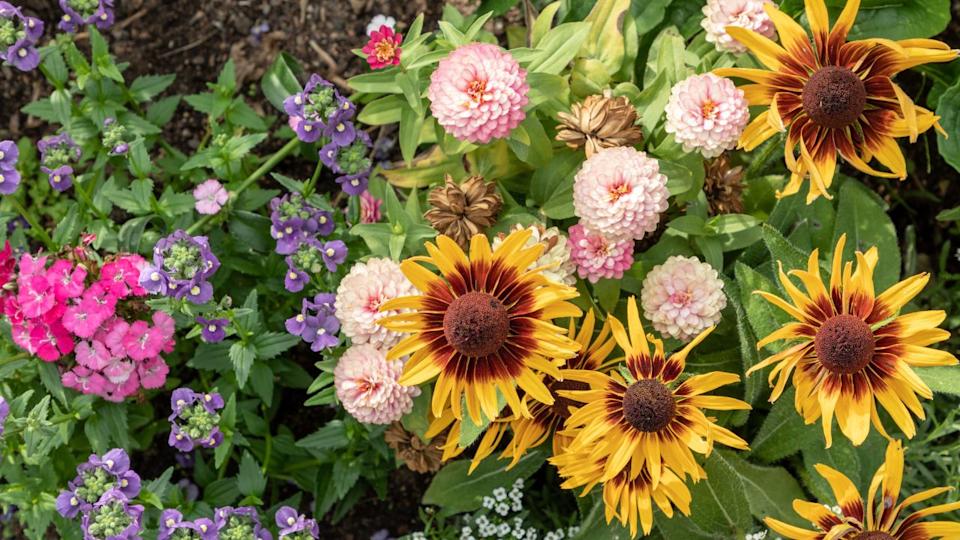
Image Credit: Dietmar Rabich, CC BY-SA 4.0/Wiki Commons.
Before worrying about specific pairings, get the fundamentals right. Companion plants need to grow within two to three rows of each other to deliver meaningful benefits, per West Virginia University Extension. Plants spaced further apart essentially can’t communicate through scent, root exudates, or physical presence.
Match growing seasons before you match pairings. A cool-season companion does nothing for a warm-season crop because they won’t overlap in the ground at the same time. Growth habit and mature size matter enormously; many companion planting failures aren’t about chemistry, they’re about one plant shading out or physically overwhelming another. Okra and sweet potatoes, for example, look manageable at transplant size and turn into garden bullies by midsummer.
Start with flowers. Marigolds, nasturtiums, calendula, alyssum, and borage deliver the most reliable, broadest benefits of any companion category. Adding even a few of these to your vegetable beds will attract pollinators, draw beneficial insects, and reduce pest pressure across the whole garden, without requiring you to follow a chart at all.
The best companion planting strategy isn’t about memorizing which vegetables like which. It’s about growing a diverse, layered garden where plants, insects, and soil organisms support each other the way they do in any healthy ecosystem. Start with the pairings backed by real evidence. Add a few good flowers. Watch what happens.
Read more:
Do these 12 raised garden bed tasks before March ends, or lose your head start
12 vegetables to direct sow in the garden right now in March
Comments are closed.