
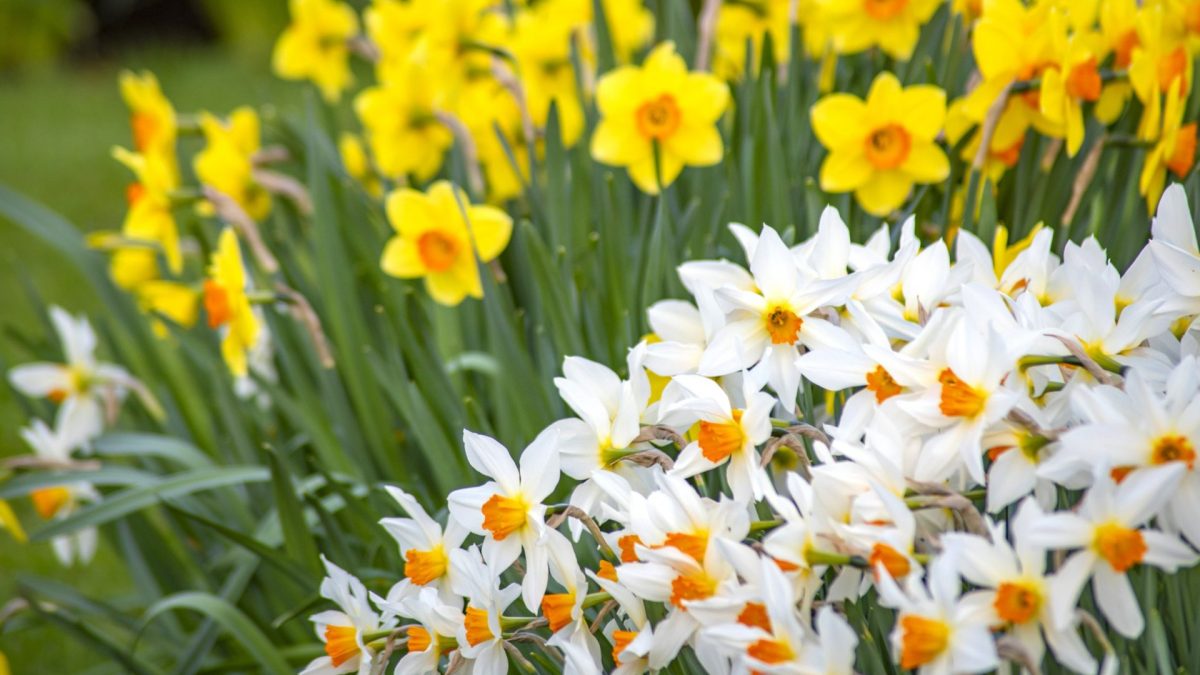
Daffodils peak in March, with more flowers to come – especially tulips – in April. Others, snowdrops for example, are already fading. Their foliage can be a little unkempt, but avoid cutting it for at least six weeks as they need the leaves to photosynthesise to build up the bulbs and flower buds for next year. Dead-head too if you have the time, so that plants can put all their energy into bigger bulbs rather than seeds.
Anemone blanda, snake’s head fritillary (Fritillaria meleagris) and Muscari latifolium (grape hyacinth) are examples of the few bulbs that usefully self-seed if not deadheaded.
Where you have congested clumps of bulbs, consider lifting and splitting them into clusters of, say, three to four bulbs and replanting at the same depth with the leaves intact at about 15-20cm apart to give them more space to grow and flower and boost your stock of bulbs. Snowdrops, snowflakes (Leucojum aestivum) and grape hyacinths (Muscari) in particular can multiply amazingly.
New FeatureIn ShortQuick Stories. Same trusted journalism.
In theory, the later you lift bulbs after flowering the better, typically when the leaf tips begin to yellow. This gives the bulb a longer period to build up its resources. Bear in mind though that bulbs disappear below ground from late spring, becoming hard to find once they are without foliage. However, in practice, you don’t seem to lose much by lifting as soon as flowering is over.
Snowdrops and winter aconites in particular suit this “planting in the green”. If more snowdrops and aconites are needed, suitable freshly lifted bulbs are widely sold at the moment.
Not every bulb will prosper, however, and inevitably there will be “blind” bulbs that produce leaves but no flowers. Sometimes these blind bulbs will be in congested clumps. Here, lifting, dividing and replanting will bring them back to flowering vigour in two years. Some blind bulbs are growing in areas that are too shady – lift and move these to brighter spots if lack of light seems to be involved. Adding fertiliser, especially potassium-rich fertiliser, is often suggested, and certainly won’t do any harm.
Bulbs don’t seem to respond much to fertiliser but daffodil farmers will add some nitrogen in particular to boost their bulb crop. An organic based fertiliser such as blood, fish and bone applied as soon as possible would be suitable.
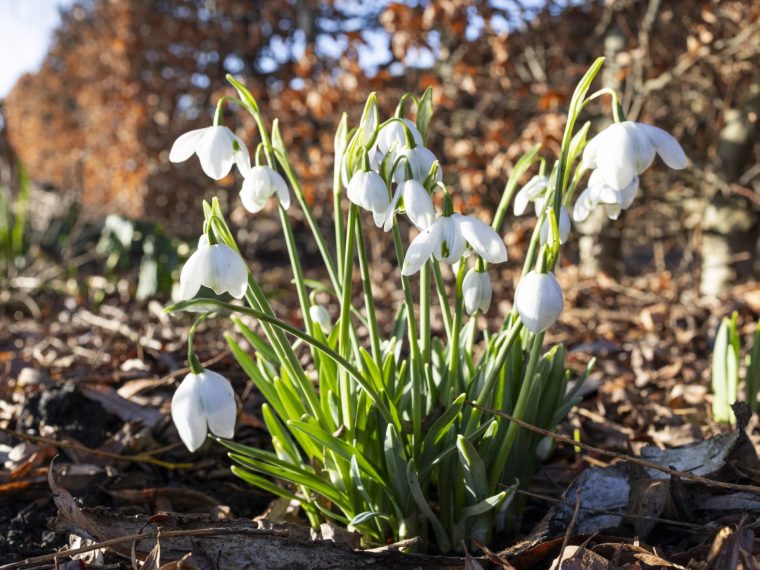 Snowdrops are among the first plants to flower in the new year (Photo: Josh Kemp-Smith/RHS)
It is also worth feeding tulips coming into flower now in the uncertain hope of them flowering well next year. Tulips almost always decline but there are occasional instances of persistent clumps.
Keep bulbs growing in pots – including narcissi, hyacinths and Iris reticulata – in good light, well-watered and with an occasional liquid feed, seaweed fertiliser for example.
Bulbs are seldom as good the second year in pots as in the first, and planting fresh-bought bulbs in autumn is a more reliable and rewarding option. The spent potted bulbs, however, can be planted out in the garden as soon as you like after flowering, when they can add to the flowering display in future years.
To provide reasonably priced summer colour, consider planting summer-flowering bulbs from late March. Even in current cold soils, Anemone coronaria (De Caen, St Brigid), gladioli and lilies can be planted.
The RHS is a charity inspiring everyone to grow via its research, advisory, outreach, shows and gardens. For more information, visit: rhs.org.uk
Comments are closed.