
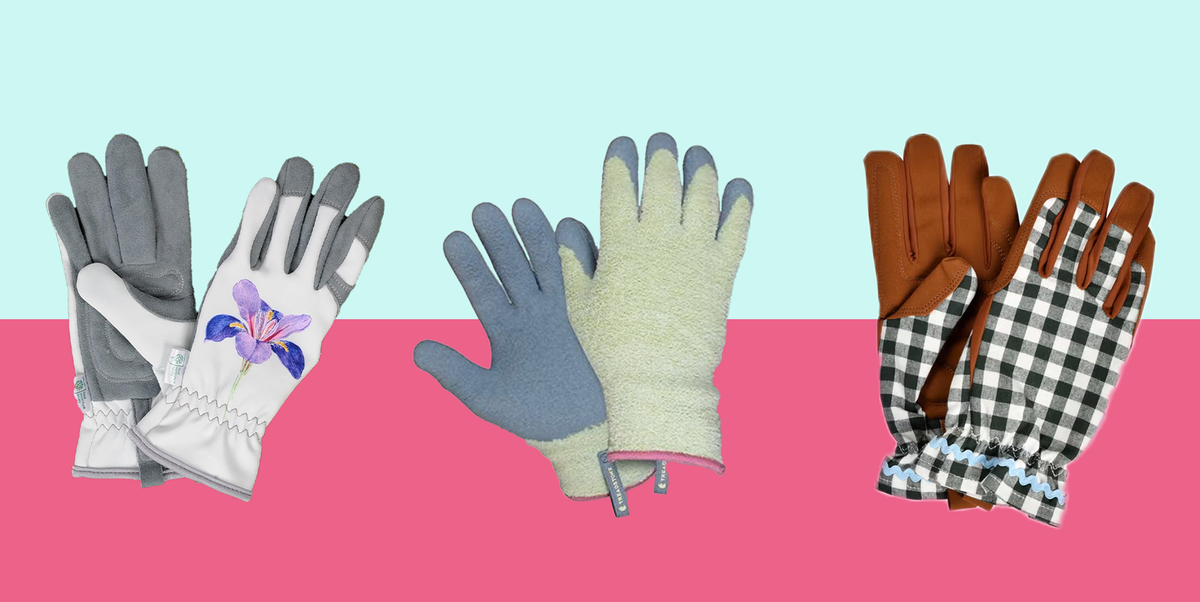
How to choose gardening gloves
There’s a lot more to a gardening glove than you may think. In fact, there are a whole range of factors to consider. To start, you need to make sure the gloves you buy suit the type of gardening work you generally do.
Light duty gloves are for non-intensive work like sowing seeds, weeding and general gardening tasks Medium duty gloves are for slightly hardier work such as potting, pruning or clearing Heavy duty gloves are for intensive jobs, including landscaping, digging and mowing
Once you’ve narrowed down what you’re looking for, here are the other factors to consider.
Material: Gardening gloves are made in an array of fabrics – and each offers different benefits. You’ll find more information on this below.
Waterproofing: Gardening can be wet work, so if you like to garden year-round, you’ll need a pair of waterproof gloves. These are great for heavy-duty tasks, but are often thicker than general purpose designs, so aren’t as suited to more delicate jobs – for those, opt for water-resistant ones instead.
Arm protection: Most gardening gloves finish at the wrists, but some extend further or have a gauntlet (a long cuff). This is particularly helpful if your garden has lots of prickly plants (hello, roses) or tangled brambles.
Knuckle and vein guards: Some gardening gloves have protective reinforcements across the knuckles and wrists. While this tends to reduce flexibility, if you’re undertaking particularly heavy-duty work, they’re a must.
Reinforced fingertip protection: Padded fingertips protect against thorns and digging. They’ll make things more difficult during more delicate jobs, so keep them for heavy duty work.
Padded palms: Some gardening gloves have protection across the palms, which is ideal if you’re kneeling and leaning on your hands a lot when working.
What material is best for gardening gloves?
You’ll find a mix of materials in the gloves in our list. Below, we’ve listed the pros and cons of each.
Bamboo fibre is environmentally friendly, soft and flexible, but isn’t waterproof. Elastane is stretchy, abrasion-resistant, strong and durable. Latex is wear-and-tear-resistant and has a strong grip. It’s a good alternative to animal products but avoid if you’re allergic. Leather is resistant to punctures and tears and becomes more flexible after prolonged use. Linen is strong, dries quickly and stays cool in hot weather, but it isn’t waterproof. Polyester is strong, durable and quick to dry, but it isn’t waterproof. Nylon is strong, stretchy, lightweight and less absorbent than polyester. PU, or artificial leather, has good tensile strength, which means it doesn’t tear easily and is puncture resistant. Suede is durable, pliable and offers a good grip, but it’s thin and permeable. TPR is a water-resistant material that has both the characteristics of rubber and plastic, making it abrasion resistant and flexible. Nitrile is a type of synthetic, latex-free rubber that is durable and puncture resistant.
Comments are closed.