
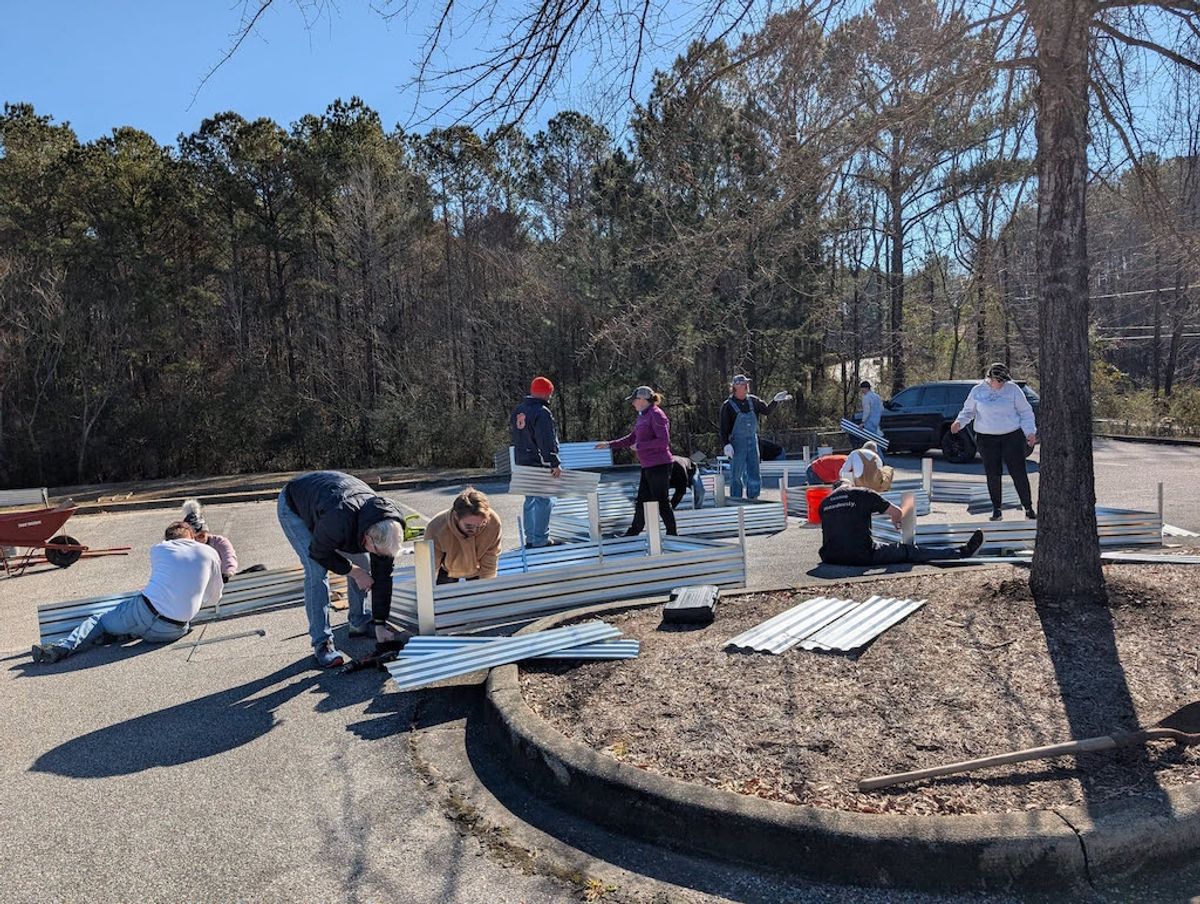
Fowler said the church’s longstanding relationship with Oak Mountain Missions has helped fuel excitement for the project.
“For most of the past 20 years, we’ve been volunteering with them,” she said. “Our members already see the impact on people, and it’s ignited a fire to do more.”
In addition to providing food, Fowler hopes the garden will create opportunities for education and community connection.
“You can teach your kids about science, you can cook with others and form bonds,” she said. “It’s so much more than just food.”
The project has also received guidance from local experts, including master gardeners and farmers, as well as resources from Jones Valley Teaching Farm, where Fowler is currently enrolled in a fellows program.
Despite strong early momentum, Fowler said the team is focused on long-term sustainability—one of the biggest challenges for community gardens.
“One of the hardest things is keeping the excitement and engagement going long-term,” she said. “It’s a lot of work, especially in the Alabama summer heat.”
To address that, organizers plan to closely track what crops perform well and adjust future planting strategies accordingly.
“We’re going to document everything we plant—what grows well and what doesn’t,” Fowler said. “If something’s not working, we’ll shift our resources to what does.”
Looking ahead, Fowler hopes the garden will continue to grow both in output and community involvement. By the end of its first full year, she aims to significantly expand its impact.
“My goal is to feed around 4,000 people,” she said. “Every need that we’ve had so far has been provided for.”
With its first crops set to go in the ground this week, the garden represents a new chapter in the church’s ongoing efforts to serve the community—and a tangible way for members to make a difference.
Comments are closed.