
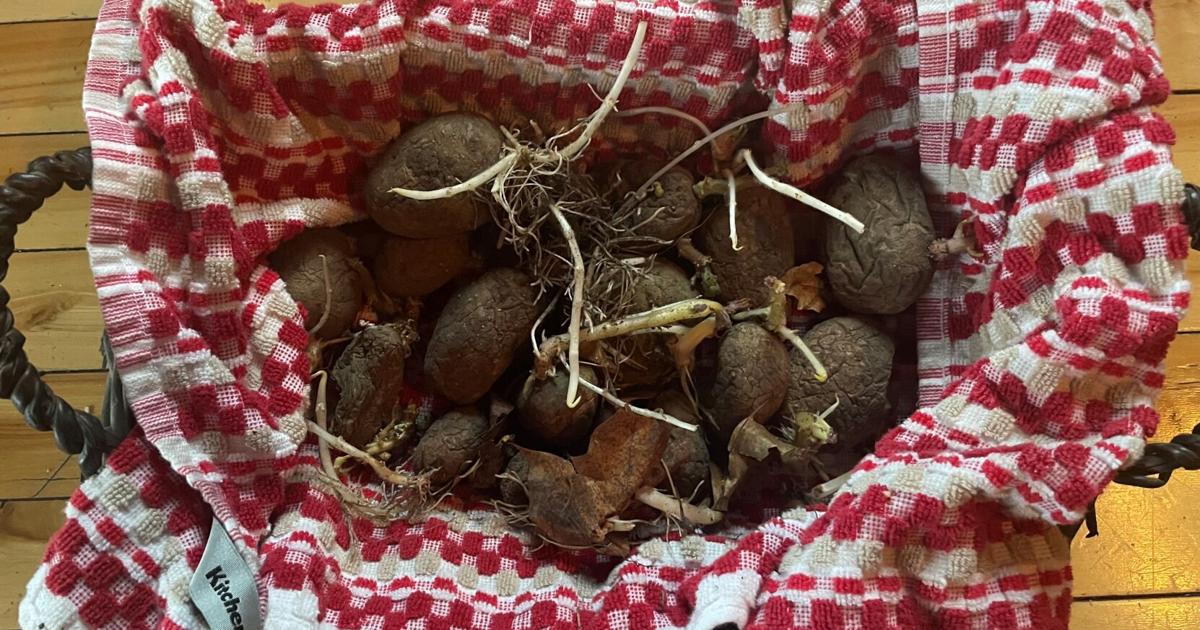
Potato planting time is anywhere from mid-March to early summer. Even earlier this year would have worked with the temperatures; however, there was rain, oh so much rain. Potatoes are fairly forgiving with growing conditions, except for one thing: they don’t like wet, soggy soil. Yuck! And have we ever been getting enough rain to make the soil soggy for quite a while!
Potatoes prefer full sun, but will tolerate some shade. They grow best in loose, compost-like, mildly acidic soil, but not nitrogen-rich. If the nitrogen is too high, they will turn green. If you use a soil thermometer, when the soil is 45 to 50 degrees F, it is time to plant. They like regular watering, just not enough to make the soil soggy. One method of planting is to dig four to six inch deep holes, about 10” apart, place a small tuber with the eyes up, or a cut piece of a larger potato with at least two eyes. Cover the tuber with a couple of inches of soil, then when the foliage is about four to six inches tall, cover with more soil, so just a couple of inches is above ground. Continue to hill around the plant to offer the tubers plenty of space to grow.
Another method is to plant in trenches four to six inches deep, six inches wide and two feet apart, then cover with straw. When the tubers sprout, start covering them with two inches of the soil that was dug out of the trench. Continue to add soil as they grow, being sure they are covered so they don’t turn green.
Another popular potato planting technique is to plant them in buckets or bags, with drainage holes, that are at least two feet deep. A food-grade, five-gallon bucket is a good place for nongardeners to get started. Even if you live in an apartment with no yard, you can always find a sunny space for a five-gallon bucket (or two). Start with four to six inches of potting soil, compost or peat moss on the bottom (or a combination of all three). Then place three or four seed potatoes, with sprouts pointing up and cover with one to two inches of soil and gently water. Then, as the sprouts emerge, cover with more soil and continue until the bucket is full. Water regularly when the soil starts to dry. When the foliage turns yellow or the leaves drop off (about 90 days), simply turn the bucket upside down onto a tarp and pick out all your tasty potatoes. Easy peasy.
I have also read about growing them in a Dollar Store laundry basket. Basically, use the same process as for the bucket, but start by lining the sides with a few layers of newspaper to keep the soil intact. Also, you will be able to plant a few more potato starts because of the larger size of the basket. This is a great project for somebody who has limited space, has never grown any of their own food or simply loves eating potatoes. Get the kids involved; they could each start their own bucket. Potatoes are an excellent survival food – nutritious, filling, versatile in the kitchen, with a long storage life.
Linda Morrison, a University of Washington graduate, lives in Kamiah with her husband, Jim. They enjoy gardening, canning, camping, berry picking and spending time with their grandchildren.
Comments are closed.