
Prisons are often rural, isolated milieus that cast a shadow over the sunniest of days. When confined within unforgiving concertina wire, it is often easy to fall into hopelessness and despair.
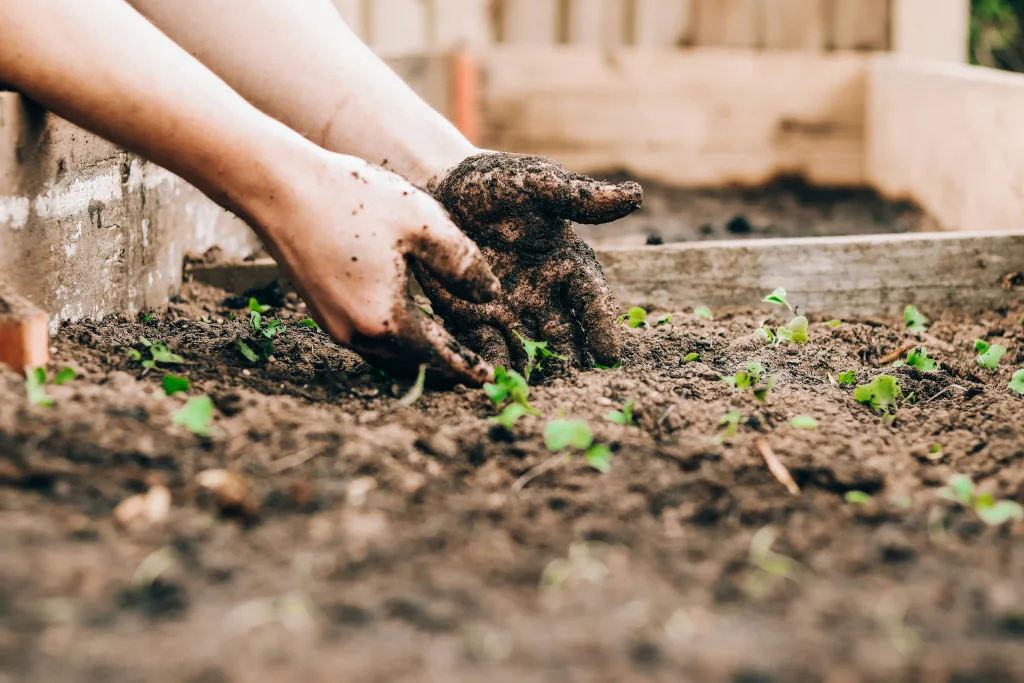
To counter that persistent obscurity, residents of Mule Creek State Prison, Facility-D, constructed the “Garden of Hope,” a sacred space for personal transformation through horticulture.
On any given day the small outdoor enclosure hosts a variety of tasty herbs, vibrant flowers and nutritious vegetables. There’s lamb’s ear (a large furry leafed plant), lavender and chocolate mint to explore, amongst others.
The garden serves as a metaphoric space of natural harmony, transformative growth and a symbol for potential — for humans and plants.
It was that potential that was on prominent display as representatives M.Redding and B. Borchering visited our facility. Their overall mission was to gain insight into the effectiveness of rehabilitative programs in the state’s prisons.
Kenneth E. Hartman and his colleague Norhan Abolail, of Transformative Programming Works accompanied the governor’s delegates. Hartman, who served 38 years of a sentence of life without the possibility of parole before being commuted by Governor Jerry Brown in 2017, states, “It was positive programming that helped me survive in prison and change my life.”
Kevin Wyman/ an incarcerated person and participant of the program, expresses similar sentiment, “This program gets me out of prison the minute I enter this space. It’s so beautiful, a garden at home.” Wyman has served 8 years of a lengthy sentence, and concludes that, “It motivates me to journal and recognize opportunity.”
In the center of the garden is a small, charmingly simple bird bath where a gorgeous blue-black hummingbird hovers just above the geranium, basil and garlic plant fixtures to the right of this abundant garden flowing with life.
Land Together, the program for which the Garden of Hope is founded, has been in operation for twenty-three years and is present in 9 of the state’s correctional institutions.
According to Jill Plumb, the site coordinator, the garden is a system of order, a web of interdependence, likened to a delicate orchid that needs just the right amount of water and nurturing to survive. Plumb analogizes that people are no different, “Everything is connected to everything else,” she declares.
Elijah Hall echoes Plumb’s perspective. A resident of the facility, but one who hasn’t yet taken the program states, “It’s like when a seed is planted, the produce can grow. It’s the same with human beings. We plant seeds in the ground and within each other, but all the seeds come from God.”
The garden has one entrance and two main earthy walkways that are divided by a cluster of different plots that host comfrey, strawberry, and rosemary.
The walkways are composed of dark moist dirt that has the consistency of clay and feels cooler than the day’s temperature high of 76 degrees.
David Gray, another participant of the program, offers a couple of running motifs the program instills, “Compost your past, plant your future, as well as, “Gotta get to the roots of your problems.” The curriculum for the program is replete with such guiding metaphors and principles.
M. Johnson, one of the visitors from the governor’s office states, “I’m impressed. This is a remarkable program.”
Plumb envisions an inclusive world where there are no dividing lines among people. To symbolize this ideal, she introduces the Bouquet Project.
This program offers small bundles of scented herbs and aromatic flower arrangements to be shared with custody and medical staff, incarcerated persons, and people within the community at large. Additionally, Plumb says 400 bags of tea and salve produced from the garden were gifted to the Global Homeboy Gathering of Partners in Collective Justice. All of the products are produced by incarcerated people in the program as a single gesture of amends among many other material expressions.
Plumb continues, “Just as it takes many ingredients to make a salad from our garden, we can create diversity with people.” The bundles of herbs and flowers were then distributed among the residents, staff and guests.
“Programs like this make life easier for staff and residents; these programs make us all safer,” says a smiling Hartman.
*The names of the Governor’s delegates have been changed to protect their privacy
Dortell Williams is in his 37th year of incarceration. Despite being deemed irredeemable, he has earned six academic degrees, his most recent being a master’s degree through Cal State Dominguez Hills. He uses his education to initiate positive programming for his peers, to mentor youth inside and outside of prison and to support survivors of harm.
To learn more about Dortell and to join others in his freedom journey, go to www.freedortellwilliams.com
Follow the Vanguard on Social Media – X, Instagram and Facebook. Subscribe the Vanguard News letters. To make a tax-deductible donation, please visit davisvanguard.org/donate or give directly through ActBlue. Your support will ensure that the vital work of the Vanguard continues.
Categories: Breaking News Everyday Injustice Tags: Garden of Hope Incarcerated People Mule Creek State Prison personal transformation prison rehabilitation Restorative Justice
Comments are closed.