
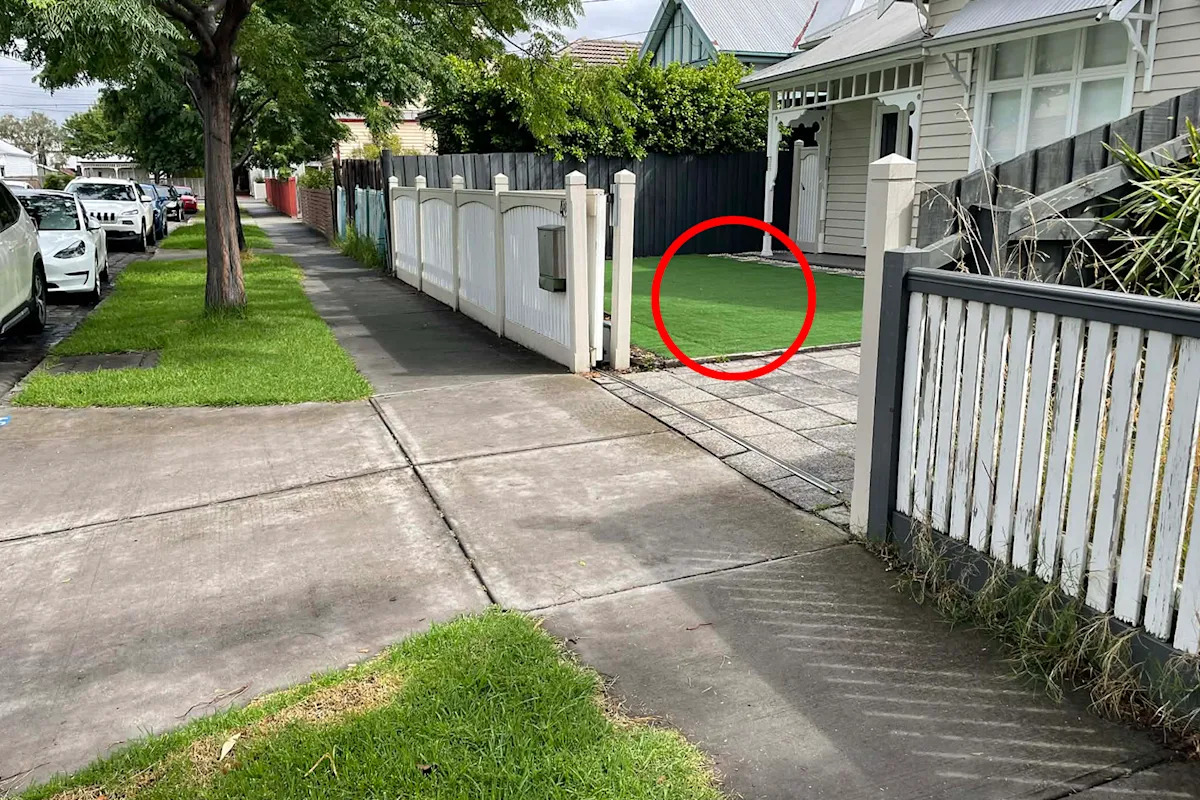
Fake lawns are a popular feature seen in Aussie gardens and nature strips. They save on water and maintenance costs, but there is a hidden expense residents should consider before ditching real grass.
Not only do plastic alternatives get burning hot in summer and shed microplastics into the environment, RMIT senior lecturer Dr Muhammad Safiullah warns they also wipe out biodiversity.
When hedges and trees are replaced with synthetic alternatives, the impact is visible, but the impact of blanketing the ground in plastic is largely unseen.
“Synthetic turf essentially creates ecological deserts, removing insects and worms, or even microorganisms,” he told Yahoo News.
It prevents water from permeating into the soil and reduces oxygen supply, suffocating everything that lives beneath.
While most people wouldn’t give a worm a second thought, they provide food for the magpies, currawongs and kookaburras that survive in the cities and suburbs.
If they have nothing to eat, their populations slowly decline, and so too does the birdsong.
“When you cover the surface with synthetic turf, it prevents the growth of natural inhabitants, like cover or wildflowers,” Dr Safiullah said.
“That again prevents pollinator species like bees from coming.”
Synthetic grass, particularly that with short piles, can become extremely hot, soaring to as high as 100 degrees Celcuis.
That means there’s no shade for smaller insects like caterpillars, ants, or even Christmas beetles.
Weather change leads to spike in fake lawn popularity
The fake lawn trend has been rapidly spreading since the 1990s, spiking in popularity during drought.
In 2021, the US city of Las Vegas announced it would be outlawing lawns that are purely decorative and replacing 16 million square metres of natural grass with synthetics.
Three years earlier, new houses around Echuca in Victoria’s north were landscaped with plastic grass, due to dry conditions.
As Australia continues to experience a housing crisis, government regulations are making it easier to subdivide properties in some states, resulting in a loss of green space.
If nature strips, ovals, and lawns are also replaced with plastic by councils and homeowners, then the little wildlife that remains will slowly disappear.
The problem doesn’t rapidly occur, but slowly, with one house converting at a time.
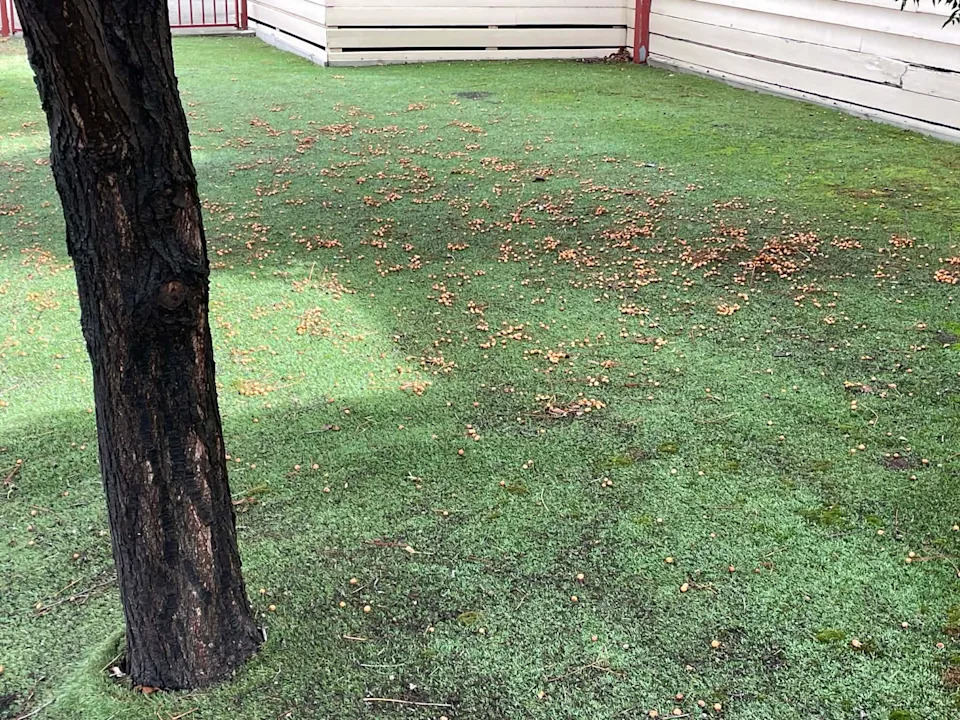
As synthetic turf ages, it sheds microplastics into the surrounding environment. Source: Yahoo News Australia
Expert urges councils to ban synthetic turf
Several councils have proposed banning synthetic turf due to environmental and safety concerns.
While advocates, like the City of Sydney, argue the product has a place because its use in synthetic sports fields allows community sports to continue during wet weather.
Dr Safiullah argues synthetic grass should not be placed on land in any suburb and should be limited to small-scale use, like on balconies.
“If councils do permit it, then they should provide guidance on its harm,” he said.
Lawns aren’t the most ideal form of garden for wildlife, but they are superior to plastic.
For those wishing to attract more birds and other native species, the best option is to plant native groundcovers and shrubs.
Native grasses that don’t need cutting are also beneficial for several species of butterflies that lay their eggs on them.
Do you have a story tip? Email: newsroomau@yahoonews.com.
You can also follow us on Facebook, Instagram, TikTok, Twitter and YouTube.
Comments are closed.