
The spring season feels like a fresh start, meaning there’s never been a better time to pull out your cleaning supplies and give your home a good scrub. But the lighter days can also be incredibly busy with social plans, and you might not have an entire weekend to devote to a full spring clean.
Fortunately, there are several smaller cleaning tasks that can make a big difference to the look and feel of your home. Many of them take only a few minutes to complete – around the same time it takes to click on the kettle for a brew or boil an egg for breakfast.
From buffing your bathroom vanity to freshening up your bin lid, give these highly satisfying odd jobs a go when you’ve got just five minutes to spare.
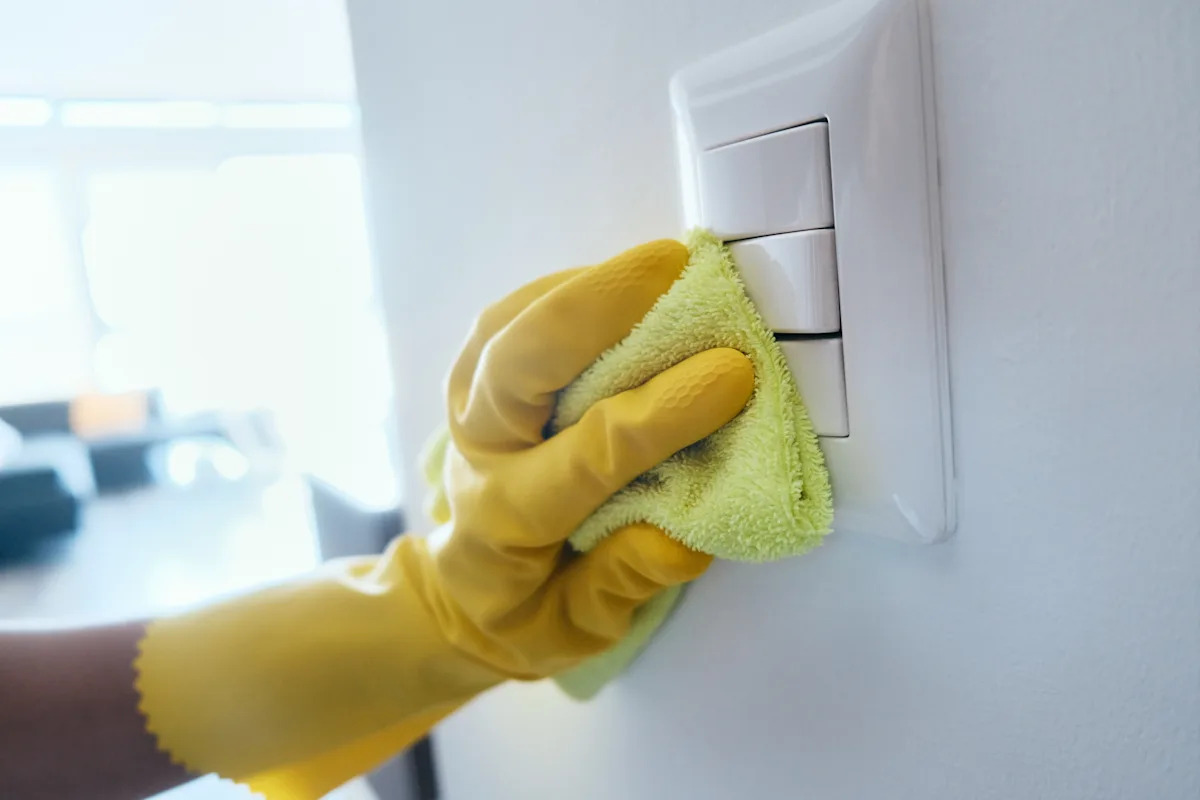
Wipe down light switches
High-touch spots like light switches can quickly accumulate grubby fingerprints if they aren’t cleaned regularly. A quick wipe with a damp microfibre cloth will remove fingerprints and lingering germs – just make sure it’s wrung out thoroughly before you start cleaning. For safety, always turn the power off at the circuit breaker and wipe the switch dry before using it again.
Clean your bathroom mirror
Unsightly toothpaste splashes, water marks, flecks of your facial cleanser… your bathroom mirror sees a lot of action throughout the day. Luckily, they’re also one of the quickest things to refresh in your home. A couple of sprays of glass cleaner and a quick buff with a microfibre cloth will have it sparkling again in seconds.
For a streak-free finish, some TikTok users swear by applying a tiny amount of shaving cream and buffing it off gently to keep fogging at bay.
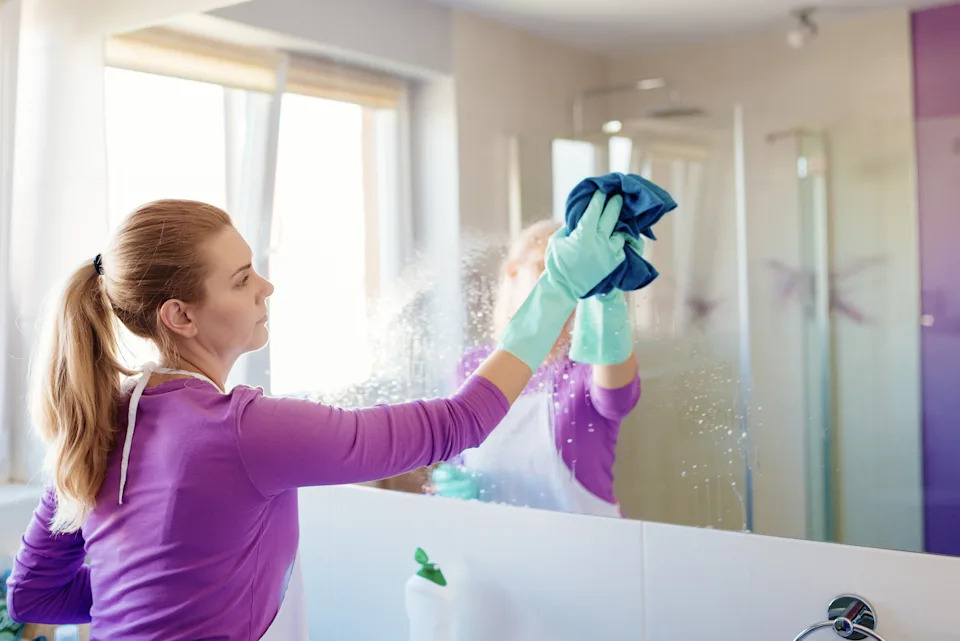
Cleaning mirrors is one of those household chores that many people put off.
(djedzura via Getty Images)Shake out your doormats
Your doormat works overtime to trap dirt from your shoes before it’s carried through the house, but how often do you actually give it a clean? Taking it outside for a quick shake or tapping against a wall will dislodge any dust and debris that’s trapped between the bristles.
This is particularly worth doing during the spring months, when mud, pollen and garden debris are more likely to make their way inside and trigger allergies.
Dust your skirting boards
The little ridges that sit between the wall and the floor are a haven for dust settlement, and they can absorb liquid and food splashes in our homes, too. Cleaning them is as simple as running a damp cloth along the edges of the room to lift away any stains and dust build-up.
If your vacuum comes with a crevice tool, you can use it to tackle hard-to-reach corners, which is particularly handy if you struggle to easily bend down.
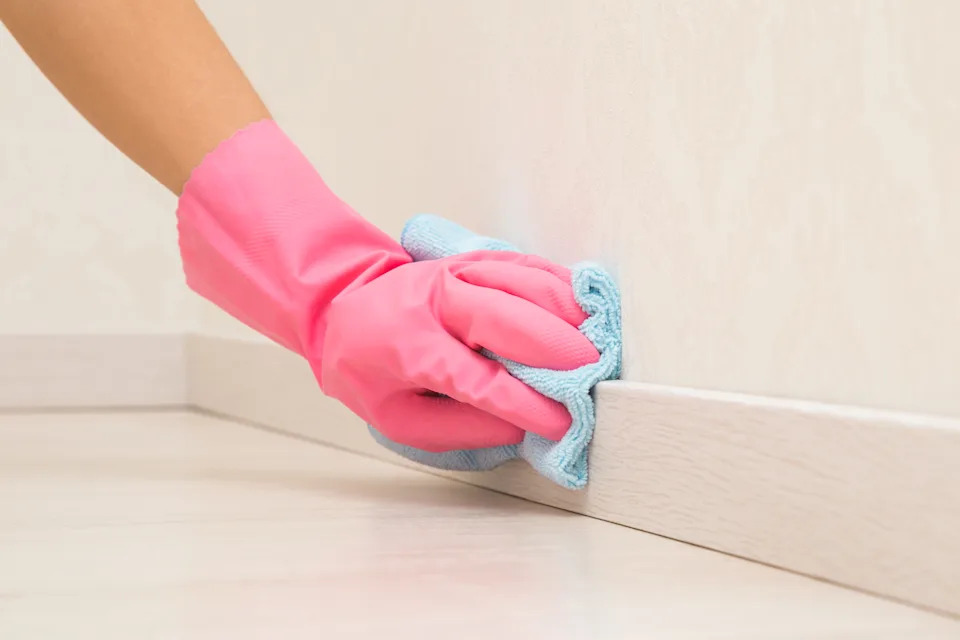
Skirting boards need regular attention to avoid a dust build-up.
(FotoDuets via Getty Images)Inspect your bin lid
No matter how religious you are with changing the liner, the lid of your kitchen bin can easily pick up spillages and dried-on food with day-to-day use. A quick wipe with antibacterial spray and a damp cloth will usually remove any residue, although you may need to soak your lid in hot water if some food stains are particularly stubborn.
The handle and hinges tend to collect the most grime, so pay particular attention to these areas.
Wipe down your desk
Did you know that the average office desk is home to 20,961 germs per square inch, according to a study from the early 2000s? The key to tackling your home working setup is to remove everything from the desk surface before wiping it down with an appropriate cleaner.
If your desk is made of wood, use a specific cleaner designed for the grain and avoid soaking the surface, as it can cause warping. Once it’s dry, you can return everything to its place for a workspace that feels far more pleasant to sit in.
Clean your kettle exterior
You might not have an afternoon for a full descale of your kettle, but the exterior can still get some TLC when you’re strapped for time. Fingerprints, sticky breakfast jams and other kitchen foods tend to build up on the handle, making it a hotspot for germs and bacteria.
Unplug the kettle and clean the unit and base with a damp cloth. If you have a stainless steel kettle, you could try using olive oil, which is said to be effective at removing streaky fingerprints.
Limescale and mineral deposits can also quickly build up around your kettle spout, especially if you live in a hard-water area. Try using a cloth dampened with white vinegar to gently wipe around the opening and remove any chalky residue.
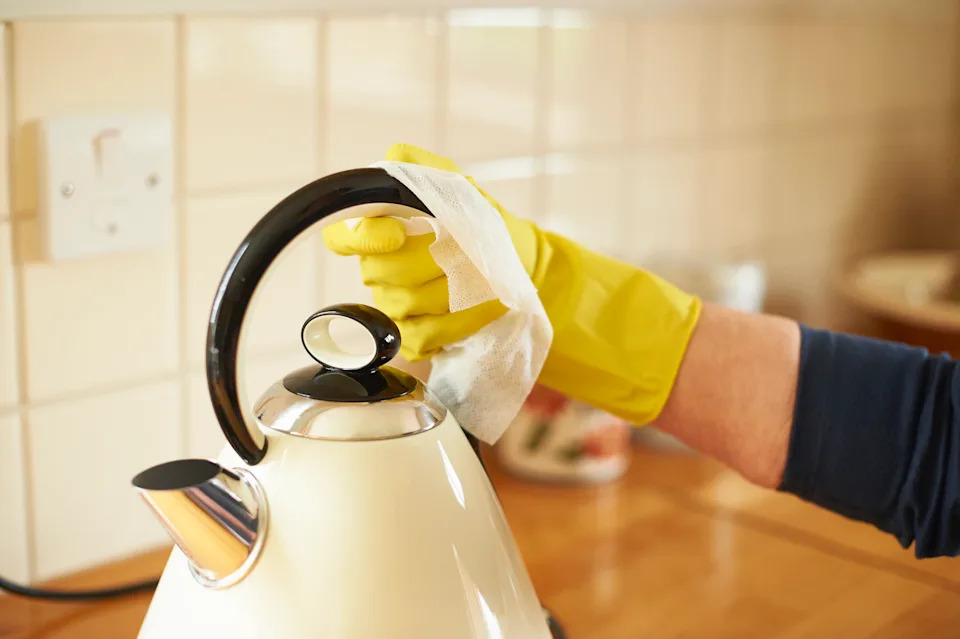
We’re a nation of tea lovers, but our kettles rarely get the regular cleaning they deserve.
(Richard Drury via Getty Images)Neutralise your chopping boards
Chopping boards are notorious for picking up stains and funky smells between uses. To freshen them up, sprinkle a tablespoon of bicarbonate of soda over the surface and scrub it gently with half a sliced lemon. The mild abrasiveness helps to lift stains while the lemon neutralises any lingering kitchen odours. Rinse your board well and leave it to air dry thoroughly before storing it away again.
Refresh your kitchen sponge
Kitchen sponges can be a major hotspot for germs, harbouring up to 54 billion bacteria per square centimetre, including types that can cause illness like E. coli and Salmonella.
An easy way to freshen them up is to run them through the dishwasher on a hot cycle with the rest of your dishes. Even with regular cleaning, however, it’s best to replace your kitchen sponges every week or two to avoid any harmful bacterial buildup.
Comments are closed.