
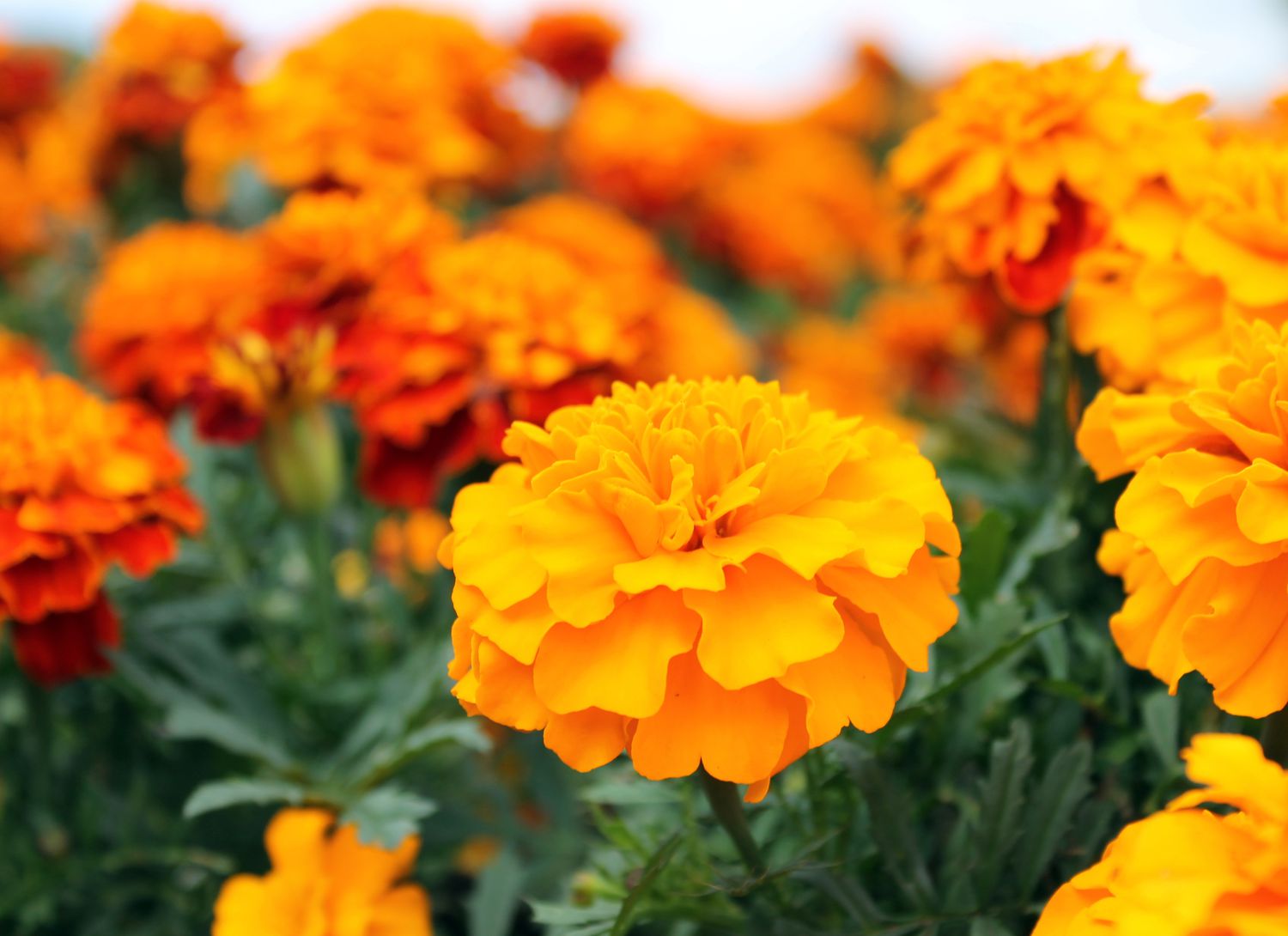
Marigolds are beautiful, beneficial plants that deter pests and attract pollinators. Because of their many helpful traits, marigolds make the ideal companion plant for numerous flowers, vegetables, and plants.
What can marigolds do? They have been shown to repel whiteflies, kill plant-parasitic nematodes, and work as guardians by attracting harmful pests away from other plants, in addition to other benefits. While marigolds won’t deter everything, they are a must in any edible garden—and they can also be an edible crop themselves. “You can eat the petals,” says Laura Irish-Hanson, a horticulture educator at the University of Minnesota Extension. “Get the signet marigolds, they’re so tasty as they have a citrusy flavor to them!”
We asked garden experts to share which fruits and vegetables benefit most from having marigolds as neighbors.
Tomatoes
Whiteflies can be very destructive, taking down your tomatoes in no time, but planting marigolds nearby offers a colorful distraction. “A flower may be more attractive to an insect than a tomato plant due to color, scent, or even petal shape,” says Isabel Branstrom, vegetable product development manager for PanAmerican Seed. “French marigolds contain the chemical limonene, which can deter whiteflies, another sap-sucking insect often found in vegetable gardens.”
Strawberries
As with tomatoes, French marigolds can help repel pests common to strawberries, such as Western flower thrips and nematodes. In this case, the marigolds act as guardian plants, attracting thrips and nematodes to the marigolds rather than to the strawberry. “Taller varieties of the plant, such as African marigolds, can be planted with tomatoes, potatoes, and strawberries and help decrease root diseases caused by nematodes (microscopic worms),” says Judy Elliott, community education director for Denver Urban Gardens.
Potatoes
Along with other root crops, potatoes are susceptible to root-knot nematodes. With potatoes, you’ll need to plant the marigolds ahead of time where you want to plant the potatoes, then transplant the marigolds elsewhere and plant the potatoes. Marigolds tend to be hosts for root-knot nematodes, so they will essentially control the population in the soil beforehand (and can kill the root-knot larvae) instead of killing the nematodes when planted alongside the potatoes at the same time.
Kale
Credit:
Veronique Duplain / Getty Images
Not only does that miracle scent of limonene repel whiteflies, but it may also repel deer from eating your leafy veggies. “Marigolds are also really good among brassicas, like kale, cabbage, and Brussels sprouts,” says Irish-Hanson. Stick to low-growing marigolds, however—Irish-Hanson advises against growing taller varieties because they could potentially provide too much shade for your kale. Plant marigolds as a border plant, as well as intersperse them with your kale crop to make sure that your greens don’t get munched.
Cabbage
When planted alongside onions and nasturtiums, marigolds can help reduce cabbage worms, leaving your cabbage fuller and healthier. As with kale, marigolds may also prevent deer from nibbling cabbage leaves, saving your summer salads from lackluster greens.
Brussels Sprouts
Delicious roasted, sauteed, or steamed, Brussels sprouts are an easy-to-grow member of the Brassica family. Marigolds are great companion plants for Brussels sprouts because they attract pollinators, like native bees, to cross-pollinate the flowers, as these plants don’t self-pollinate.
Green Beans
Marigolds love nitrogen, and legumes of any sort provide a lot of it. “As legumes improve the soil’s nitrogen, planting them before marigolds will give the marigolds a boost following the legume’s harvest,” says Will Conway, farm director at Wildflower Farms, Auberge Resorts Collection, in the Hudson Valley, N.Y. Plant your beans before the marigolds to give your marigold plants a boost.
Edamame
Many types of beans, including soybeans, are susceptible to Mexican bean beetles, which will feed on every part of the plant and ruin your crop, but marigolds can help here. “Planting them with beans helps to protect against the Mexican bean beetle,” says Elliott.
Mustard
Flea beetles are a common pest of mustard greens, but marigolds can also be planted nearby to keep flea beetles at bay. You may also want to include dill or bunching onions nearby to further deter flea beetles from your greens.
Radishes
Similar to potatoes and carrots, radishes may suffer from root-knot nematodes that will make your crop unsightly, if still edible, and reduce the yield. As with potatoes, you’d need to plant the marigolds first and then move them elsewhere to reduce the nematode population in that spot before planting the radishes.
Basil
Credit:
Ewa Saks / Getty Images
If you plant basil near your marigolds and tomatoes, it can work in tandem with the marigolds to repel insects. Basil tends to repel flies and maggots, and marigolds do as well.
Sage
If you haven’t noticed yet, strong-smelling plants like sage are the best at keeping unwanted pests from devouring your veggies. Sage can deter cabbage moths when planted with cabbage plants and should be planted alongside marigolds for an extra boost of protection.
Onions
Thrips can be a common issue for young onion plants and can damage the leaves. Marigolds can trap thrips and keep them away from your young onion and tomato plants. “Planting them around onions can help deter these pests and protect the onion crop,” says Carrie Spoonemore, co-creator of Park Seed’s From Seed to Spoon app. Once the thrips have congregated on the marigold blooms, you can release predatory insects to kill them off.
Sweet Alyssum
Not only does sweet alyssum smell amazing to humans, but it also does to beneficial insects. Though marigolds and sweet alyssum don’t directly affect each other, sweet alyssum will work to bring in hoverflies and ladybugs, and marigolds can work as a trap plant that graphs pests and holds them for the predatory insects to feed upon. “Think of it like a tier system,” says Irish-Hanson. “Something low-growing like alyssum is beneficial to attract pollinators.”
Plant sweet alyssum along the border to utilize your garden space, and intersperse marigolds between your crop plants.
Yellow Squash
Credit:
Steve Cicero / Getty Images
Planting marigolds near yellow squash has two benefits. The first is that marigolds can deter squash bugs, which will eat your squash plants in no time. The second is that marigolds will attract those beneficial pollinators to the squash plant blooms.
Arugula
Yet another member of the Brassica family, arugula is similar to mustard in that you may see flea beetles on your plants, leaving small holes in the leaves. Arugula also attracts whiteflies, which will dry your leaves out if you’re not paying attention to an infestation. Both of these pests can be repelled by marigolds when planted close enough together.
Zucchini
If you’ve ever tried to grow zucchini, you’ll be aware that squash bugs can devastate the plant. Marigolds smell so strongly that squash bugs hate hanging around nearby and provide other benefits. “Companion plants such as marigolds, nasturtiums, and radishes can help improve zucchini growth, flavor, and pest resistance by attracting beneficial insects and repelling harmful pests,” says Spoonemore.
Cucumbers
Part of the Cucurbita family, cucumbers, yellow squash, and zucchini can all fall prey to squash bugs alongside other common garden pests like aphids and cucumber beetles. “Marigolds contain pyrethrins that repel pests such as aphids, spider mites, and cucumber beetles,” says Linda Langelo, horticulture specialist at Colorado State University. “They also attract beneficial pollinators such as bees and butterflies.”
Peppers
Marigolds help peppers in the same way that they help tomatoes—both crops belong to the nightshade family. Just remember to keep a crop rotation going to keep your plants at their healthiest. “To prevent the buildup of diseases, don’t grow the same crop family, especially the tomato family, which also includes peppers, potatoes, and eggplants, in the same place each year,” says Elliott. “Plant your marigolds several weeks after planting the crops that they are grown to protect.”
Eggplant
Credit:
Costache Hurgoi / 500px / Getty Images
As noted by Elliott, eggplants, as members of the nightshade family, receive the same benefits from marigolds as peppers and tomatoes do. Keep your plants spaced appropriately, and don’t plant your nightshades in the same area each year. This prevents pests from multiplying in the same spot and keeps your yields higher, as the soil is allowed to replenish its nutrients.
Broccoli
Depending on what species you have, some types of flea beetles can attack anything in the Brassica family, including broccoli. If you have a bed of cruciferous veggies growing, marigolds can help keep beetles away from your broccoli by deterring them with their smell. You may still need other ways of trapping and killing the beetles, though, so that they don’t harm other plants in the vicinity.
As with kale and other brassicas, you’ll want to be mindful of too much shade from a companion plant. “Be sure to select compact types [of marigolds], not the taller cut flower types when using as a broccoli companion,” says Heather Kibble, homegrown sales manager for Sakata Seed America, Inc., and a National Garden Bureau member.
Carrots
Numerous types of nematodes and pests can create havoc with a carrot crop, especially those that love carrot roots. Affected carrots will become deformed and stunted, but planting marigolds nearby helps deter these dangers while enhancing carrots’ pigmentation and sugar production for more colorful, flavorful roots. French marigolds also specifically help eliminate carrot rust fly, carrot psyllid, and aphids.
Pumpkins
Marigolds can help create a healthy pumpkin crop because these little flowers pack a punch in deterring damaging squash bugs and nematodes. Squash bugs are tough pests to eliminate, and they quickly become an infestation, so you’ll want all the arsenal you can get, specifically from African marigolds.
Comments are closed.