
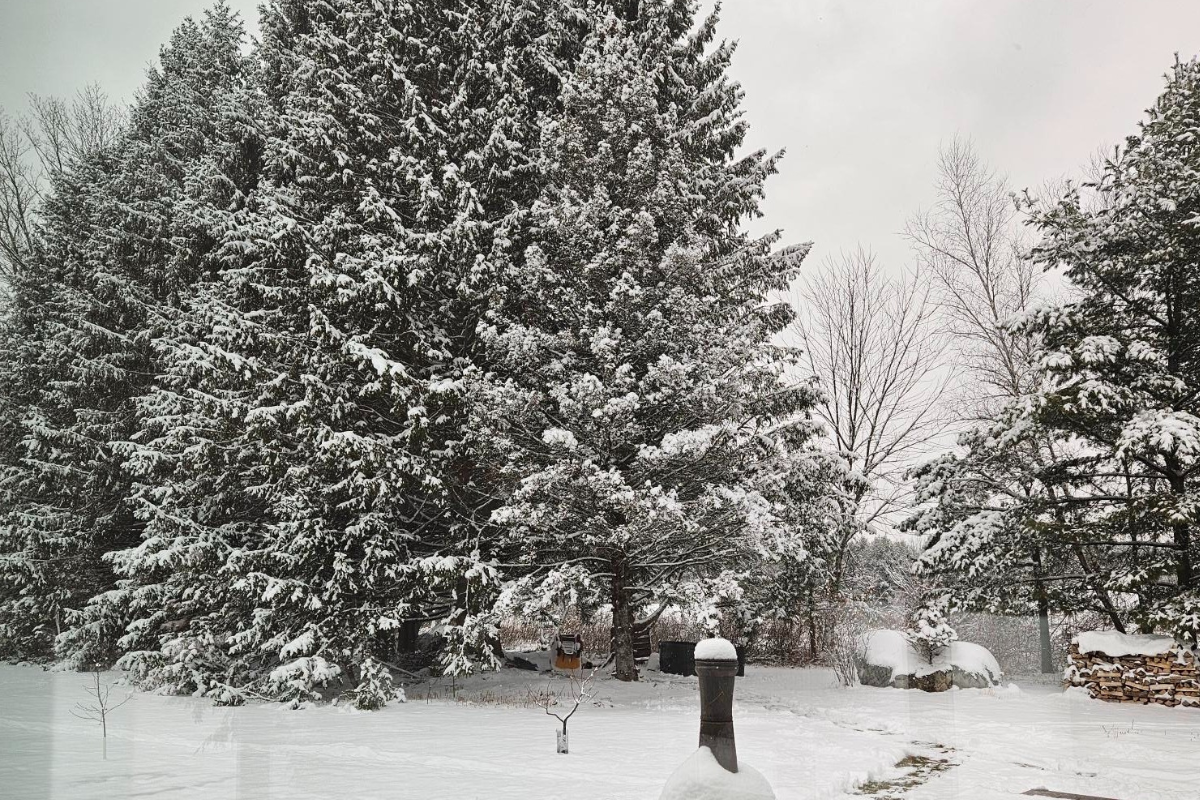
While the colorful seed catalogs arrive and I tire of either white landscapes or barren brown trees, I like to remind myself that snow is important around here. Snow protects the gardens from drying winds and erosion. A slow snowmelt in March will restore the water table and enable strong spring growth. Although I was caught off guard by the volume of snow at my house last weekend, I know that the coating will make spring gardening easier.
Plus that snow kept me from pruning tasks and focused on what needs to happen indoors. If you always purchase a variety of annuals for flower borders or companions in the vegetable garden, I recommend starting a few from seed to save yourself some money. Order or purchase the seed now. Most early annuals and a few perennials will need to be started in the next few weeks if you want them ready for your gardens by mid-May.
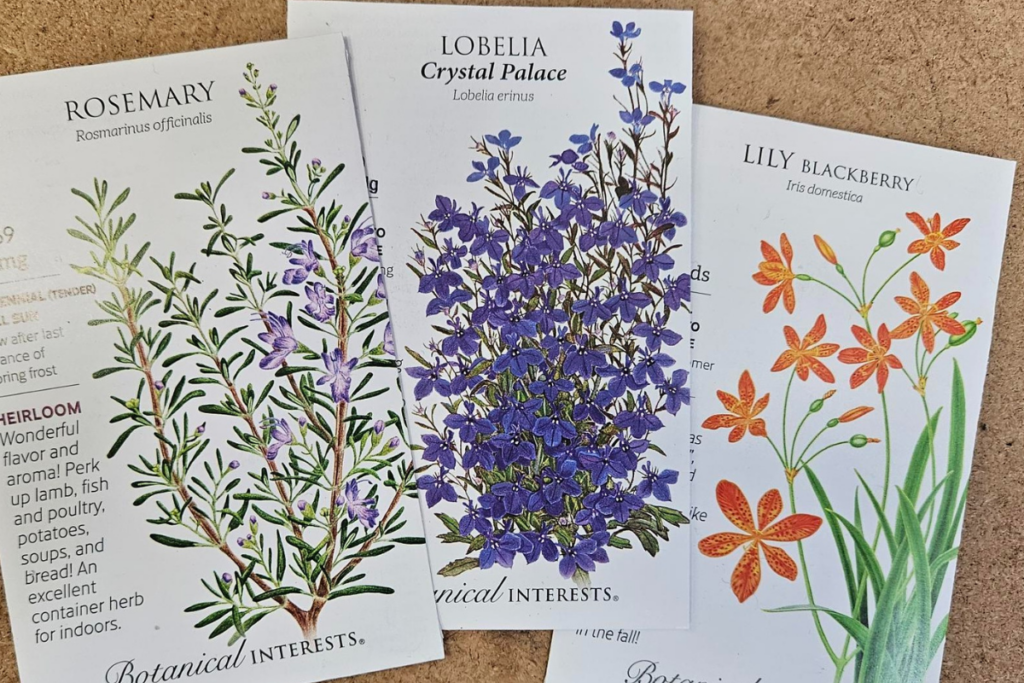 Shop now for garden seeds. Many annuals and herbs should be started in the next month, and seeds sell out. Buy early and you will have them to plant on time.
Now is also the time to get seed-starting supplies like trays, humidity domes, heat mats, and sterile starting mix. If you have the trays and cells to reuse, wash and sterilize these to prevent damping off (fungal disease) of the seedlings. Not all seeds need to be started now, just the ones that germinate slowly. Once the early seedlings get a few inches tall, you can pot them into a larger pot and move them from your germination area to a brighter, cooler location for growing on until planting time.
Vegetables to start at the end of January or early February are in the onion family, like leeks and Spanish onions. By starting now, you will have larger “starts” to transplant that will grow through the summer and be ready to harvest in early fall.
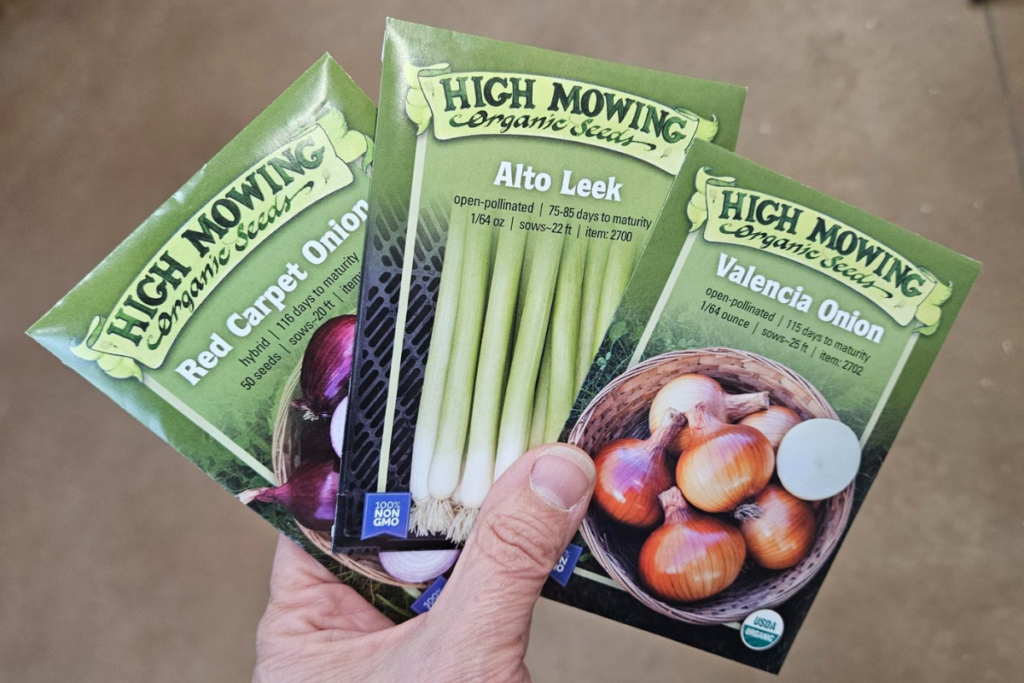 Start seeds of onions and leeks in early February. You can also purchase onion sets—mini-onions—to plant in spring outdoors for a harvest of large onions in fall.
Parsley and other herbs will sprout in a bright window. Start them now for earlier use, and you can still transplant larger plants into the garden in spring.
Because garden centers and catalogs have the seeds for 2026 now, shop early to ensure that you get the variety of seeds you want. Seeds offer us the greatest number of choices. If you have struggled against pests or diseases to grow certain vegetables, you can shop now for disease-resistant varieties. Many vegetable seeds should not be started until mid- to late March, but popular seed types sell out. You will want to have your seed in hand well before planting time.
Gardening for me has become a refuge, a place to nurture and plan with some reliability for the future. Seeds add to that planning exercise. Consider where you will plant your seedlings before you order and purchase. If you do not have enough room or the growing locations have too little sun, contact gardening friends to share seed packets. You can strategize where to plant together and share the produce. Making plans helps build hope.
Indoors, I will continue to move houseplants as the sun strengthens. A few things to note: Variegated plants need more light for better variegation. If you leave them to grow away from a window in the darkest end of the house, they will become more green overall.
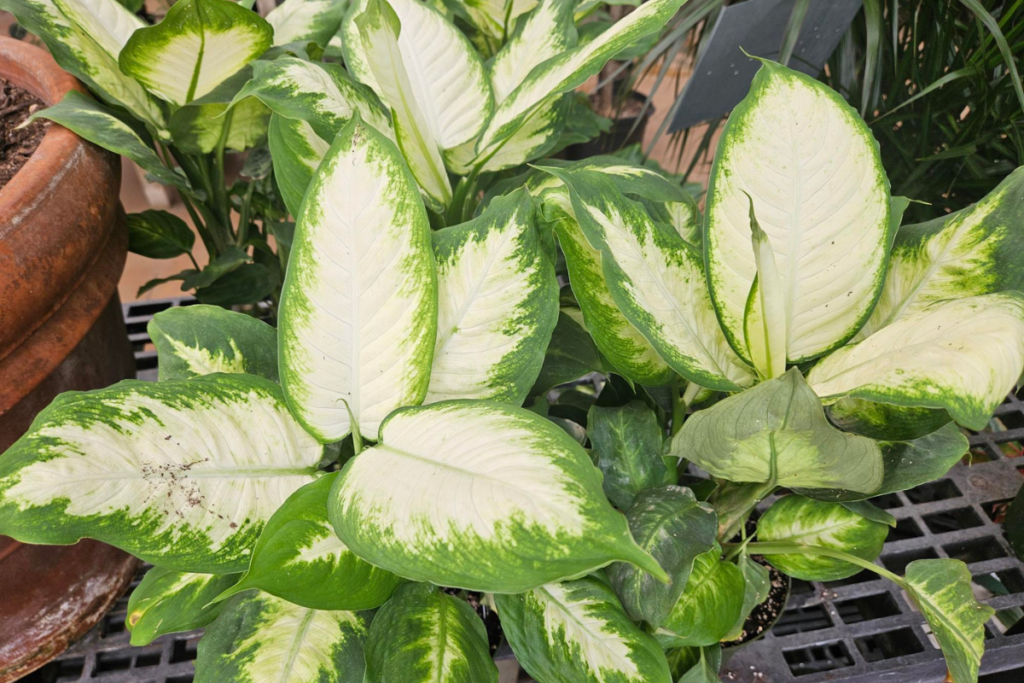 These variegated Dieffenbachia will have better color variegation if placed in a brightly lit room with eastern or western exposure but back from a window.
I have been inspecting my plants, but I still have fungus gnats. The gnats develop in soil that retains too much moisture or in pots that have poor drainage. Establishing a better watering schedule can take trial and error. Every pot and every plant are different! Check soil before watering and treat your plants as individuals for a few weeks before you get stuck in poor watering routines. Sudden wilt can be from too much water, especially standing water in the bottom of a pot.
My overwintering geranium has new growth from the roots. Now is the time to start pinching back the newest set of leaves to create more stems and bushier growth.
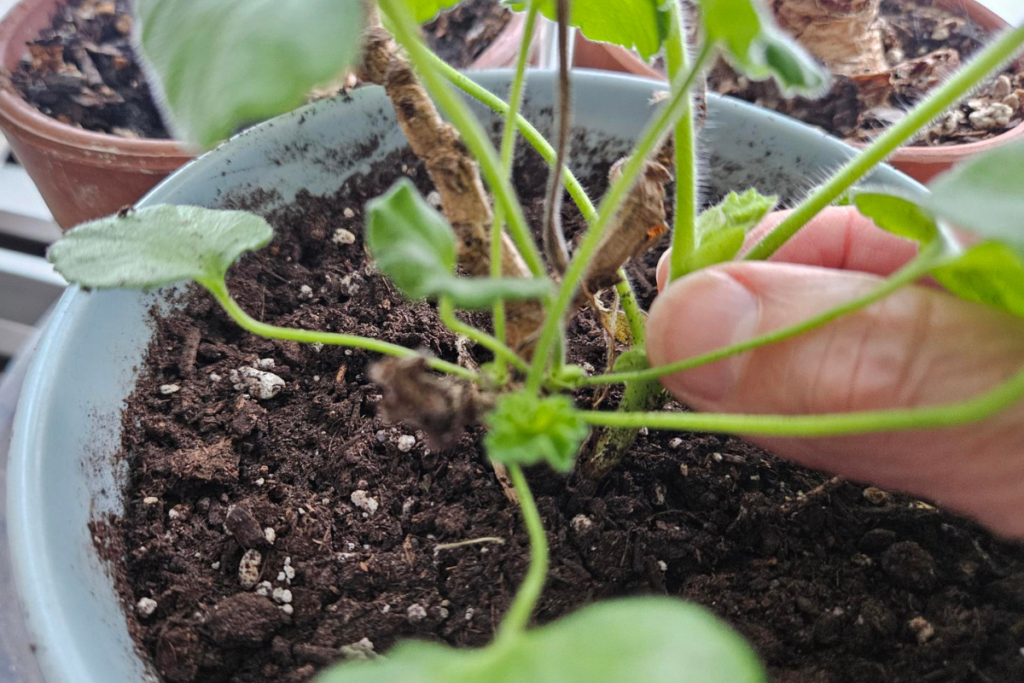 New growth has emerged from this overwintering annual geranium. Pinch off the new growth at a new leaf node now to encourage branching and a bushier plant.
The perfect plants for a lazy gardener, succulents need sun; well-drained, gritty soil; low water; and low fertilizer. As long as I keep them in a bright location and water once a week until the water runs out, I should have beautiful succulent plants. If I up-pot my succulents, I need to mimic the original soil structure to get the preferred drainage. Neglect equals success!
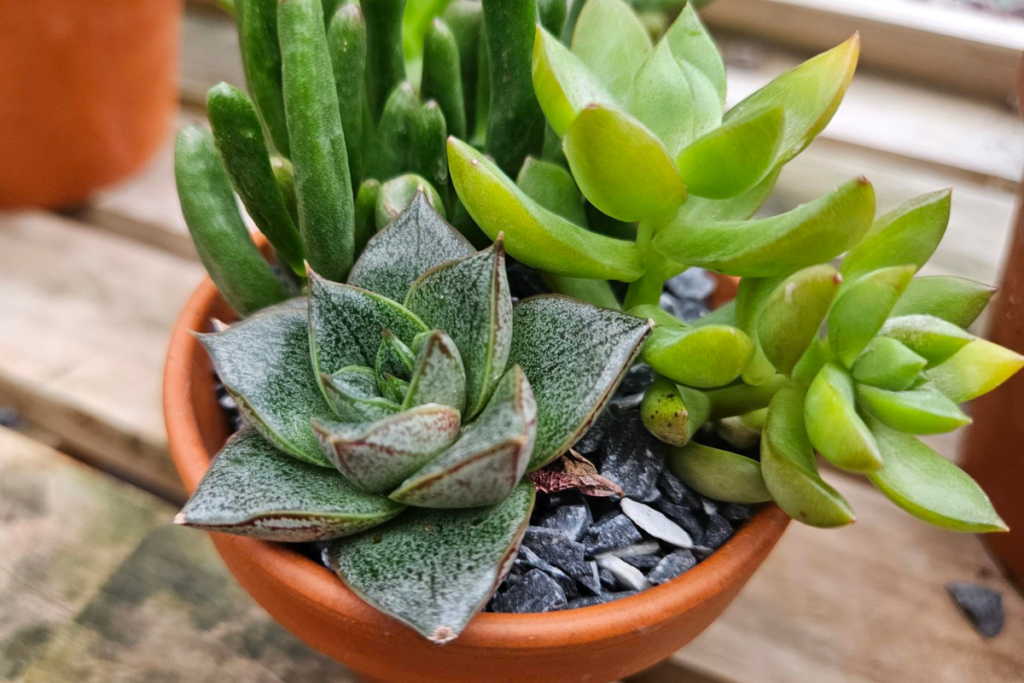 Mini succulents in a tiny pot of rapid-draining soil. As plants grow, mimic the growers’ soil for best success.
I call myself the Lazy Berkshire Gardener because I don’t want to work too hard in my gardens. I want to enjoy them. I find it easier to observe my landscape and let the compost happen, the water pool up, or daisies to self-sow. I look for ways to do the minimum task for the biggest impact. For example, mulching is better than spraying and much better than weeding all season. I look for beautiful, low-maintenance plants that thrive in or at least tolerate my garden conditions. Plus, I am willing to live with the consequences if I miss something.
Comments are closed.