
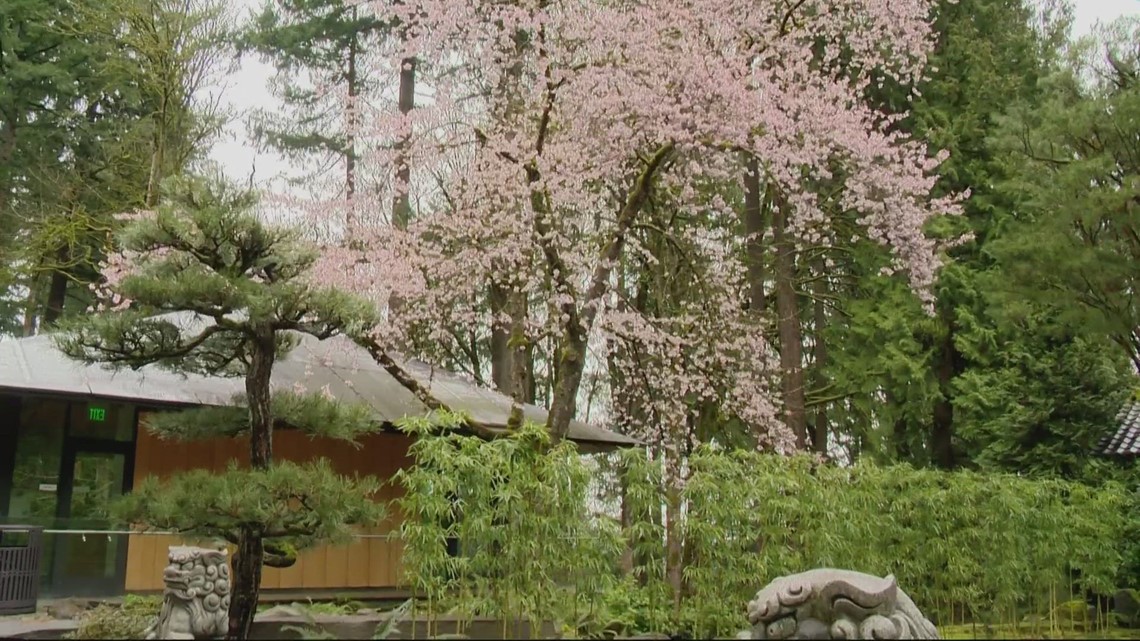
The Portland Japanese Garden, turning 65 next year, has grown into a cultural hub and “safe haven,” with recent expansions enhancing the visitor experience.
PORTLAND, Ore. — Perched in the West Hills above downtown Portland, the Portland Japanese Garden has long served as a place of reflection, beauty and cultural exchange.
The garden, located in Washington Park, has been welcoming visitors for more than six decades. Co-CEO Aki Nakanishi described it as a “safe haven” that has offered guests a space for contemplation for the past 64 years. The garden will celebrate its 65th anniversary next year.
In recent years, the garden has expanded its role beyond a traditional landscape attraction. Since completing a major architectural expansion in 2017, Nakanishi said the garden has also become a place for civic pride and community dialogue.
The expansion added roughly 10 acres to the property and introduced new cultural facilities while preserving the historic garden spaces, Co-CEO Lisa Christy said. The additions include classrooms, workshop spaces and a cultural center designed to deepen visitors’ understanding of Japanese art and traditions.
RELATED: Japan Institute property to be sold off by Portland Japanese Garden just 2 years after purchase
In the following excerpt, Portland Japanese Garden co-CEO’s talk about changes at the garden and the upcoming cherry. The transcript has been edited for clarity. This interview was recorded on Thursday, Feb. 12, 2026.
Tim Gordon: Well, for those who have not experienced the beauty of the Portland Japanese Garden, it’s located up in Washington Park, in the West Hills. Aki, describe it for us.
Aki Nakanishi: Oh, the garden has been a, a true safe haven for the past 64.5 years. Actually, we’ll be celebrating the 65th anniversary next year. It has been a place of beauty and contemplation. Ever since we had that architectural expansion project completed in 2017, it has also become a platform for civic pride, community building, and then also a place where we can have a social discussion around things that are important to society.
Gordon: Lisa, if people haven’t visited the garden for a while, there has been a lot of change in a major expansion starting about 10 years ago. Can you tell us about that?
Lisa Christy: It’s interesting because you ask people, “Hey, do you know about Portland Japanese Garden?” They say yes. They say, have you been recently? “No.” So we always encourage people to come and come again often because it changes with the seasons, but as you mentioned, it’s changed quite a bit over the past almost 10 year when we did a whole expansion.
We added about 10 acres to the garden, mostly on the outside of what we call the historic gardens, so those have been preserved, but outside, you’ve got cultural centers, classrooms and places for workshops. You’ve got an additional area for a bonsai terrace, which is always a popular favorite. Those will return in April, by the way, for those who are marking their calendars. It’s a place where you get to experience as Aki mentioned so much more besides the garden itself, so it really truly is a cultural center.
Gordon: It’s beautiful year-round, obviously, but we’re heading into spring. The weeping cherry has signs of blossoms, yet we are in the middle of a very rainy week here towards the end of a rainy week. What’s it like right now? What should people expect coming up this spring?
Nakanishi: I would say it’s about 30% in terms of the blossoms that we get to see across different types of cherry trees. The Yoshino trees in particular, they are coming up but not quite yet because of the rainy days that we’ve had in the past several days, actually, the lower temperatures than usual. But we have something called the Sakura tracker actually available up on our website, where people can actually constantly check in to see what the state of the cherry blossoms basically up at the garden.
Comments are closed.