
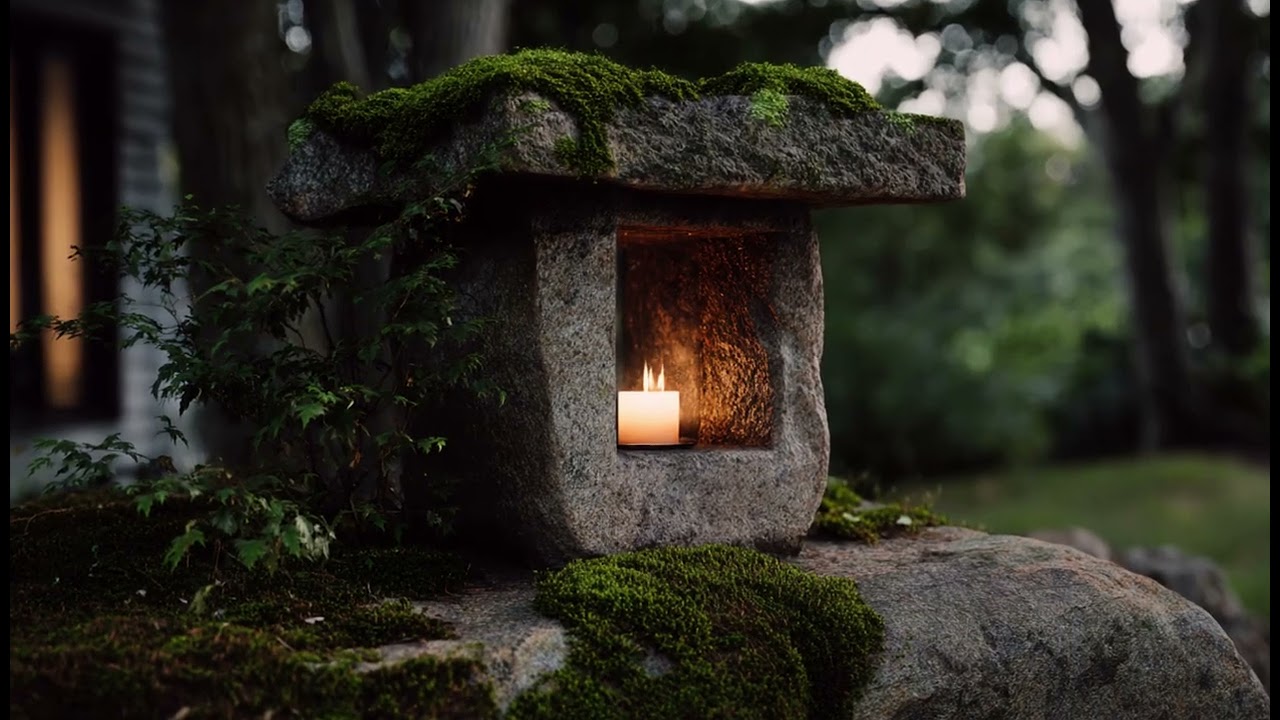
Japanese gardens are far more than tranquil spaces of beauty; they are living works of philosophy. Every detail—every stone, path, lantern, and bridge—is carefully chosen to embody spiritual lessons and cultural traditions. In this 60-minute video, Symbolism of Lanterns and Bridges in Japanese Garden Design, we explore two of the most iconic features of Japanese gardens: the japanese stone lantern and the graceful garden bridges, uncovering the deeper meaning behind elements that transform a garden into a timeless sanctuary.
Japanese Stone Lanterns: Guardians of Light
The japanese stone lantern is not simply a decorative feature. Traditionally used to illuminate temple grounds, they symbolized guidance and clarity for worshippers walking through the night. Their warm glow represented inner wisdom, while their placement within a garden still carries deep significance. Each part of the lantern—the base, shaft, firebox, and roof—symbolizes elements of earth, water, fire, wind, and sky. This layered design connects the garden to the universe itself.
When moss, lichen, or time leaves its mark on the granite, the lantern becomes even more meaningful, embracing the Japanese concept of wabi-sabi: the beauty of imperfection and transience. Whether standing tall by a pond, hidden in a corner near a tea house, or glowing softly at dusk, the japanese stone lantern embodies harmony, serenity, and subtle guidance. It represents the eternal light of wisdom that shines quietly within us, even when storms surround us.
Garden Bridges: Pathways of Transformation
Equally symbolic are garden bridges, which span water, gravel streams, or connect islands within ponds. In Japanese design, crossing a bridge is never only a physical act—it is a metaphorical passage from one state to another. The meaning behind elements like bridges is profound: they represent transition, renewal, and the spiritual journey from the everyday world into spaces of reflection and enlightenment.
Bridges may appear in many forms: high arched structures that lift the walker toward the sky, zigzagging paths designed to slow movement and encourage mindfulness, or simple stone slabs that reflect humility and groundedness. Painted red in temple gardens, they symbolize vitality and protection, while natural wood or bamboo bridges embody resilience and flexibility. Every style carries its own lesson, yet all share the same truth—that each step across is part of life’s unfolding journey.
The Meaning Behind Elements in Harmony
What makes Japanese gardens unique is the way every element speaks in conversation with another. A japanese stone lantern placed beside a water basin prepares guests for the tea ceremony, reminding them of purity and mindfulness. A bridge reflected in a koi pond shows duality—one world above, another mirrored below. A lantern glowing near a moss-covered path teaches that light and nature are partners, not rivals.
The meaning behind elements lies not just in their forms, but in their relationships. Lanterns guide us toward awareness, while bridges invite us to cross into deeper understanding. Together, they remind us that gardens are not mere landscapes; they are spiritual texts written in stone, wood, and water.
Why Symbolism Matters in Garden Design
For centuries, Japanese gardens have inspired not only peaceful retreat but also contemplation of life itself. By studying the symbolism of japanese stone lanterns and garden bridges, we begin to see that design is never accidental. These structures encourage us to slow down, reflect, and move with intention. They teach us about impermanence, resilience, balance, and harmony with nature.
Whether you dream of creating your own Japanese garden, or simply wish to understand the philosophy behind these timeless designs, this video offers both inspiration and insight. You will learn how lanterns and bridges were used in temple gardens, tea houses, and private landscapes, and how their symbolism continues to shape modern interpretations of garden design.
A Journey of Peace and Reflection
In Symbolism of Lanterns and Bridges in Japanese Garden Design, you will experience a narrated journey across 60 unique scenes, each exploring a different facet of these sacred elements. From moonlit reflections of lanterns on water to bridges spanning waterfalls with mist rising like breath, the video invites you to step into a world where nature, art, and spirituality meet.
Whether you are interested in Japanese culture, Zen meditation, or simply finding peace in outdoor design, this exploration will deepen your appreciation of the garden as a place of living philosophy.
👉 If you enjoyed this journey into the meaning behind elements of Japanese garden design, make sure to subscribe to our channel for more inspiring content on Japanese aesthetics, Zen landscaping, and mindful outdoor spaces. #garden #gardenideas #gardendesign #japanesegarden
3 Comments
中村駿 分解成見守護者 兩人 黃嘉正與李碩庭
三宅 分解守護者 鄭偉中
;此三宅 殖也來自香港