
This year, the National Women’s History Alliance’s theme for the month, “Leading the Change: Women Shaping a Sustainable Future,” highlights women engaging in sustainable activism in all its forms: including community strength, leading local movements and transforming unused plots of land to green spaces. In the East Village, that legacy lives on in the neighborhood’s community gardens — small shared green spaces where residents grow fruits and vegetables, flowers and other plants gather with neighbors and reconnect with nature in the middle of the city.
What started as a grassroots effort to clean up the Lower East Side in the ’70s quickly grew into a movement that reshaped urban spaces. Women played a central role in that transformation, founding and sustaining some of the city’s most historic gardens that continue to gain public support, as New York state recently gave $2.5 million to urban farms and community gardens that support local food access. As the weather warms, stop by these four East Village gardens to contribute to a legacy that prioritizes environmental activism and human connection.
Liz Christy Garden
110 E. Houston Street
 (Sophie Hess for WSN)
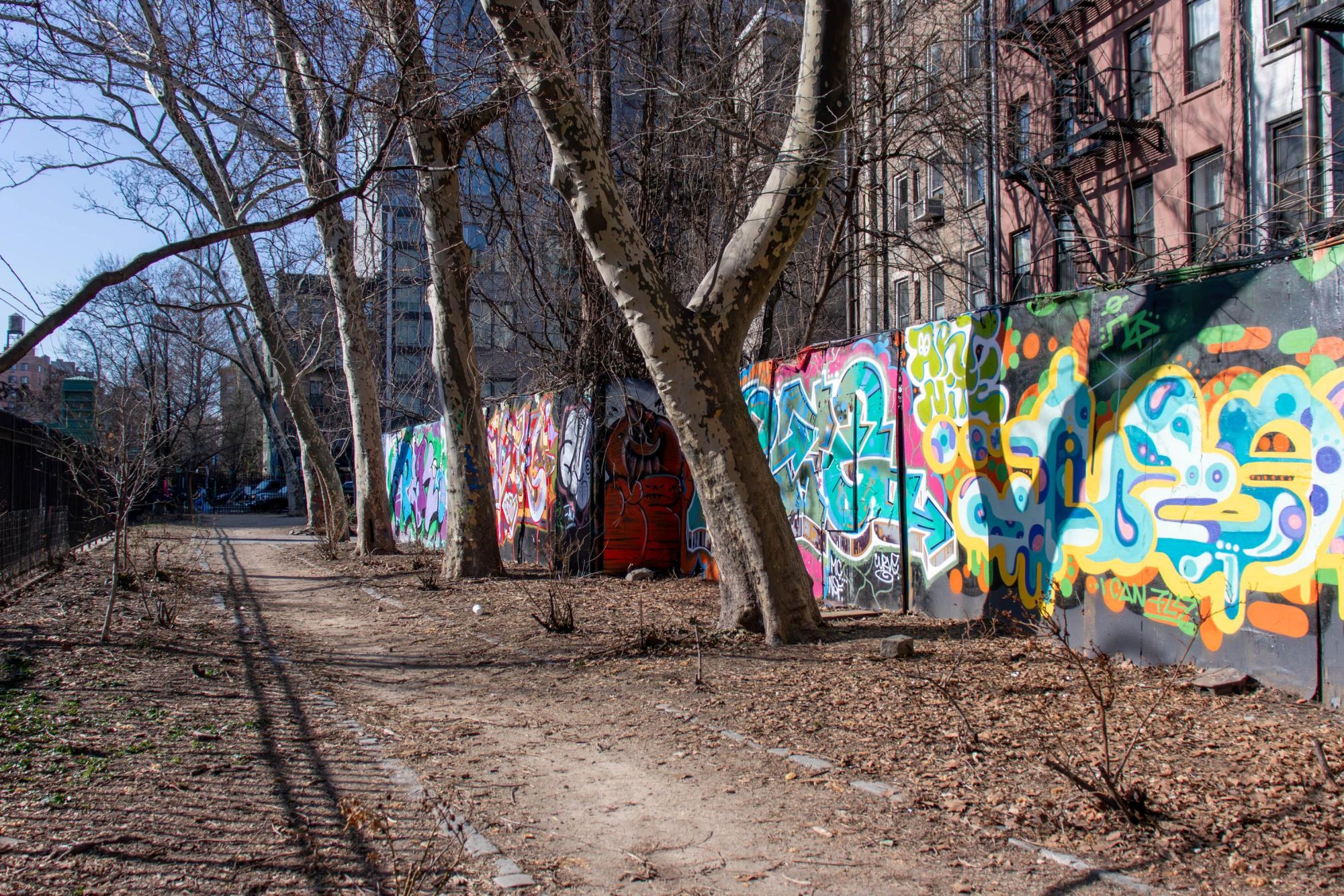
Just steps from the busy intersection of Bowery and Houston Street sits Liz Christy Garden, with rich history dating back to 1973, when activist Liz Christy and the Green Guerillas began reclaiming neglected lots across the Lower East Side. After discovering a rubble-filled lot, Christy and fellow activists Amos Taylor and Martin Gallent cleared debris, brought in donated soil and planted vegetables. The project became the first community garden officially recognized by New York City and helped launch a broader community gardening movement.
Inside the fenced space, winding paths lead visitors to raised beds filled with herbs, berries and seasonal vegetables, while fruit trees shade wooden benches and fish and turtles glide quietly through a small pond. If you’re interested in volunteering, you can contact the Community Engagement Coordinator where you can maintain the fish pond and tend to beds of herbs, vegetables and flowers.
Liz Christy Garden is open for visitors or volunteers on Tuesdays and Thursdays from 6-9 p.m. and Saturdays and Sundays from 12-4 p.m.
Clyde Romero Memorial Garden
 (Sophie Hess for WSN)
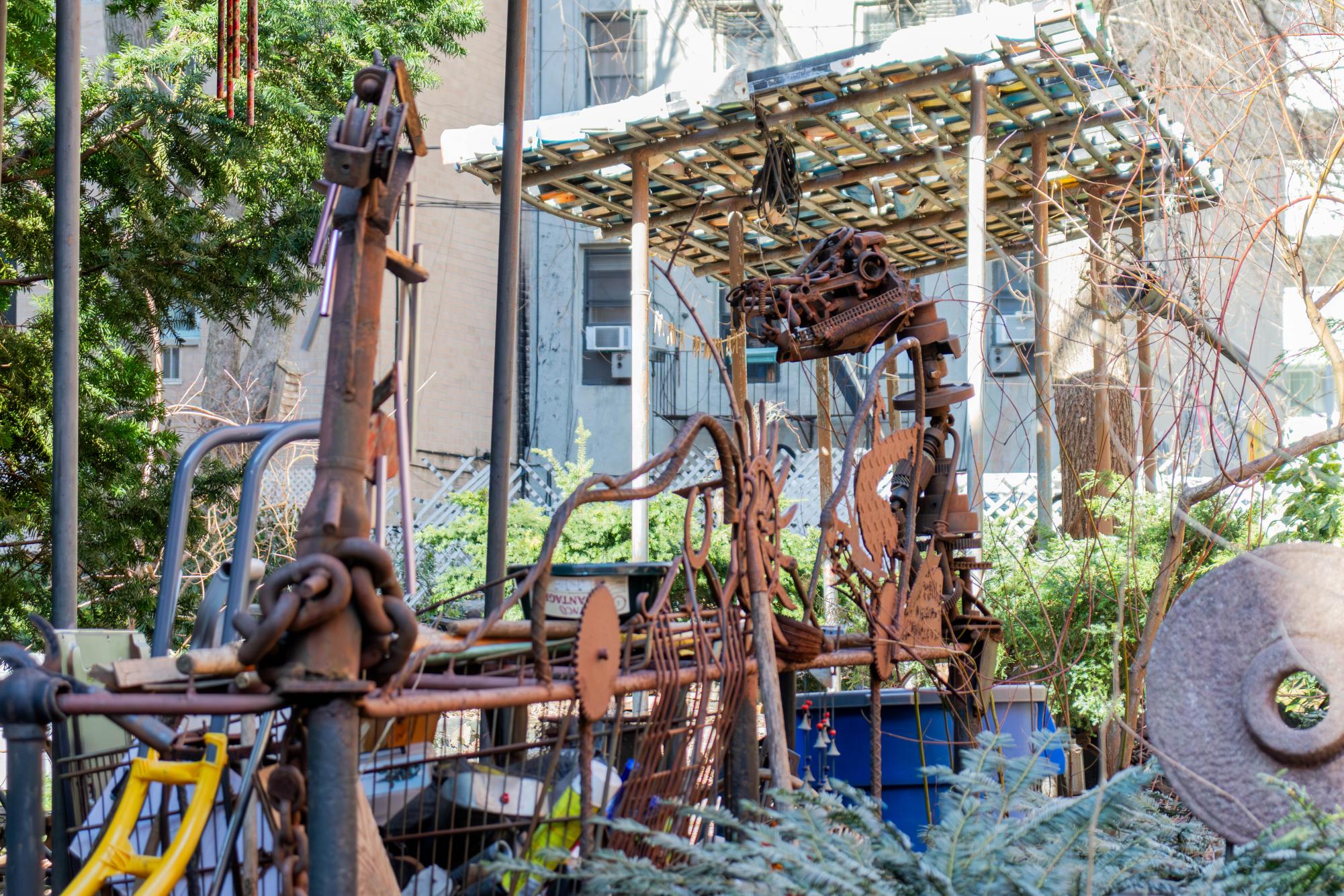
The Lower East Side Ecology Center, based near the Williamsburg Bridge, has its own community garden located on East Seventh Street in between Avenue B and C. This community-based organization began in 1987, when activist Christine Datz-Romero and her partner Clyde Romero started a small recycling drop-off at the community garden on the corner of East Seventh Street and Avenue B community garden, two years before New York City established its own mandatory recycling program. Soon after, they transformed four rubble-filled lots on East Seventh Street into one of the city’s first community composting sites, now known as the Clyde Romero Memorial Garden, where neighbors could drop off fruit and vegetable scraps that volunteers turned into nutrient-rich soil for nearby gardens.
Today, the Center has expanded upon its garden by hosting compost giveaways in Tompkins Square Park and offering a public calendar of recycling events, compost workshops and environmental training sessions. Volunteers can simply show up or sign up on their website to sort food scraps into compost, drop off old electronics for recycling and gather for workshops on how to care for street trees or start their own gardens.
The Clyde Romero Memorial Garden is open on Sundays and Fridays from 8 a.m. to 6 p.m.
Carmen Pabón del Amanecer Jardín
115 Loisaida Ave.
 (Sophie Hess for WSN)
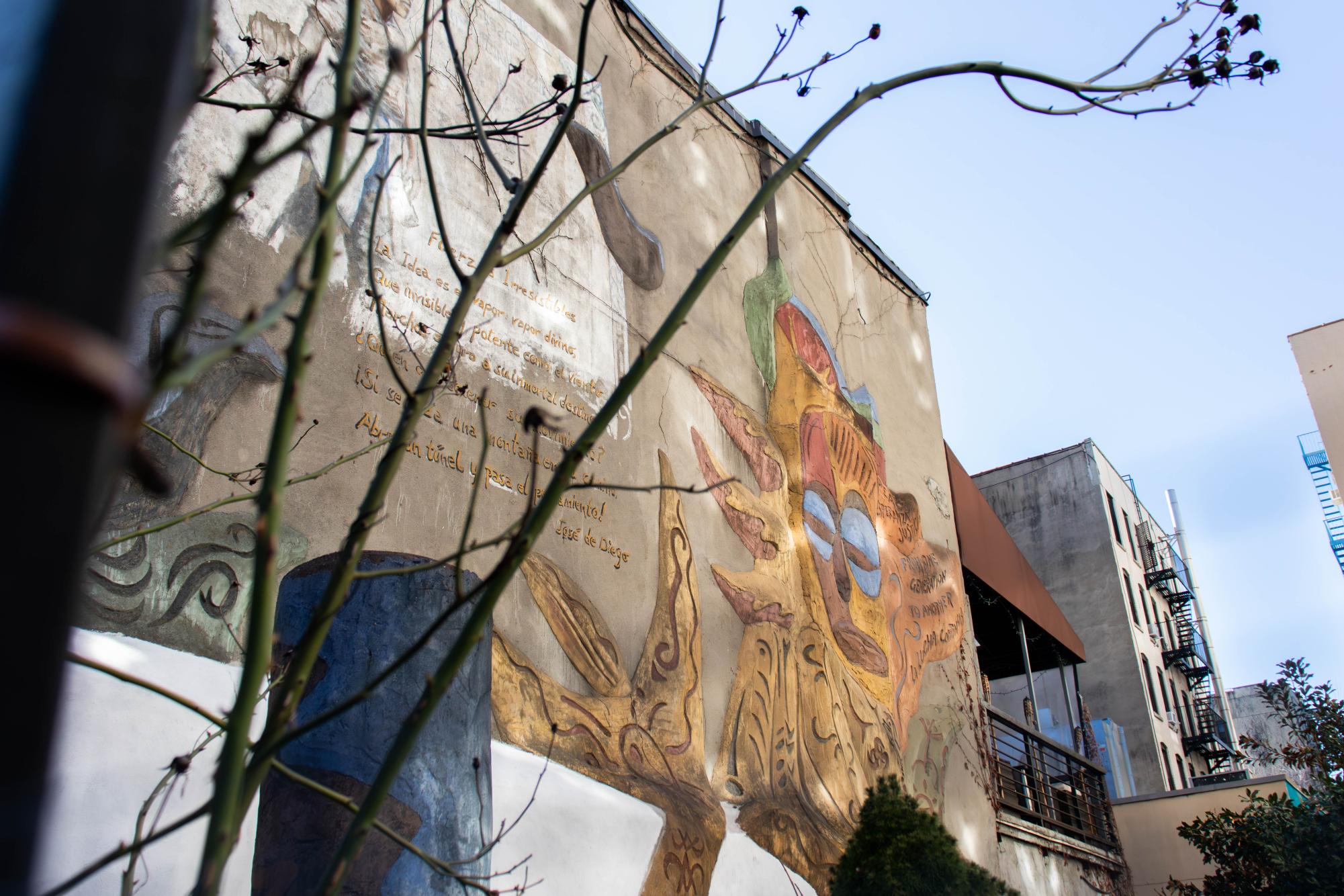
The first thing you notice about this green space is the mural, “From One Generation to Another, La Lucha Continua,” that stretches across the wall. Painted in warm golds and browns, the artwork features Taíno-inspired symbols and a radiant sun-like face at its center, reflecting the garden’s deep cultural roots in the Loisaida community — the historically Puerto Rican enclave of the Lower East Side and whose name stems from the Spanish-speaking pronunciation of the neighborhood.
The Carmen Pabón del Amanecer Jardín was founded in 1984 by activist Carmen Pabón, nicknamed “Madrina of Loisaida,” after she helped neighbors clear rubble from vacant lots and transform the space into a garden where residents could grow food and gather together. Facing demolition in the ‘90s, community advocacy helped preserve the space, reopening in 2016 to continue Pabón’s vision of a garden rooted in culture, resilience and neighborhood care. It remains a communal space with no assigned plots, where you can become a member for free and help maintain the garden, water plants and gather for monthly meetings that keep the space thriving.
The Carmen Pabón del Amanecer Jardín is open to the public when volunteers are present and every Saturday and Sunday from 12-5 p.m. in the spring and summer.
Creative Little Garden
530 E. 6th St.
 (Sophie Hess for WSN)
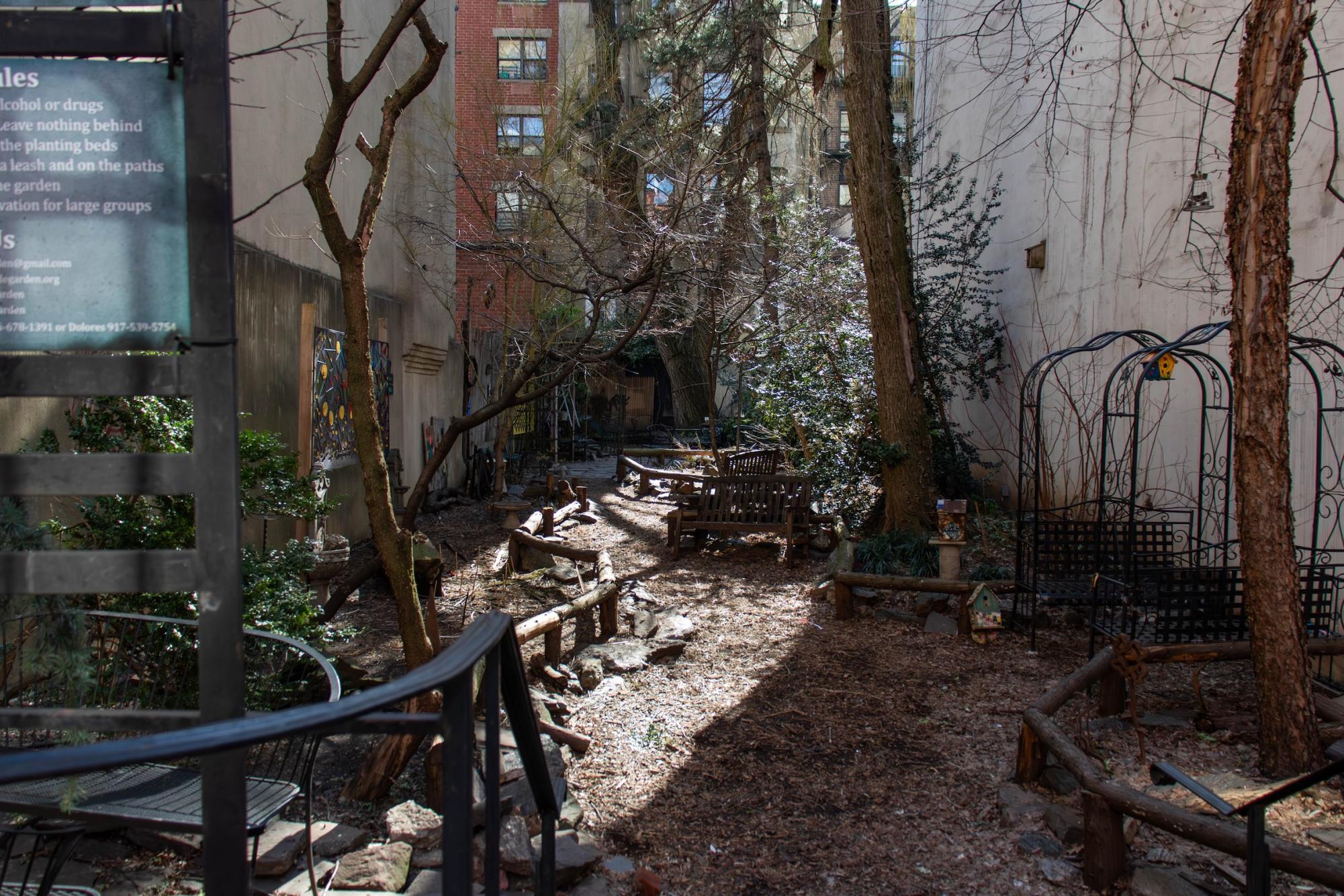
Upon entering Creative Little Garden, a bright yellow sunburst arch stretches over the gate, making it feel like you are walking through a burst of sunshine into a hidden garden just a few blocks west on East Sixth Street.
The space was created in the early 1970s by local activist Françoise Cachelin, a former member of the French Resistance who later became a strong advocate for tenant and community rights in downtown Manhattan. Cachelin worked with local residents to secure the vacant lot for neighborhood use, transforming the site of a burned-down building into a shared garden. Members, which anyone can become by signing up and paying an annual fee of $20 per household, maintain the space collectively with the help of volunteers, growing flowers, herbs and edible plants.
The Creative Little Garden is always open from 1-2 p.m on Mondays through Fridays and from 1-4 p.m. on weekends. Though, when the gates are open and volunteers are present anyone is welcome at any time.
Contact Robin Young at [email protected]
Comments are closed.