
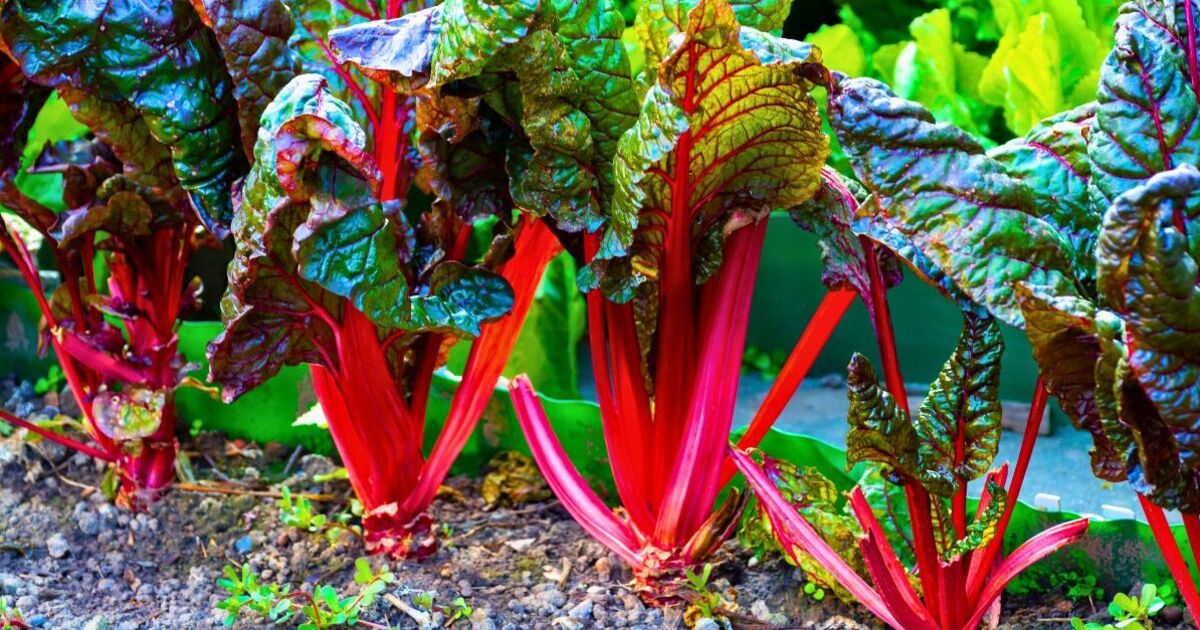
Rhubarb is a popular choice for British gardens because it stays healthy without much maintenance, making it easy to grow and bake into desserts such as crumbles or pies. However, gardeners need to be careful when harvesting this plant as part of it is actually poisonous, and only its red stalks should ever be eaten.
Geoff Stebbings, an experienced gardener and founder of Nags Hall Gardener is warning that rhubarb leaves should never be consumed as they contain high amounts of oxalic acid. He said: “It is not harmful in small quantities but ingesting very large amounts over a prolonged period (much more than you could comfortably consume) can affect the absorption of calcium and some other nutrients and can lead to kidney stones.”
The high amounts of oxalic acid in rhubarb leaves are toxic to humans and can lead to nausea, vomiting, and stomach pain. In severe cases, it can cause kidney problems and difficulty breathing, so make sure to avoid taking the leaves into your kitchen when harvesting rhubarb this spring.
However, the rhubarb stalks have very low levels of oxalic acid and is absolutely fine to eat, and can even be good for you as they are very rich in vitamin K.
How should you handle rhubarb leaves?
Rhubarb leaves are only poisonous if eaten and will usually be fine to touch, and can even be put in your compost bin.
Geoff said: “You can put the leaves on the compost heap or just cut them off and leave them around the plant to decompose. They will not harm other plants or ‘poison’ the compost or soil.”
They also have a very sour taste, so it is unlikely that cats or dogs will chew on it, so you will not need to fence it off unless you have a very young puppy or kitten.
What else should you know about growing rhubarb?
Rhubarb is one of the easiest crops to grow and is ideal for a spring garden, as it tends to produce stalks before other plants and continues to provide food until summertime.
It will do well anywhere in your garden but prefers a sunny spot in fertile soil rich in organic matter.
Rhubarb extracts a lot of nutrients from the soil, so avoid planting it in a vegetable garden next to potatoes, cabbage, broccoli, or other heavy feeders.
Tomatoes are the worst plant to grow near rhubarb, as they compete heavily for resources and can also introduce diseases such as blight, which can affect rhubarb.
It usually cannot be grown in a patio pot because it is such a hungry plant, so keep it in the ground, feed it compost, and it should keep thriving throughout spring.
Comments are closed.